P/C AGENTS CAN TAP INTO GROWING GROUP BENEFITS BUSINESS
Consultant provides P/C agency clients with discipline and
strategy in reaching retirement and health goals
By Phil Zinkewicz
"Some people look upon retirement as their greatest fear; for others, it is their ultimate dream. But either way, it requires a great deal of discipline and strategy. This is what we provide.
--Joseph N. Savasta, J.N. Savasta Corp.
 "What do you want to be when you grow up?" That question has been asked of just about every child at one time or another. And what were some of the answers? A cowboy? A cop? A fireman? An actor? A nurse? A football quarterback? A ballerina? One answer that is probably rarely, if ever, brought forth is "an insurance executive."
That's not saying anything against the business, but let's face it, the thought of becoming anything in the business world is probably the farthest thing from the minds of children. But, unlike Peter Pan, most of us grow up and come to recognize that the more glamorous endeavors are not always the most attainable or even the most rewarding. Therefore, we seek out our own little "niches" and hope that we can we become happily satisfied with what we've carved out for ourselves.
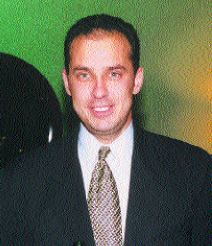
Joseph N. Savasta, president of the New York (Manhattan)-based J.N. Savasta Corp., has found his niche and he's happily satisfied with it. J.N. Savasta Corp. is a full service broker/consultant handling everything from problem claims to comprehensive industry advice in the area of employment benefits. His target is middle market companies. His firm is not on the level of a Marsh & McLennan or an AON and he doesn't want it to be. He has made a specialty of offering group benefits products, including health insurance, dental insurance, long- and short-term disability, group long-term care insurance and flexible spending accounts for the types of middle market businesses that the large brokers are only now considering.
In the retirement area, J.N. Savasta Corp. offers such products as 401(k) and profit sharing, defined benefit plans, 403 (b) and TSAs, deferred compensation plans, IRAs and SEP/IRAs, variable and fixed annuities and non-qualified retirement plans. Furthermore, Savasta does a good chunk of his business through property/casualty insurance agents who want to service their commercial accounts in the employee benefits area, but who don't have the staff or expertise to do so.
"A little known fact," says Savasta, "is that Americans spend more time planning a two-week vacation than they do for a retirement which lasts decades. Some people look upon retirement as their greatest fear; for others, it is their ultimate dream. But either way, it requires a great deal of discipline and strategy. This is what we provide. We're not a property/casualty agency, but we work with agents who want to enhance their P-C accounts with life, health and employee benefits products."
Ironically, although Savasta's firm is not a property/casualty agency per se, it has moved into the workers compensation area because of the overlap caused by managed care. "Over the past 10 years, the rising cost of workers compensation insurance has attracted the attention of human resource managers and risk managers. Our services include exploration of the benefits of self-insuring, introduction to managed care programs, development of in-house safety programs and implementation of early-return-to-work programs," says Savasta.
J.N. Savasta Corp. was officially incorporated in 1989. Before that, Savasta, while still a graduate student, worked for a small life insurance agency in New York City. "I worked for the agency in the equities department. I began to notice that agents were in need of group products. I realized that it was an area of tremendous interest to them. I mentioned this to the general agent and he agreed to start a special department in the area. It became very profitable."
It was at that point that Savasta decided to open his own operation and, over the years, the organization has expanded into a multi-million dollar agency specializing in employee benefits, opening the door also for property/casualty agencies to expand their horizons.
"What we offer property/casualty agencies is our expertise in the employee benefits field. The financial arrangements we make with them are on an agency-by-agency basis, depending upon production. But when an agency brings us business, we insist on working directly with the client in terms of employee benefits products and programs. We're not property/casualty and we don't want to take any of the property/casualty business away from the agent who comes to us, so there's no danger there. But we want to get to know the client and the client's needs so that we can provide the best service."
Savasta says that one of the more volatile areas his agency deals with on a day-to-day basis is managed care. It is a field that is just 10 years old in New York, yet it dominates a good part of the commercial insurance buying public's benefits programs. Here again, Savasta believes that his firm can provide assistance to property/casualty insurance agents. "It's not easy for the average insurance agent to keep abreast of which carriers are good and which are bad in the managed care arena," he says. "We have a 99% retention rate among our clients that come to us for advice in terms of managed care. The reason is that we keep close watch on the marketplace."
As for expansion plans, Savasta says that his agency already operates in about 40 states, although they do most of their work in the tri-state area of New York, New Jersey and Connecticut. "We look at expansion in terms of new products and new opportunities in the business arena," says Savasta. "For example, we have started a new department that targets labor unions as an area of growth. We don't want to limit ourselves. We want to continue our record of growth at 35%-plus per year."
So Savasta, whatever his dreams were as a child, has found a niche for himself and it is in the area of employee benefits in the middle-market arena. True, some of the broker giants are moving down the ladder to examine opportunities in this particular market and that could cause him some stiff competition. With all the mergers and acquisitions that have taken place in the upper part of the brokerage community, and with Fortune 500 companies already having established their benefits programs, the Marsh & McLennans and the Aons have to turn to the middle market for further growth.
But Savasta remains confident. "I'm not sure that the monoliths are used to providing the personalized services that we can provide. Maybe they can. But right now, I'm not worried." *