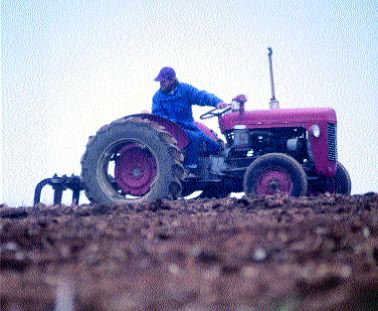
It's been this kind of year down on the farm:
* Hail storms destroyed a third of the apple crop in upstate New York.
* An infestation of grasshoppers in Texas added to the woes of farmers and ranchers already suffering from severe drought.
* Devastating drought in the Deep South pushed some farmers to the brink of bankruptcy.
* A version of mad cow disease hit sheep in Vermont, pitting farmers against the federal government in a battle over whether or not they should be destroyed.
* A wave of eco-terrorism was blamed on militant environmentalists opposed to genetic modification of crops and other plants.
At least these are the events making headlines--and the year isn't over yet.
For insurers, the losses from the usual weather suspects go with the territory. The mad cow scare and eco-terrorism, while cause for concern, they believe are isolated incidents.
Perhaps the real story of the year--or any given year--is the one not often told: the key role insurance plays in helping the agribusiness feed Americans and millions of others around the world--with food that is the best and the safest on earth.
With a growing appetite for this line and their
$17 billion a year in premiums, insurers are creating innovative policies and methods for agribusiness as it evolves from the traditional small farms and ranches to sophisticated family-run specialty farms and huge farm corporations.
Insurance company executives and agents say there are two main movements driving the agribusiness into the 21st Century: consolidation and diversification. In the case of consolidation, it's the same type running rampant in other businesses with the big getting bigger and the little getting lost. Among other benefits, its goal is to gain economies of scale--gobbling up more and more acreage to keep expensive tractors and harvesters working full-time.
Diversification is taking two forms. On the one hand, it has given birth to what's called vertical integration--the grower/packer/shipper. Called the new generation of farmers, they are largely college-educated people who combine their knowledge of farming with newly acquired technological and scientific skills and business acumen to increase their income stream by expanding into certain commercial areas such as packaging and shipping of products straight to the marketplace. And they'll perform this all-round service on a custom-made basis for other farms whose owners prefer to let others handle these operations. They're also using the Internet to market their products.
The second form of diversification has farmers expanding into farm-related services--everything from retail co-ops selling various goods and tools, to chemical and fertilizer operations, to tractor and harvester dealerships.
This new generation is also placing a high priority on safety in its farming, which has one of the highest accident, fatality and injury rates of all occupations, according to the U.S. Department of Labor. Seeing safety both as a job entitlement and a way to cut insurance costs, they are implementing safety training programs, installing roll-over protection on tractors and harvesters, outfitting workers with protective gear and clothing, closely supervising the storage, handling and transportation of chemicals, fertilizers and animal waste, and posting do's and don'ts safety signs all over their farms.
To cover these ever-expanding farming operations, insurers are offering all-inclusive policies, according to Joseph Mattingly, vice president of CGU Agri. For example, different coverage parts--such as property, liability, auto and umbrella, to name a few--can be mixed and matched into a single versatile and seamless policy covering both farm operations and commercial operations, says Mattingly, adding that not only are these blanket policies a boon for the farmers, but for their independent insurance agents as well.
Brad Colson, of Peel & Holland, Inc., in Benton, Kentucky, agrees. "It's almost impossible to list everything on a farm today that might need to be covered," says Colson, adding that these blanket policies take the worry out of the underwriting process for everyone involved. To underscore the need for flexible policies, Colson says his agri clients might include row crop (soybeans, cotton, grain, etc.), tobacco, poultry, cat fish farms, equine, hog feed, and buffalo, among others.
Along with new policies, insurers are also engaging both farmers and agents in hands-on efforts to deal with hazards--particularly pollution, for which there is zero tolerance in today's environmentally conscious society. One of the main concerns, says Mattingly, is the runoff of water containing chemicals, fertilizers and livestock waste, which can contaminate wells, lakes and rivers, among other things. To reduce the contamination, insurers are encouraging farmers and ranchers to build buffers--wide areas of grass bordering farms which can cleanse the water of pollutants during the runoff. He says these efforts also include urging farmers to strictly adhere to provisions of the Clean Water Act, which is being used both to regulate compliance and punish violators.
Along with policies, there's also creativity in the way some insurers are marketing their products. Zurich US and The Hartford have formed a strategic alliance to co-market their agribusiness products in a program designed to take advantage of each company's unique strengths. The Zurich US Agribusiness Unit will provide core property/casualty coverage and The Hartford will provide livestock mortality coverage. In addition, Zurich US will offer specialty products such as environmental impairment liability, umbrella, and directors and officers coverage.
William Ziletti, Jr., vice president of Agriculture Zurich US, says livestock was the missing piece of its farm coverage. "Having no underwriting expertise in this line, we looked for a business partner with strong expertise in livestock; The Hartford, with some 80 years of experience, was the logical choice, along with the fact that the agents of both companies match up well." He says agents and companies alike will benefit from a program that combines broad-based agribusiness and specialty coverage with a specialty product that addresses the unique aspects of the livestock sector.
David Berry, vice president of the livestock business group of The Hartford, says, "The alliance will allow its agents access to the property/casualty market and enable them to write total packages of coverage." Customers, he says, will get some of the broadest solutions available anywhere in the market from two companies that built their reputations on their industry expertise and their superior products and services.
The program will work as a referral process, with agents of each company referring customers to the other company's product as a way to round out the customer's insurance coverage. The products themselves will remain independent, with livestock mortality coverage underwritten by The Hartford and basic property/casualty and other specialty products underwritten by Zurich US. The two companies estimate the market for the expanded coverage at approximately 140,000 customers.
David Duzan of The Duzan Agency, a small livestock agency in Lexington, Illinois, is delighted with the alliance. "Before the alliance, we had to go to another carrier for the
P-C coverage or we couldn't write it. Now we can offer the complete package and also benefit from Zurich's top underwriting expertise and loss control programs."
Charles Gordon, an agent with Arthur J. Gallagher of Mississippi, Inc., in Jackson, offers another perspective. "This alliance brings together two powerhouses, and that's welcome news to many agents who are a bit leery about the shaky financial condition of some insurers."
Along with the alliance, Ziletti says Zurich US has more in the pipeline--including a new policy which would provide farmers with income protection from weather-related losses. Scheduled to roll out next year, the excess cover would kick in after payment from the primary federal crop policy.
Whether going it alone, as CGU does, or joining forces as Zurich US and The Hartford have done, underwriters and agents agree that the agri insurance market will continue to grow. That's good news for agents who specialize in this line. But whether it will offer opportunities for agents looking to break into agri is another matter. Ziletti of Zurich US says the sheer size of the agribusiness ("It's everywhere") could allow agents to carve out a niche if they're willing to learn the business. Mattingly of CGU believes it's a tough market to crack, not only because of the long learning curve (five to eight years) but because of the intense loyalty farm people have for people they do business with. And agents Duzan, Colson and Gordon also point to the loyalty factor as well as the complexity of the agribusiness.
But for agents wishing to give it a try, they all say the starting point is to learn the business, connect with a carrier that will enable them to write a broad mix of business, and then visit potential clients to sell them on the superior products and services that the agent and the carrier promise to provide. They also agree that in some ways the more farms change, the more they stay the same. No matter how big and sophisticated farm operations get, it's still a people business--one built on trust and friendship--with the farmer on a tractor working the fields always at the center of the agri universe.
As this article went to press, the stand-off between two farmers in Vermont and the federal government over the killing of some 400 sheep which could be infected with a version of mad cow disease continues to play out. The Agriculture Department ordered them destroyed after tests on four of them showed signs of the disease, which wrecked the cattle business in Britain in 1995 and killed 70 people in Europe. The owners of two of the flocks are asking for more tests to prove that the sheep are in fact infected. The owner of a third flock of 21 sheep sold them to the Agriculture Department to be destroyed. The sheep were either imported in 1996 from Belgium, where the government believes they may have eaten contaminated food, or are the offspring of them. While scientists are not completely certain that the sheep have the mad cow disease, they say it is better to destroy them and remove any chance that the disease, which is always fatal, could break out in the United States.
The wave of eco-terrorism is another matter. There were more than 30 acts of destruction by radical environmentalists opposed to the genetic modification of crops and plants. They included vandalism of cornfields in New York and Maine, grasslands in Oregon and vineyards in California, and the more serious act of arson in the offices of Michigan State University's Agriculture Department by a radical group opposed to the school's programs in biotechnology.
There's a touch of irony here. The thrust of the genetic modification of crops was designed to enable farmers to produce better and safer crops and do it without the use of pesticides and other chemicals. To do this, scientists began adding genes, for example, to protect the plants against their natural predators--insects, funguses and viruses. It was all for a good cause but in recent years, strong opposition to the practice has grown among environmentalists who have fears about the potentially damaging effects of tampering with nature. That opposition has caused Novartis A.G., a leading agricultural biotechnology company, to eliminate genetically engineered ingredients from all of its food products, including Ovaltine, Gerber baby foods, Wasa crackers and various health foods. While still believing in the safety of genetically engineered crops, the company says it took the action because customers are concerned about their safety.
As the debate about the merits of genetically modified crops intensifies, so does the media coverage. The cover story of the July 31 issue of Time magazine focused on the creation of genetically engineered "golden" rice that could, among other things, improve the lives of people in developing countries, including more than a million children who die every year from illnesses brought on by a vitamin-A deficiency, and another 350,000 who go blind. But again fears that the process used in producing the rice could have dire consequences have put the project on hold. *