By Phil Zinkewicz
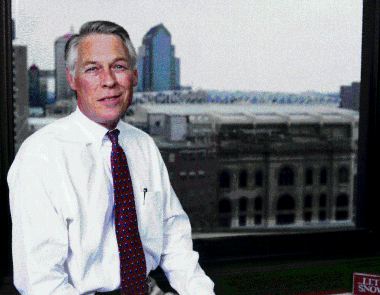
Gregory A. Allgeier is president of Bolton & Co. in Louisville, Kentucky.
In 1965, when Browne Bolton started the Louisville, Kentucky, managing general agency, Bolton & Co., there was still such a thing in the property and casualty insurance industry known as "market cycles." Simply stated, the scenario ran this way. The industry would experience three years of "hard" market conditions during which insurance buyers had to pay higher premiums for more restricted coverages. For certain exposures, some coverages weren't available at all in the standard market, so buyers had to look to the specialty, excess and surplus lines arena. As insurers experienced profits from the hard market, they began to vie for more business, creating excess competition and driving premium rates down. This led to three years of "soft" market conditions, during which insurance rates dropped and terms and conditions were less stringent. During the soft market, because of fierce competition, standard insurers then drew exotic exposures from the specialty insurance markets and put them back into the standard market.
That was the routine, hard market vs. soft market. Which came first, the chicken or the egg, can be debated forever; but the fact of the matter is that the P-C industry enjoyed being comfortably cocooned in a market cyclicality that was as predictable as death and taxes.
Most young underwriters and agents today don't remember those times, but Gregory A. Allgeier, president of Bolton & Co. and son-in-law of the MGA's original founder, does. In 1973, a time when the traditional three-year-on, three-year-off market cycles were still operating, Allgeier, having finished college, decided to take a break from the academic world before going on for his master's degree. So, he joined the agency as a field representative.
"At that time, Bolton had ten employees and was writing about $2 million in premiums," says Allgeier. "When my father-in-law first started the agency in 1965, it basically handled standard lines of business. In 1969, the agency took on its first specialty company, Midwest Mutual, to write insurance coverages for motorcycles. In 1970, my father-in-law began writing mobile homes for American Modern Home. It was in the year that I joined the firm, 1973, that the agency contracted with Jefferson Insurance Co. of New York and Canal Insurance Company, which put us squarely into the specialty lines business."
 Jeremy Allgeier (seated), manager of Bolton's IT Department, meets with Christopher A. Allgeier, manager of the claims department.
After that, Bolton & Co. underwent significant expansion in the specialty lines arena and in 1975, the agency received permission from Lloyd's of London to bind specialty lines business on behalf of underwriters there. "We expanded from Kentucky into Ohio, Indiana, Tennessee and Southern Illinois, and we're still in those states," says Allgeier. "We maintain and hope to build on our excellent relationships with our customers--the independent agents--in the specialty lines business. We do nothing direct with insurance buyers. We are wholesalers, pure and simple, and the only things we don't write are standard lines
of business."
Allgeier is not exaggerating when he says that Bolton writes just about everything but standard lines. In the area of commercial lines, Bolton writes asbestos abatement, batting cages, beauty parlors, contractor equipment, day nurses, demolition contractors, exercise studios, golf courses, landscaping and tree trimming, bars and restaurants, day care and preschool, youth recreational facilities, special events coverage, and that's only a partial list. In the area of commercial auto, the agency writes ambulance services, limousine services, long-haul truck fleets, non-metro taxicabs, charter and church buses and garage keepers legal liability, among other exposures.
Bolton does not ignore professional liability exposures either. The agency writes such risks as law enforcement, public officials, nonprofit and for-profit D&O, title agents, travel agents, employment practices liability, real estate agents, mortgage brokers, computer service, broadcasting, newspaper publishing and home inspection services. Today, Bolton & Co. employs 30 people and does about $23 million dollars worth of business through Northland Insurance Co. and Scottsdale Insurance Company, in addition to the carriers mentioned above.
Allgeier attributes his agency's growth to a number of things--a total commitment to the independent insurance agency system, a trained staff that works closely with its agent customers and a recognition that the cyclical markets of the past have changed dramatically.
 A meeting at Bolton's headquarters includes (left to right) Lavern Bale, LaVerne Skinner, Jackie Reinert, Christopher Allgeier, Gregory Allgeier, Nancy Roudenbush, Sandy Ballard and Donna Renfrow.
"We are seeing a good many companies that were experimenting with alternative distribution systems and the Internet coming back to independent agents," he says. "We never left them. We have always believed that independent producers are a link in the insurance transaction that cannot be replaced. The consumer is buying an intangible product that is very complex even in the simplest of transactions. I am convinced that there are insurance buyers out there who don't know the difference between uninsured motorist coverage and underinsured motorist coverage, nor do they know what coinsurance is. We see the local agent as not just a sales person, but as a counselor to the insured.
"As for out staff, we make certain that they are there to assist the agent in whatever that agent needs to do the job as efficiently as possible. We're using new technologies and the Internet to provide agents with the information they need as to the products we offer and to make it easier to deal with the application process."
That brings us to the third element in Bolton & Co.'s success--recognition of a changed insurance marketplace. When Allgeier first started with the agency, the market was still three-years-on and three-years-off cyclical. But that was back in 1973, and the market has undergone soft conditions going on for more than 15 years since the last hard market of 1985-86. During that period, a good deal of what was formerly thought of as specialty lines business has remained in the standard market. How has Bolton dealt with that situation?
"If we have learned anything in the last 15 years, it's to not rely on market cycles anymore. It's not very likely that we will ever see the cycles of the past," says Allgeier. "What we have done is to look for pockets of hardening where it is possible to make a profit. In addition, we assist our agent partners in broadening the scope of their activities. The broader the scope of what an agent writes, the more commission dollars will flow into the agency. If an agent doesn't know a particular area, we're here to help. Many of our staff members have developed particular areas of expertise and we make that expertise available to the independent agent."
Another way that Bolton has prospered during the prolonged soft market is to become involved in program business. "We do two programs," says Allgeier. "One for the Professional Clubmakers Society (PCS) and the other for International Tire and Rubber Association (ITRA). The PCS consists of craftsmen who make golf clubs. Members of the ITRA include tire dealers and retreaders. We write many of them on a monoline basis, but we can provide all types of coverages if needed. We spend a good deal of time with these associations, to learn their business and determine what their insurance needs are. Both associations offer continuing education classes for their membership so that they can maintain their professionalism."
As for continuing education at Bolton & Co., Allgeier says that he and his staff have taken CPCU classes, NAPSLO classes and AAMGA classes. In fact, Allgeier, who was president of the AAMGA in 1991, says that the AAMGA University is probably one of the most important developments to affect MGAs in years.
"Especially in today's insurance marketplace, where the cycles of the past can no longer be depended upon, continuing education stands out as immensely important," says Allgeier. "People are talking about the market finally turning around. That's true to a certain extent. For example, commercial auto, nursing homes and habitation exposures are seeing a hardening. Some of those exposures are coming back into the specialty lines arena. But I don't expect to see the overall hard markets that we knew in the past and certainly not like the one we experienced in 1985-86. It is essential, therefore, that agents and MGAs keep abreast of developments as they occur on a line-by-line basis. We must be proactive instead of reactive to market conditions." *
For more information:
Bolton & Company
Phone: (800) 292-6597
Web site: www.boltonmga.com