MARKETING
From fine arts to famous gems to rare wines,
Thomson & Pratt is a go-to market
By Elisabeth Boone, CPCU
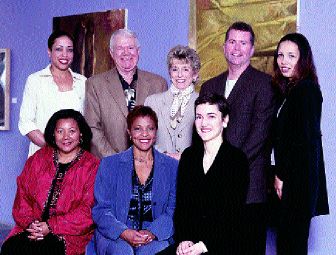
Thomson & Pratt executives: (seated, left to right) Lynora Miller, marketing manager; Jacklyn Pratt, assistant vice president; Susan Schomburg (client/owner of Schomburg Gallery); (standing, left to right) Ericka Smith, media consultant; R. John Pratt, president/COO; Margot Pratt, chairman/CEO; Tom Pratt, director/fine arts division; and Jane Kennedy, apprentice.
Most corporate mission statements feature words like culture, values, stakeholders, and excellence. However well intentioned, after a while they all start to sound alike.
At Thomson & Pratt Insurance Associates, Inc., a leading brokerage for fine arts insurance, the mission statement is short, simple, and distinctive: Protecting People's Passions. From Bugattis to Beaujolais to baguettes, this Santa Monica, California agency has built a reputation for expertise in arranging complex insurance coverages. Under the direction of Tom Pratt, son of the firm's founders, its book of fine arts business has grown to $2 million in premium in just three years; and its client list now numbers almost 400 galleries, museums, libraries, auction houses, and private collectors. Of the firm's total book of business, some 35% to 40% is written through retail independent agents.
"People are very passionate about their art or their collectibles or their wine--more so, we sometimes think, than their significant other," Tom chuckles. "At a brainstorming session we asked ourselves: What is it that we're really doing? And the answer we came up with was, we're protecting people's passions. So that became our mission statement. All of us are very passionate: we're passionate about art; we're passionate about our clients. We love what we do, and we have a lot of fun doing it. When we insure a Monet painting or the Declaration of Independence, the Maltese Falcon or the Cowardly Lion, we have a little piece of history, and we're preserving that history for future generations. It takes our role of insurance brokers to a whole other level."
From bedroom to boardroom
Earlier this year, competing against major multinational brokers, Thomson & Pratt won a one-year contract to provide fine arts insurance to all 171 United States embassies worldwide. Not bad when you consider that Tom Pratt started the firm's fine arts division from his spare bedroom in 1999 with $500 and a list of 10 clients. How did it happen?
 Thomson & Pratt staff visit one of their client galleries, Schomburg Gallery, in Santa Monica, California.
Thomson & Pratt was established in 1994 as a woman-owned minority insurance brokerage. Its chairperson and chief executive officer is founder Margot Thomson Pratt, and R. John Pratt serves as president and chief operating officer. The firm's objective was to provide insurance brokerage expertise to corporations that were interested in supporting minority-owned businesses. "Prior to this, my father worked for an African American-owned insurance brokerage in San Francisco, and he was able to secure some large accounts with major corporations as part of their compliance with federal regulations concerning the use of minority contractors," Tom explains. "The corporations benefit from practicing social responsibility by helping smaller firms, and it also gives these firms an opportunity to expand their business and to work on accounts they normally wouldn't have the chance to handle."
In 1999, Tom, who had some 15 years of experience as a fine arts insurance broker, decided to put his experience to work by launching a fine arts operation in his parents' firm. "I started it in a spare bedroom of my apartment, and from there I built our client list to what it is now," he says. Thomson & Pratt, which had handled a variety of personal and commercial business, now writes exclusively fine arts accounts. "It was a natural for us. My mother is an artist herself, and she also has worked with several museums. My father has 40-plus years of experience with major brokerage houses. I majored in theatre arts and studied art history in college, and I also studied in Paris. I wanted to combine my passion for art with my knowledge of insurance, so we decided to focus on the fine arts market."
Using the experience and contacts he acquired while working as a fine arts specialist for other brokerages, Tom set out to establish carrier relationships and develop a book of business with former clients. "We were profitable from Day One because of my company relationships," he says. "All of my markets supported me; I wouldn't be successful if it wasn't for the insurance companies that were willing to enter into agreements with us because they knew my background. In a highly specialized field like ours, close relationships are the key to writing profitable business."
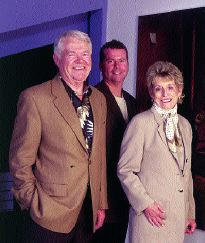 John Pratt (left) and Margot Thomson Pratt founded Thomson & Pratt Insurance Associates, Inc. The agency is now under the direction of their son, Tom Pratt (center).
"In the corporate structure we've created, we think of ourselves first as art consultants and then as insurance brokers."
-- Tom Pratt
The varied backgrounds of Thomson & Pratt's staff members represent a significant departure from the norm for an independent agency. They bring to the firm a wealth of experience in the visual arts, entertainment, advertising, and graphic design. "In the corporate structure we've created, we think of ourselves first as art consultants and then as insurance brokers. We understand the nuances of art; we can 'speak art,'" Tom says. "We strongly encourage our employees to take art courses and attend seminars as well as sharpen their insurance skills, and we believe this approach uniquely positions us to take care of our clients' needs."
From artists to wineries
Speaking of clients, what kinds of risks does Thomson & Pratt pursue? Here's a sampling:
* Fine arts collectors
* Animation arts collectors
* Artists
* Wineries
* Auction houses
* Collectors (fine wines, jewelry, memorabilia, antiques, and antiquities)
* Fine art collections (personal, corporate, foundations, and trusts)
* Galleries/dealers (fine art, antiques, and antiquities)
* Libraries (university, corporate, private, specialty)
* Museums (collections and exhibitions)
* Art packers and shippers, freight forwarders, and storage facilities
In addition to arranging insurance coverages for its clients, Thomson & Pratt provides a variety of value-added services, depending on the particular risk. Among these services are reviewing security surveys and inspections of facilities; reviewing transit schedules, values, and documentation; analyzing contracts for loan requests from museums and galleries and loan forms from borrowers; and arranging additional coverage for exhibitions and other special programs.
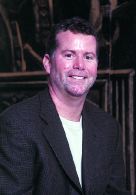 Tom Pratt's knowledge of art history, passion for art, and experience in the insurance industry makes a winning combination for Thomson & Pratt's focus on the fine arts insurance market.
Thomson & Pratt represents a number of leading insurers that offer specialized coverages for arts-related risks. The firm's major markets are American Zurich, AXA, Insurance Corporation of Hanover, Lloyd's, Navigators Insurance, and Fireman's Fund. "We try to differentiate our submissions by preparing a detailed narrative on each account," Tom says. "We don't just submit ACORD forms; we give the underwriter as much information as possible in a readable format."
Helping retailers be heroes
As noted earlier, some 35% to 40% of Thomson & Pratt's business is written through retail agents. Does an agent have to be an art specialist to work with the firm? "No, if an agent needs us, we're always here," Tom responds. "There are a lot of museums and dealers throughout the country, and the local agent who handles the account may not understand all the nuances of arranging appropriate coverage. In my travels, I've found a number of local museums and galleries that are inadequately insured. Our job is to act as a consultant, to help the local agent obtain the right coverage based on complete, accurate information from the client. It makes the agent look good to present a great program, and he or she comes out looking like a hero."
Colorful clients
What are some of the unusual and exciting risks for which Thomson & Pratt has arranged coverage? "Right now we're insuring the Freedom's Journey exhibition," Tom says. "It's a two-year exhibition from the National Archives that features the Declaration of Independence and other famous documents. It's traveling to several presidential libraries--Ronald Reagan, George H.W. Bush, Harry Truman, and Jimmy Carter."
As mentioned earlier, Thomson & Pratt won the bidding to insure the art collections in all 171 U.S. embassies around the world. That's a big prize, and fulfilling the contract means not only arranging coverage but also complying with a host of federal government requirements for minority contractors. "Just to submit our bid, we had to complete a huge amount of paperwork," Tom recalls. "We worked around the clock for days to finish on time, and we were pretty excited when all our hard work paid off and we got the contract."
The firm very well might not have gotten the contract, not because it lacked expertise but because it found out about the Art in Embassies program only a few days before bids were due. "My wife's cousin in New Jersey sent us information about the program on February 4, and we were really excited," Tom says. "Then we read a little further and discovered that if we wanted to submit a bid, we had to express our interest by February 5. I called the State Department, and they faxed me the specifications for each of the 171 embassies around the world and what they needed. We had to have a quote ready by February 11. We partnered with Huntington T. Block Insurance Agency of Washington, D.C., and in five days we put together a terrific program for the embassies. When we heard from the State Department a few days later, my contact there told me that our proposal was the most professional-looking one they'd ever received."
A look at the market
What's going on in the market for fine arts coverage in terms of competition, capacity, and pricing? How did the September 11 terrorist attacks affect availability and rates? "There were substantial losses in the World Trade Center because of corporate art collections that were destroyed," Tom replies. "A lot of the carriers on those risks had the same reinsurers as other markets, and higher reinsurance prices are driving up direct premiums. So we're seeing sizable rate increases, and some carriers are curtailing their writing of certain risks like galleries. Capacity is a problem, and reinsurers are becoming particularly concerned about earthquake and hurricane risks because of their potential to generate catastrophic losses."
Despite these challenges, Tom is confident of his firm's ability to remain successful and profitable. "Because we're specialists, we know which markets will accept different kinds of risks," he says. "We look at each account on a case-by-case basis and decide which market can best serve its needs. Our close relationships with carriers are a big asset in a hardening market."
Looking ahead, how does Tom characterize the major challenges his firm faces? "I think our biggest challenge is managing growth, because we're growing so fast," he says. "We now do business in 20 states and the District of Columbia, and we're thinking about expanding into Mexico, Latin America, the Far East, and Australia. We understand the arts and we're experts in the insurance business; now we need to put in place a structure that will allow us to grow profitably while continuing to provide the level of service our clients deserve and expect from us."
Judging from Thomson & Pratt's record so far, success is definitely on the menu for this hard-working, high-energy team whose passion is protecting people's passions. *
For more information:
Thomson & Pratt Insurance Associates, Inc.
Phone: (877) 334-6327
Web site: www.fineartguy.com