AAIS COVERAGE PERSPECTIVE
Can the exposure be controlled?
By Robert J. Prahl, CPCU
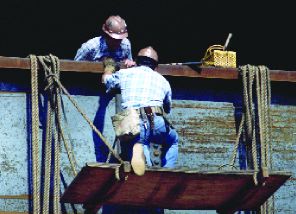
A construction defect--work performed that falls below the standard promised or expected by the purchaser of the work or services.
What are the coverage ramifications for insurers with respect to construction defect claims? Are such claims covered? Can they be excluded? How can underwriters combat and control construction defect claims?
Those questions were answered recently by veteran insurance author and consultant Donald S. Malecki, CPCU, in a presentation at the annual Alliance/AAIS Underwriting Conference, held late last year in Cleveland. In examining this controversial subject, Malecki guided his audience through a historical tour of policy language, culminating with his suggestions for combating and controlling construction defect claims. Malecki is CEO of Donald S. Malecki & Associates, an insurance and risk management consulting firm with offices in Cincinnati and Newport Beach, California.
Speaking from the standpoint of property and liability insurance, Malecki defined a construction defect as work performed that falls below the standard promised or expected by the purchaser of the work or services. He cited several examples of construction defects, including:
* doors do not close properly
* pipes do not conform to code
* roof is not properly attached to structure
* no weep holes in brick work
Some of the more serious problems involve PVC pipes, exterior insulation, and mold, he added.
He then asked rhetorically, what if property damage results from any of the above situations? His response: Resulting property damage may be covered, but the construction defect itself is still excluded.
Exclusions for loss caused by construction defects have long been in use with respect to property and liability insurance policies, he noted. These exclusions can vary in scope, some being quite narrow, others rather broad, he added. The narrowly drafted exclusions provide an exception (there is coverage) for damage resulting from the faulty or defective workmanship, while the broad or more restrictive exclusions do not, he said.
Are construction defects covered under liability insurance?
Malecki identified several reasons why construction defect claims may not be covered:
* No property damage, as defined in the policy
* No occurrence took place
* Expected or intended exclusion
* Damage to "your work" exclusion
* Impaired property exclusion
From a liability standpoint, work performed that fails to serve the purpose intended can be a construction defect from the standpoint of the contractor who performed the work, and property damage from the standpoint of other contractors working on the same project, the consultant noted. However, it can be considered property damage only if there is physical injury, or loss of use of tangible property that is not physically injured or damaged, he added. Malecki offered the following example:
Suppose subcontractor A inserts anchor bolts for framing into the concrete foundation unevenly, causing other contractors' drywall and exterior stucco work to crack, necessitating replacement. The subcontractor's anchor bolt work is excluded as a construction defect, but damage to the work of the other contractors is considered property damage and covered under subcontractor A's liability policy.
Work performed by a subcontractor that fails to meet the standard promised may not always be considered an "occurrence," he contended, because the defective work performed may not be considered fortuitous, that is, happening by chance or accident without the insured's foresight or anticipation. The expected or intended damage exclusion may also be invoked in such situations. However, when a general contractor is sued because of property damage caused by a subcontractor's defect, it should be considered an "occurrence" from the GC's standpoint, according to Malecki, and subject to coverage under the GC's policy.
The author/consultant pointed out that the purpose of the damage to "your work" exclusion is to preclude covering what is known as a business risk, since such risks should be assumed by the one who performed the faulty work. But coverage can still apply to the contractor for whom the work was performed, after completion of operations, he added, because of the exception to the "damage to work performed" exclusion. The exception to the exclusion provides coverage for damaged work resulting from work performed by a subcontractor who is working on behalf of a general contractor--or work by a sub-subcontractor who is working on behalf of a subcontractor.
The rationale for this exception to the exclusion, according to Malecki, is that the named insured (for whom the work was performed) did not directly perform the work and has only limited control over it.
The "impaired property" exclusion may also apply to preclude coverage in construction defect claims, he noted. The insurer will not pay for "property damage" to property that has not been physically injured or destroyed, or to "impaired property," that arises out of a defect, deficiency, etc., in the insured's work, or a delay or failure to perform a contract or agreement. Impaired property is defined as tangible property, other than the insured's product or work, that cannot be used or whose value has been decreased because it incorporates the insured's defective product or work, or the insured has failed to fulfill the terms of a contract. If, and this is a big "if," the consultant asserted, the property can be restored to use by repair, replacement, etc., of the product or work, the property will be considered "impaired property" and the exclusion will apply.
Beware of older court cases -- "property damage" definition
Malecki noted that in property damage claims, attorneys often cite old court decisions involving policy language that was somewhat broader than it is today. Older policies referred merely to "injury," rather than physical injury, in the definition of property damage, he said. "Injury" has a much broader meaning than physical injury, he added, and plaintiffs will sometimes use these old cases, which held for coverage, to obtain a favorable result today.
Malecki cited the example of a cosmetic loss involving the application of stucco, which was simply done poorly. Would this involve injury to tangible property? Probably yes, but it is unlikely it would be considered physical injury, he added. Current policy language has changed and become more restrictive. Watch old court cases that cite old language, he warned.
Can construction defect claims be controlled?
Malecki concluded his comments by offering specific suggestions concerning what underwriters could do to control or limit exposure to construction defect claims. He suggested that underwriters:
* Encourage or require that contractor prospects complete educational courses that focus on how they might prevent construction errors or defects. These courses and seminars are available in some areas. Perhaps insurers could offer premium discounts to contractors who have earned certificates of completion for these courses.
* Limit your exposure geographically by avoiding writing in states where construction defect claims are most prevalent, e.g., California, Nevada, Arizona, and Florida; or charge accordingly for the greater exposure.
* Be careful about writing "design and build" contractors because you are magnifying your exposure by picking up every exposure from the initial planning and design to the actual construction.
* Insure only contractors who are familiar with local and regional construction codes, as opposed to those who work on a national basis and may not be sufficiently familiar with the codes in a particular location.
* Avoid insuring contractors who build private homes, condominiums, town homes, or other residential dwellings because that is where most construction defect problems arise; or charge accordingly.
* Use a sub-limit for defense costs involving construction defect claims, or a sub-limit for such damages. In other words, provide the coverage, but control your exposure with sub-limits.
In closing, Malecki asked underwriters to think about their chief role, which is to screen risks and accept those that meet specific criteria. Underwriters must make the effort to get to know the risk: its mission, purpose, attitude, and loss experience. What are its plans for the future? Has it assumed, or will it assume, any new loss exposures? In short, the more the underwriter knows about the risk, the better the chance of controlling losses and writing a profitable account.
For information about AAIS insurance programs, contact Robert Schnoll, AAIS marketing manager, at bobs@aaisonline.com or call (800) 564-AAIS (2247), ext. 222. *
The author
Robert J. Prahl, CPCU, is director of education for the American Association of Insurance Services.