
Chubb partners with The National Alliance
to provide producer training
By Barbara A. Morris
These students--all Chubb agents--came from all across the country to attend The National Alliance for Insurance Education & Research's School for Producer Development, held at Chubb's headquarters in Warren, New Jersey.
At 7:55 a.m., the classroom is filling. Muffled chatter permeates the room as a few stragglers move quickly to their seats, just before the instructor takes her place. She opens with greetings and a bit of small talk to break the ice and establish rapport. As the instructor talks, a cell phone rings. Her eyes dart around the room, looking for the source. She jokingly asks the culprit to fess up, assuring the group that it's really okay--the phone just needs to be turned off. Predictably, no one among the 50 students acknowledges his or her culpability. Nervous laughter. The class continues.
This could be a typical classroom in any college or university across the country. But in this classroom on this particular August morning, the students are actually insurance producers, having traveled from as far away as Oregon to attend an intensive three-week School for Producer Development established by The National Alliance for Insurance Education & Research. And while The National Alliance has held several of these schools around the country since its introduction in 2000, this class is somewhat different. A common bond connects each of the students sitting in this classroom--they are all Chubb agents and their campus is actually the Warren, New Jersey-based headquarters of the large property/casualty insurer.
Last year, Chubb joined forces with The National Alliance to bring the highly touted School for Producer Development directly to Chubb agents through an arrangement in which Chubb lends its promotional, administrative, and facilities support to the program. Control over curriculum and teaching staff remains squarely with The National Alliance, although the three-week course has been tweaked ever so slightly to allow input from Chubb personnel and include some content related specifically to Chubb products.
"Chubb has been interested in the producer school since the beginning," says Bill Toll, senior vice president, The National Alliance, and one of the program's developers. The National Alliance, he continues, welcomes the support from Chubb, viewing it as highly effective in reaching producers who are new to the industry and need the School's intensive type of training. He also finds Chubb's involvement uniquely refreshing during a time when many companies are cutting back or abandoning education for their producers. Years ago, he recalls, producer development had been the domain of agency companies. But in today's marketplace characterized by both steadily rising expenses and combined ratios, many, he observes, "have pulled out."
 Elizabeth McDaid is Chubb's agency education manager and has worked closely with The National Alliance to facilitate its School through Chubb.
It is just this dynamic that prompted Chubb to reevaluate its educational role within the producer community. "We recognized a need in the industry--that there was a void with respect to training new producers," says Elizabeth McDaid, Chubb's agency education manager who has worked closely with The National Alliance to facilitate the program through Chubb. She notes that Chubb was particularly impressed with the School for Producer Development because it not only uses agents to teach agents, but weaves sales training throughout the three-week session. She characterizes the partnership between Chubb and The National Alliance as "the perfect marriage." It is Chubb's hope, she adds, that this marriage "will create a strong bond between our company and the agency and that producers trained by Chubb will eventually produce business for Chubb."
McDaid is realistic. She acknowledges that many of the high-end, more complex policies marketed by Chubb are not the typical products these novice producers are initially equipped to sell. But the company, she stresses, is committed to forging a link with incoming producers that will ideally follow their careers and will reap rewards to both agent and company over time.
Meanwhile, the producers gathered in Classroom #4 at the Chubb headquarters are about midway through their three-week program of study. On this particular day, they are learning about professional liability, with the curriculum addressing concrete coverage issues, while also delving into more theoretical, brain-teasing dilemmas.
The instructor, Cheryl Koch, asks the students if they believe a health provider's medical malpractice claims history should be made public. A spirited debate ensues. Sometime later, the class is reviewing such topics as "tail" coverage, claims-made vs. occurrence policies, and what types of providers would potentially be good prospects for medical malpractice insurance. To the surprise of the class, the list grows longer and longer as they identify a widening range of health care professionals whose one mistake could spell disaster for the unsuspecting patient.
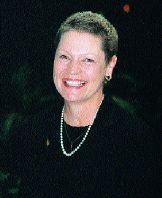 "We help students to develop the skills and attributes they will need ... while setting realistic and achievable goals."
--Cheryl Koch,
independent consultant and trainer at the School for Producer Development
Koch brings to the classroom more than 20 years of involvement in the insurance industry, comprising agency, consulting, and teaching experience. She owns a Lincoln, California-based agency management, consulting and training company called Agency Management Resource Group, and over time has earned numerous designations, including a CPCU and CIC. She is among the highly respected national faculty from which The National Alliance draws to staff its educational programs.
The School for Producer Development, one of several insurance educational programs created and conducted by The National Alliance for Insurance Education & Research, was conceived by the organization in 1998, as more and more insurers dissolved their producer schools. To date, approximately 350 people have attended six sessions of the School since its introduction in 2000--two of which have been sponsored by Chubb. At least three Schools are slated for 2003, at locations in San Francisco (Burlingame); Plymouth, Massachusetts; and Dallas.
Toll explains that the three-week course is geared to producers new to the industry. This is affirmed by a quick poll of the student population at the Chubb headquarters, which reveals that more than 90% of the attendees have been selling insurance for less than one year. Over the three weeks the group is together, they will study technical topics covering a variety of commercial coverages, including property, inland marine, crime, workers compensation, BOP policies, professional liability, and employment practices liability. They will also test their product knowledge by working through hypothetical case studies. Additionally, they will hone their selling skills through the "Dynamics of Selling" section which comprises a significant chunk of the three-week program, and through role plays that are intermittently woven into the course.
Ultimately, the students' grasp of the information being delivered is assessed through five multiple choice examinations with their final grade reflecting these results, as well as their level of participation. Each student, says Toll, must earn a minimum average grade of 70% to receive a diploma, which is awarded at a graduation luncheon at the end of the School.
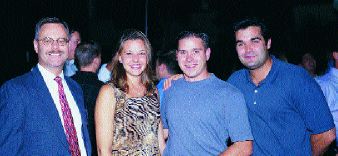
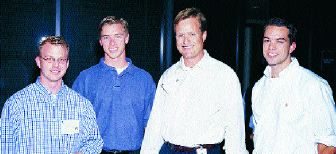
A unique aspect of the School for Producer Development, says Toll, is that while it delivers a wide range of technical commercial coverage information, it also focuses heavily on sales training and strategies. This combination of both technical and sales training is intended to drastically shorten the novice producer's learning curve.
"There is no other way to fast track them (new producers) into production other than by immersing them into a learning situation such as this," says Koch. "We help students to develop the skills and attributes they will need to master to do what they will be asked to do in the short term, while setting realistic and achievable goals," she continues.
"The course is rigorous," adds Toll. The ultimate goal? "We want to return to the agency a street-ready person who can immediately go out onto Main Street USA and begin selling to different businesses."
Timothy Snyder, a sales associate at Tanner Companies, Inc., in Pleasanton, California, has been in the business since he graduated from St. Mary's College of California in May with a degree in communications. A resume submitted to his college recruiting office eventually found its way to the large P-C agency and Snyder is embarking on a career that he looks to with great promise.
Now in the second week of the School, Snyder says the program "has exceeded my expectations." While he came to the class expecting a heavy dose of technical information, Snyder has been pleasantly surprised by the attention paid equally to sales training and problem solving. He is also impressed with the caliber of instructors, virtually all of whom have real-life agency experience to share with the group. As Snyder points out, "You can learn a lot from books, but I really like the fact that I'm receiving education by professionals with industry experience."
Kim Spangenberg, a producer/account executive with Johnson Kendell & Johnson, a large agency based in Newton, Pennsylvania, knew several years ago that she would pursue a career in insurance. Having interned at several agencies while at LaSalle University, insurance seemed like a logical fit as she pursued a B.S. degree in marketing and finance.
The School of Producer Development, says Spangenberg, has helped give her a sense of "focus," putting together in a short period of time key technical and sales information that most novice agents take much longer to amass. Like Snyder, she is also impressed with the sales training, observing that while technical knowledge is critical, the act of selling insurance is still a person-to-person transaction. "You will eventually have to go out to meet people," says Spangenberg. The School, she adds, is equipping its students with the tools and confidence necessary not only to knock on the door, but to close the sale.
It is progress--not perfection--that the School for Producer Development seeks to achieve. As Toll points out, the goal of the School is to introduce its students to a broad array of technical information--ideally helping them to focus on areas they might want to pursue and prompting them to learn more. Equally important, continues Toll, is the role the school plays in "developing a sales culture," building solid sales strategies and tools to monitor success that the producer can bring back to the agency.
To help achieve this latter goal, The National Alliance has created a mentoring program to support producers after they graduate from the School. Introduced at a School last June in Tallahassee, but offered to all former students, the mentoring program asks participants to set production goals and monitors their success through the producer's weekly production reports. Also, participants and their managers receive a monthly report prepared by The National Alliance which compares the producers' performance with their stated goals, as well as their performance against those of other students in the class.
The mentoring program, explains Toll, is optional, although most are eager to test the skills they've learned and to assess their effectiveness through ongoing numerical reports. Additionally, Chubb has expanded the mentoring program by introducing participants to a local Chubb mentor, and by offering them access to both a national sales coach and live Web casts addressing timely industry topics.
"We're trying to build a bridge back to the agency," says Toll, who stresses that the producers' long-term success depends, in part, on the level of support they continue to receive.
At the end of three weeks, students leave the friends they've made to return to their agencies. Many have just begun their careers, while others have had other careers but have recently made the switch to insurance. Yet while each student brings to the School for Producer Development a different background and perhaps a different reason for attending, they all leave with a common experience. The School, says Toll, "is uplifting--it's an attitude-changing time," and one intended to leave a long-lasting impression not only on the students, but on the industry they'll serve. *
Photography by Jeff Robbins
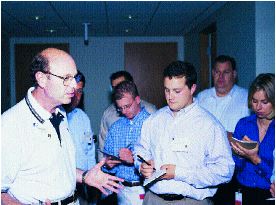
 Role playing is part of the three-week School's hands-on training. In this instance, the class is given a hypothetical transaction to consider--a case study involving the sale of commercial insurance products to the executive director of a YMCA. The class is divided into three groups--producers, buyers, and observers.
The producers move to a different location where they are prepped for the appointment (top photo), while the buyers and observers are given additional information that may be key to the producer's ability to make the sale. Fifteen minutes later, the class comes together in the groups of three and the "diagnostic appointment" begins.
In one group (lower photo), Lori Wodicka plays the role of agent, asking questions of buyer David Hearns. He deliberately stonewalls some of her inquiries, testing her resolve to dig deeper. Observer Michael Hayes tells the young producer to "be assertive--cut to the bone." He offers encouragement, assuring her "you're doing great," and reminding her about the age-old sales technique to "appeal to the buyer's emotions."
At one point, an unanticipated answer results in silence, with Wodicka unsure how to proceed. The three role players look at each other for a short while and then begin to laugh. "I still have a long way to go," says Wodicka with a combination of frustration and humor. Yet she is quick to recall her first role play from the week before, acknowledging, "I'm definitely getting better."
For more information:
The National Alliance for Insurance Education & Research
Web site: www.scic.com