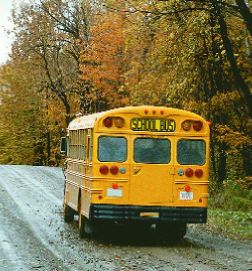
 Field trips provide wonderful opportunities for learning.... [But] with every field trip comes a liability potential.
CLASSIFYING RISK
By Linda D. Ferguson, CPCU
Field trips create memories -- and exposures
Field trips provide wonderful opportunities for learning.... [But] with every field trip comes a liability potential.
School field trips conjure up all sorts of memories--keyed-up children, long-suffering teachers, curious parents. They provide wonderful opportunities for learning, as well as wonderful incentives for good behavior. The threat of losing a field trip opportunity has caused many a child's behavior to turn around.
As a parent, I have written my name on every consent form that has come my way. In addition, I have volunteered to be a chaperone on more than a few trips. We have taken excursions to the local nature highlights, spent the night at zoos, and have taken trips to larger communities that involved weekend and longer stays. I have some great sleep-deprived memories.
Looking at these situations from an insurance standpoint, many questions arise. Is there coverage and, if so, how are the coverages classified and are any special endorsements required to make sure coverage is in place? As a chaperone, am I covered for my actions? With every field trip comes a liability potential. Several groups must address this potential:
1. The school
2. The travel agency that makes the arrangements
3. The bus company that provides the transportation
4. Restaurants
5. Hotels and motels
6. The final destination or activity area
1. The School. Because the schools are in charge, they will bear first responsibility for any injured child. There are many school classifications, but all have one thing in common--the footnotes require the attachment of form CG 22 71 - Colleges or Schools. The footnotes for the various classifications do not refer in any way to field trips or activities in or around the schools. Therefore, the field trips are covered since there is no limitation as to location or even activities.
The Colleges and Schools endorsement is a common thread, which needs to be reviewed for restrictions and extensions. While there are a number of parts to the endorsement, the one aspect that is most applicable to field trips is the revision to the aircraft, auto or watercraft exclusion. It is changed only in regard to the transportation of students and states that if a for-hire mode of transportation is used, there is no coverage for the students under the school's liability policy. Therefore, when students step onto a bus to head to Washington, D.C., the liability coverage for the school stops until they step off the bus.
What about the chaperones? The school provides coverage for them as insureds because they are volunteers. A commercial general liability policy considers volunteers as insureds in much the same way that employees are considered insured. Schools need to select chaperones/ supervisors very carefully because although there is coverage, there are also exclusions, especially relating to abuse and molestation.
2. The travel agency. Most field trips are arranged with and through a travel agency if the trip involves activities that will take place out of the area. The travel agency tours code - 49333 - should be used. This code is based on per 1,000 passenger days and is used by the agency that arranged the lodging, travel and other accommodations for group tours.
3. The bus company. The bus company is responsible for the loading, transporting and unloading of students and their belongings. All of these functions are covered under the auto policy, so there is no need for a separate general liability policy. However, if the bus company or any of its employees deal with the students away from the bus, there is a need for general liability coverage. Because of the traveling situation, the drivers may interact with students away from the bus. If a liability situation should occur, there would not be coverage unless the bus company had a commercial general liability policy. The appropriate classification would be bus terminals - 41210.
4. Restaurants. There are restaurants that cater to field trip crowds, and some of those become magnets for field trip groups because of their accommodations. Any restaurant that caters to crowds of children who are not accompanied by their parents must be aware of safety concerns regarding the children and also the havoc that students can create. Security measures should be in place for the possibility of missing children and there should be cleanup crews for the inevitable spills. Parking lots should be well lighted and large enough to accommodate buses. Any of the many restaurant classifications can be used, but the most common will be 16901 - Restaurants - with no sale of alcoholic beverages - without table service with seating.
5. Hotels and motels. Hotels that work with a field trip tour agency must be aware of the added responsibility of children without parents. Any swimming pool should have lifeguards on duty. After hours, the pool should be closed in such a way that it cannot be easily reopened by a group of curious youngsters. There should be rules on the number of children per room plus a minimum number of adults per children rule. The numbers could change based on the age of the children, but guidelines should be in place unless the hotel wants to undertake the role of chaperone. The classification that will be used is one of the Hotel Classes of 45190, 45191, 45192, or 45193.
6. The final destination. When a location allows field trips, it must be ready and capable of dealing with the hordes of children who will arrive. There is no special code for field trips and there are no footnotes that state that field trips are or are not covered. However, it is critical that any location that invites field trips or advertises educational opportunities for children be prepared and be designed for safety. Any activity should be age appropriate and have adequate supervision.
My son recently returned from his latest field trip. He ate at 12 different restaurants, slept in two different hotels and visited three different activity areas. He is exhausted but happy. The trip went well. Experiences and memories tucked in his mind will never be forgotten, and friendships have been forged and strengthened. Another field trip has met its objectives. *
The author
Linda D. Ferguson, CPCU, is Vice President, Technical & Educational Products Division of The Rough Notes Company. She has 30 years of underwriting experience with national commercial lines carriers. She can be reached at lindaf@roughnotes.com.