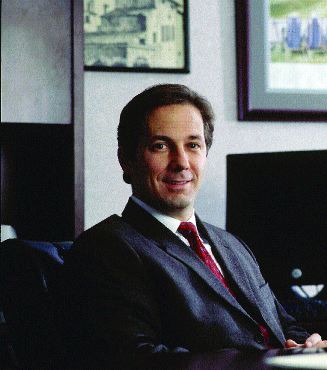
Nicholas Cortezi reflects on state of the industry
By Phil Zinkewicz
NAPSLO's new president is Nicholas D. Cortezi, who is also chief executive officer of All Risks, Ltd.
The tragedy of September 11, the corporate scandals of Enron, ImClone and WorldCom, and the pitiful performance of the equities markets have all served to place the excess and surplus lines market squarely into the spotlight. For more than a decade--beginning in the late '80s and through the 1990s--the standard insurance marketplace behaved like a greedy child, not realizing that eating too much ice cream, potato chips and pizza would result in serious bloating.
Dazzled by the lure of potential investment gains, property/casualty insurers simply forgot they were in the insurance business. Ready to take on all risks, despite their volatility, insurers kept their eyes only on the investment rewards that premium dollars would generate. Consequently, risks and exposures that previously had been the province of the excess and surplus lines market were retained in the standard market. And, now we are seeing the results.
By the end of the 1990s, insurers had begun feeling the pains of overindulgence. By then, it became apparent that high-tech stocks were seriously overvalued and the stock market started on its downward spiral. Concerned that investment dollars might not be as plentiful as they once were, the property/casualty insurance marketplace began to harden a bit, but only in particular lines. Insurers began anxiously looking around for those underwriting pens that they had misplaced for so many years. Then came September 11, 2001. Reinsurers, hit the hardest by the losses from that horrific event, raised rates dramatically and tightened terms and conditions. The reinsurers' actions did not just filter down to the primary insurance company arena--they crashed down with an impact that has brought about one of the hardest insurance markets ever.
If that weren't enough, the scandals and disgraces of the corporate world were then laid bare for the entire world to see. Words like "transparency" and "corporate governance" moved into the general vernacular. With all the uncertainties brought about by these events, the standard insurance market had to pull in the reins, which it did.
As a result, the excess and surplus lines marketplace is once again fulfilling its traditional role as the "safety valve" of the property/casualty insurance industry. The surplus lines market has always played a valuable role in providing insurance for hard-to-place risks. It acts as a complement to the standard market, insuring those risks that would otherwise not be protected. But in the soft market years of the '80s and '90s, there were very few hard-to-place risks in the eyes of the standard insurance industry.
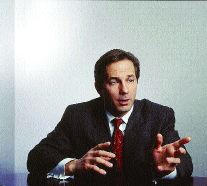 "It is a positive thing that the risks that should not have been in the standard market are coming back to surplus lines--everything from property to casualty to umbrella. That shows that carriers are now using better judgment. This is not a capacity-driven market. It is a commonsense market."
-- Nicholas D. Cortezi, NAPSLO President
Today, not only are risks traditionally considered volatile, moving back into excess and surplus lines, but the admitted market is cutting loose some "gray area" business which sits between true E&S lines and standard lines. That's the view of Nicholas D. Cortezi, chief executive officer of All Risks, Ltd., a national wholesale broker/MGA with seven offices and products distributed nationwide.
Cortezi became president of the National Association of Professional Surplus Lines Offices (NAPSLO) at the association's annual meeting in October 2002. "There appears to be a lack of consistency in the standard marketplace," he says. "Sporadically, I am seeing risks coming into the surplus lines market that haven't traditionally belonged. Nevertheless, it is a positive thing that the risks that should not have been in the standard market are coming back to surplus lines--everything from property to casualty to umbrella. That shows that carriers are now using better judgment. This is not a capacity-driven market. It is a commonsense market. Premiums are rising in the professional liability and management liability marketplace primarily because of loss experience. In the cases of medical malpractice and D&O for public companies, the results have been disastrous."
As Cortezi takes the helm of NAPSLO, he does so with an impressive string of credits. He received a bachelor's degree in international relations from Johns Hopkins University and a diploma from the Johns Hopkins School of International Studies in Bologna, Italy. He attended Lloyd's overseas school in 1992. Cortezi has also served on the boards of the Independent Insurance Agents of Baltimore and Maryland. He joined the NAPSLO Board of Directors in 1995, was elected an officer in 1999, and has served as treasurer, secretary and vice president.
According to Cortezi, the last NAPSLO annual meeting was a tremendous success. "It was a premier meeting of the excess and surplus lines industry," he says. "There were more than 2,500 registered attendees. Usually, our annual meetings average about 2,100 registered attendees. That shows that there is a terrific desire and demand on the part of our members to network. It is a rapidly changing insurance market out there. Our members feel more than ever before the need to communicate with each other and gauge market developments.
"In addition," continues Cortezi, "the educational portion of our program was superb. Discussions centered on the changing marketplace, international affairs, a financial review of the marketplace, etc. Remember, we plan our annuals five years in advance. I was astonished to see how right on target, how relevant the topics were. And all the sessions were extremely well attended," he says.
Asked what is on the NAPSLO agenda for the coming year, now that he is president, Cortezi said that, first and foremost, NAPSLO will continue to monitor state insurance department developments with regard to agents' licensing and to communicate those developments to its members. "In addition, we will focus even harder on defending the concept of freedom from rate and form filings for the excess and surplus lines industry," he says. "Only that allows us to continue as a safety valve for the insurance industry. Also, we will be looking to assist local efforts in New Jersey to convince the state to remove the prior approval law that applies to the E&S marketplace. New Jersey is the only state that has such a law," he says.
On the issue of federal vs. state regulation, Cortezi says that everyone agrees that there is a need for simplification of the licensing and filing processes. "There must be a simplification and consistency of these laws across state lines, or the federal government will take over the task. While the provisions of state insurance departments may do enough right now to forestall NARAB, they really do not adequately address the issue of uniformity."
On the international front, Cortezi says that, in terms of the excess and surplus lines marketplace, there was a bit of a falling off in terms of capacity coming into the United States from the London market last year, but that things seem to be improving. "It was a bit better this year and, in the next year or two, I think the U.K. marketplace will play an increasing role in the U.S. insurance marketplace. With new reforms at Lloyd's of London and corporate capital dominating the marketplace, I think Lloyd's is emerging once more as a strong player in the international insurance arena." *