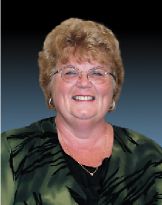
 Sharon Hall, Vice President of Personal Lines Underwriting Operations, Grange Mutual Insurance Company
Panelists at NAMIC meeting explain process
for monitoring their agency forces
By Dave Willis
Experts say the key to building strong relationships with clients and prospects is knowing what drives them. Get into their heads. Know what their pressure points are. The same holds true in dealings with carriers. Achieving solid relationships with them requires knowing what they want, understanding their perspective and getting into their minds.
Agents can get a glimpse of what goes on in a carrier's mind, thanks to information shared by company executives at a panel session that took place at the National Association of Mutual Insurance Companies (NAMIC) Annual Convention in New Orleans in late September. NAMIC's 1,300 member companies underwrite some 40%--or nearly $125 billion--of the property/casualty insurance premium in the United States. Members include four of the seven largest P&C carriers, as well as regional and national P&C insurers, and hundreds of farm mutual insurance companies. A few NAMIC member companies deal exclusively through captive agents, but most work with independent agents.
Importance of agency profitability
Sharon Hall, Vice President of Personal Lines Underwriting Operations, Grange Mutual Insurance Company
Company executives who took part in the session, titled "Focus on Agent Profitability," shared why companies care about making sure agents do well. Sharon Hall, vice president of personal lines underwriting operations at Grange Mutual Insurance Company, Columbus, Ohio, who moderated the panel, explained, "We licensed these folks, and if we can find a way to help them with profitability, it's in our best interest to do so as an industry."
Panelist Doug Albohn, assistant vice president in Grange Mutual's marketing operation, echoed Hall's thoughts and shared his passion for helping agents stay profitable. "When carriers terminate agents for poor performance, three bad things happen," he said. "The first is the agent has to waste time re-marketing all of his clients and placing them with other carriers. They wind up allocating resources that could be better spent elsewhere.
"From the company side, it's troublesome because we've spent a lot of money acquiring that book of business; and when you cancel an agency, it has all gone out the door," he said. "The third thing really bothers me because it gives the industry a black eye. When a policyholder gets a cancellation notice from the insurance company, it's a personal thing. Most of them have not had a problem in the past."
Gary Ford, who is in charge of research and planning for Shelter Mutual Insurance Company, Columbia, Missouri, says profitability for his company's captive agents is critical, since an unprofitable book means an unprofitable agency overall. Shelter works with 1,300 agents in 13 states and ranks in the top 25 or so of personal lines carriers, Ford said. "When we discuss profitability, we are actually working to keep our agencies in business, instead of just moving a specific book to profitability," he said. "We use a carrot-and-stick approach." Shelter works with agents on an annual production program, combining incentives, such as commission bonuses and award travel, to recognize good performance.
Definitions of performance
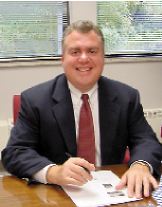 Joel Brown,
Resident Vice President
State Auto Insurance
Joel Brown, resident vice president at State Auto Insurance, which writes through 3,500 independent agencies in 16 Midwest and Eastern states, said his firm uses a matrix in assessing how well an agency is doing. "We determine agency profitability by, first of all, establishing a permissible loss ratio for every line of business in every state," he explained. "Then we take it one step further and develop a permissible loss ratio for each agency. We do that by taking into account the mix of business within that agency. Obviously an agency that writes a higher percentage of personal lines with us would have a higher permissible loss ratio, since that business is more automated and can be written and serviced more efficiently. An agency that has a predominance of commercial lines with us would have a lower permissible loss ratio, since that type of business is more often manually intensive.
"When you are looking to assess an agency and its profitability, it's important to view a trend or pattern within that agency's book of business," he added. "The key component is the importance of analyzing the individual book of business, and the losses within it. When evaluating an agency, you have to be careful not to have a preconceived notion regarding characteristics of that agency book. Go in with an open mind. Look at every possible characteristic within that agency, compared to the company profile and the state profile, to see what may be the root cause of that agency's unprofitability," Brown told fellow carriers in the audience.
Insights into causes of unprofitability
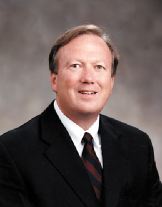 Steve Nunan,
Vice President of Underwriting
Pekin Insurance Company
Steve Nunan, vice president of underwriting at Pekin Insurance Company, an independent agency company in Pekin, Illinois, which writes in four Midwestern states, says a few factors most commonly contribute to poor agency results. "Poor risk selection on an agency's part is one factor," he said. "When it gets down to it, no matter how good of a job a line underwriter does trying to underwrite a risk, he's just looking at a piece of paper in front of him and the information on it. We hope the agency knows something about the applicant at the time of the application. All members of the agency, from the top all the way down to the clerical, should know the importance of risk selection at the time of the sale.
"Quality of business is another factor," Nunan noted. He acknowledged that companies should play a role in boosting business quality. "It's the company's responsibility to communicate to the agency what they consider to be good quality business and profitable business for their company," he said. "Sometimes what's profitable for one company is not profitable for another. Our company, for instance, puts an emphasis on supported business. Also, we pay a lot of attention to the age of the policyholder. As we've tracked it through the years, age is a profitability factor for drivers of autos, but we're seeing an even stronger relationship among home owners."
Nunan added that a carrier's standing within an agency and a lack of premium volume also play into what kind of results an agency generates. "For instance, small premium volumes won't allow an agency to absorb storm losses that we've seen so often in the last four or five years, especially in the Midwest," he said. "It can skew loss ratios for three to five years, if the volume is not there."
Walk softly and carry a big stick: How carriers rehab poor performers
 Doug Albohn,
Assistant Vice President/Marketing
Grange Mutual Insurance Company
Albohn said his company tries to head off problems by, as he says it, "establishing a culture of profitability." The firm seeks to talk about profitability well before an agency might need rehabilitation, he said. But it's not just agency principals they focus on. "CSRs, the front-line people in an agency, often are responsible for a great deal of business that comes in the door," Albohn said. "They need to be thinking, 'Is this client going to make us money? Are we betting the franchise when we write this piece of business? Are we qualifying it well?'"
Nunan says Pekin places troubled agencies on what the company calls an alert program. "Some of the actions include a complete re-underwriting," he said. "That means running inspection reports, updated motor vehicle and credit reports, and looking at any large losses in great detail. One of the newest things we've come out with is putting restrictions on about 10% of our agency force, requiring that for them to submit homeowners business to us, they also must submit auto. On a more positive note, like other companies, we have a service award and contingency bonus eligibility, which provide a positive financial incentive to the agency."
Shelter's Ford says, besides his company's incentive programs, a careful, line-by-line review and action plan is used to return agency business to profitability. When a line of business falls to a certain level, an intensive review takes place. "Each agent must contact every insured, inspect the policy and answer a series of questions for each policy," he says. "It means a re-underwriting for the entire line of business. If that doesn't work, we bring out the big stick. Agents are required to develop and implement their own plan, which we review, on what they are going to do to bring their agency back into profit. It's their plan because it's their company." Quarterly reviews of results vs. plan are used to track progress.
Brown said that when State Auto compares an individual agency's results to the profiles it maintains on all its agencies, it can see what segments in an agency book are over-represented and unprofitable vs. those other segments that need to be developed further. "As a company, we don't believe in shutting an agency down during rehabilitation," he said. "We believe in helping that agent grow in those areas we helped them identify as profitable segments within their book of business. That helps them reshape their book of business and the complexion of that book of business, and does not alienate them during that period of time when they cannot submit new business."
Success builds long-term partnerships
Nunan explained that his firm wants agencies to succeed. "The last thing Pekin wants to do is lose an agency," he said. "It's our goal, and an underwriter's job, to promote profitable relationships with our agency partners. Independent agencies are key to our success, and we are committed to doing everything we can to promote that profitability and continue our relationship with our agency force." *
The author
Dave Willis is a professional writer and communication consultant based in New Hampshire. He covers insurance, risk management, technology and marketing topics for a variety of publications. Willis has led editorial and communications initiatives for a multinational multiline carrier, a global insurance professional society and an industry-leading Internet community serving property and casualty insurance professionals. Willis can be reached at (603) 444-1388 or DWillisNH@Prodigy.Net.
"Our company, for instance, puts an emphasis on supported business. Also, we pay a lot of attention to the age of the policyholder. As we've tracked it through the years, age is a profitability factor for drivers of autos, but we're seeing an even stronger relationship among home owners."
--Steve Nunan, Vice President of Underwriting, Pekin Insurance Company