A softening market prepares
for artificial intelligence
By Joseph S. Harrington, CPCU
Do you remember that huge surge in E&O suits against agents and brokers in the wake of COVID-19? The one where business owners went after producers for failing to recommend coverage for losses due to communicable disease?
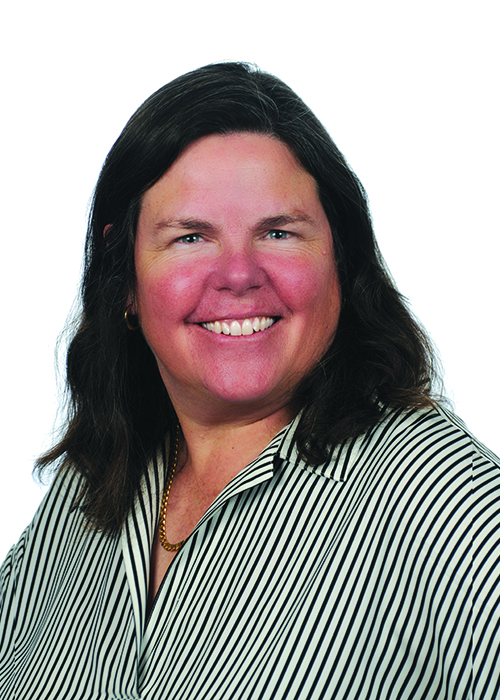
“Professional liability coverage in general is pretty soft. It’s a function of too much capacity. Today there are 70 to 80 professional liability markets (carriers).”
—Lisa Doherty
President and CEO
Business Risk Partners
Of course you don’t remember because, for the most part, it didn’t happen.
During and shortly after the pandemic, professional liability insurers feared that commercial insureds, rebuffed in their attempts to collect business income coverage for government-ordered lockdowns, would seek compensation from their insurance agents and brokers.
As carriers braced for the potential impact, the market for agent and broker E&O coverage hardened. But the onslaught of litigation never came, according to Lisa Doherty, president and CEO of Business Risk Partners (BRP), an MGA focused on professional and management liability.
“Government bailouts helped fill the revenue gap,” Doherty says. Now, with carriers convinced the threat has passed, producers can enjoy a softening market for E&O coverage.
Capacity and competition
“Professional liability coverage in general is pretty soft,” Doherty says. “It’s a function of too much capacity. Today there are 70 to 80 professional liability markets (carriers).”
“The market [for E&O coverage] is extremely soft,” adds Doherty’s colleague Karen Lombardo, BRP’s managing director. After years of price hikes and underwriting retrenchment, Lombardo sees carriers expanding limits and coverage in ways that would have seemed “crazy” not long ago. In a bittersweet turn of events, some carriers who provided essential layers of coverage in the hard market now find their policies not being renewed.
The expanded market capacity and underwriting appetite are a “positive” for Rockwood Programs, Inc., according to Mark Lann, Rockwood’s executive vice president. Among the product features Lann and others see re-emerging are:
- “First dollar” defense cost coverage, wherein the insurer pays defense costs from the inception of a claim, before a deductible has been paid
- Defense cost coverage “outside policy limits,” which preserves the basic policy limit for payment of damages
- Aggregate, or “vanishing” deductibles; a single deductible applied to all claims during a policy period, as opposed to a per-occurrence deductible for every claim
“Carriers are more willing to compete, and that’s allowed us to enhance our independent agent and broker program with new features,” Lann says, adding that “competition for small accounts is as competitive as I’ve ever seen. Carriers are actively chasing that business, and pricing reflects it.”
Of course, “hard” and “soft” are relative terms that rely on the beholder, and not everyone shares Lann’s and BRP’s assessment of today’s agent E&O market.
Mark Angelucci, senior vice president of specialty lines for Utica National Insurance Group, finds pricing to be “consistent” among a “limited number” of agent E&O carriers, particularly considering that few insurers, in his estimation, offer truly comprehensive E&O coverage supported by high-quality loss control and claims handling.
“There’s some competition for high-quality accounts,” he says. “Underwriters are looking for agencies with strong risk management practices and good loss experience.”
New challenges
Whatever is happening with the supply of E&O coverage, new risk exposures for agents and brokers are adding to the demand for it.
For several years now there has been a shift of coverage from admitted carriers into excess and surplus lines (E&S) markets. This increases the demands on agents and brokers.
“Non-admitted carriers do not have the same restrictions as admitted markets regarding changes in coverage,” Angelucci says. “As business placed with non-admitted carriers continues to increase, agents need to work with their wholesalers to understand coverage terms. Agents must be very thorough in reviewing E&S market placements.”
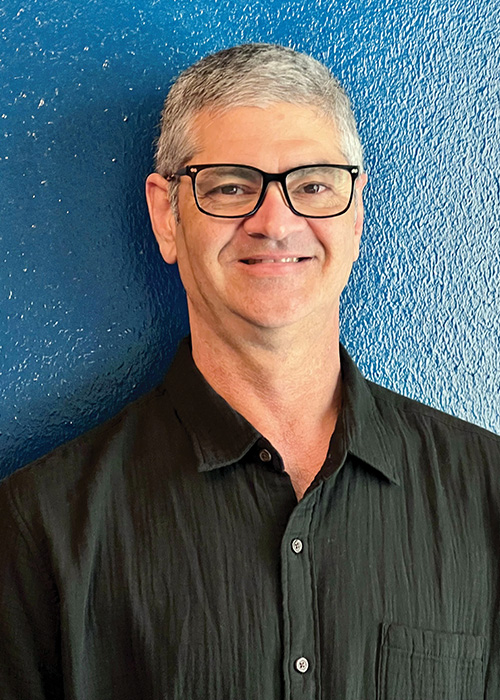
“Clients expect their agent to function as a coverage attorney regarding policy questions or whenever a claim outcome doesn’t match their expectations … reinforcing the need for proper documentation.”
—Mark Lann
Executive Vice President
Rockwood Programs
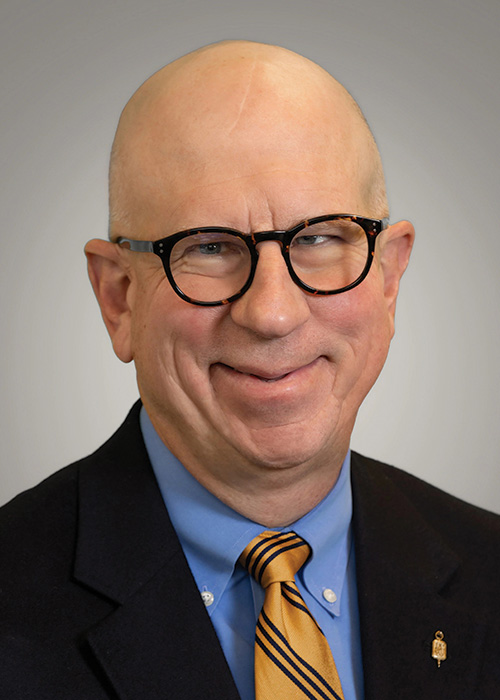
“Cyber policy forms are not standardized, so agents and brokers must exercise care in determining what is covered, what is sub-limited, and what is excluded.”
—Mark Angelucci
Senior Vice President, Specialty Lines
Utica National Insurance Group
Cyber insurance, whether written on an admitted or non-admitted basis, is also a challenge for producers, according to Angelucci. “Cyber policy forms are not standardized, so agents and brokers must exercise care in determining what is covered, what is sub-limited, and what is excluded,” he says.
Retail agents face a new type of challenge in personal lines, as distressed conditions in some regions result in accounts being shifted from carrier to carrier.
“While personal lines appear to be highly standardized, agents need to be aware that there are differences among policies,” Angelucci says. “This is especially the case with regard to sub-limits for jewelry, fine arts, and outbuildings such as sheds and garages.”
Also, he adds, “the sheer volume of personal lines business can create loss exposures for agencies.”
AI: Covered or not?
Looking forward, the limits of expanding coverage are being tested by the introduction of artificial intelligence (AI) into agency operations.
Doherty relates that “we hear clients casually say, ‘we’re going to use a virtual assistant for some tasks.’ Well, there’s a lot of potential liability (that comes) with that. [AI systems] are not always accurate. You need human intervention to make sure things are done correctly.”
For example, a rapidly growing number of agencies and brokerages are implementing AI to compare coverages provided under competing policies. The process “can be scary,” says Lombardo. “If you don’t do the extra work, if you miss an exclusion, you end up recommending something that’s not the right coverage.”
As for claims arising from the use of AI, either by agencies or their clients, there is little guidance and no consensus as to how that effects coverage under property and liability policies, including agent E&O policies.
As Lombardo summarizes it: “No one is saying [AI] is covered. No one is saying it’s excluded.”
Enduring challenges
As AI enters the scene, the principal challenges facing insurance producers continue to be what they have long been. At the top of the list, Lann says failure to recommend or procure coverages “continue to plague the industry.
“Having procedures in place for methodically quoting employment practices and cyber on every new business and renewal helps E&O insurers when defending their insureds,” he says. The same holds for standards of documentation of communications and transactions.
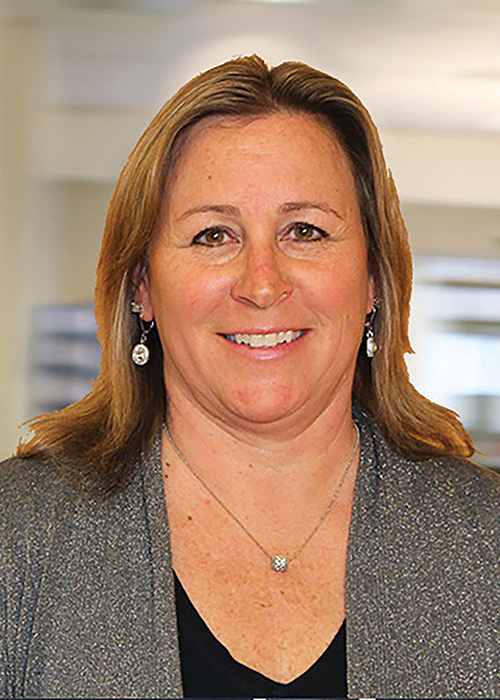
“No one is saying [artificial intelligence] is covered. No one is saying it’s excluded.”
—Karen Lombardo
Managing Director
Business Risk Partners
“Missing or incomplete documentation remains one of the most common contributors to E&O allegations,” Lann says. “We always tell agents to document, document, document. It’s the single most effective way to prevent or defend a claim.”
Also, Lann adds, “clients expect their agent to function as a coverage attorney regarding policy questions or whenever a claim outcome doesn’t match their expectations. The gap between expectations and contract language continues to drive disputes, reinforcing the need for proper documentation.”
Doherty shares that observation. “The breadth of work for an insurance agent has expanded over the past 20 years,” she says. “There are fewer and fewer ‘order taker’ exposures as agents are constantly evolving.”
Ditto for Angelucci. “Customers need the deep knowledge and solutions independent insurance agents can offer,” he says. “Attention to detail and understanding what is covered and not covered creates opportunities for high-quality agents to distinguish themselves.”
Expanding expectations are forcing agents and brokers to “think outside the box,” says Lombardo. “If you want to be a big player you have to do that.”
For more information:
Business Risk Partners
businessriskpartners.com
Rockwood Programs
rockwoodinsurance.com
Utica National Insurance Group
uticanational.com
The author
Joseph S. Harrington, CPCU, is an independent business writer specializing in property and casualty insurance coverages and operations. For 21 years, Joe was the communications director for the American Association of Insurance Services (AAIS), a P&C advisory organization. Prior to that, Joe worked in journalism and as a reporter and editor in financial services.