
A look at the technology preventing
severe non-weather water losses
By Christopher W. Cook
A few years ago, when this writer’s son was three, he was obsessed with a specific episode of Blippi. In it, the titular character finds various objects at a playground and places each individually in a glass aquarium full of water to discover which ones will sink and which will float.
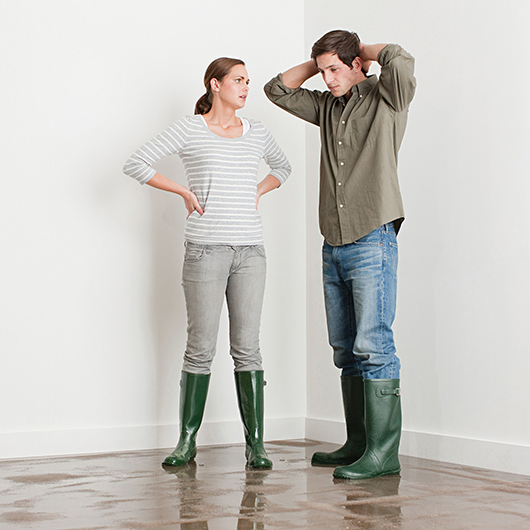
My son would duplicate this experiment in the shower, splashing water all over the bathroom floor in the process. While this mess could easily be cleaned up with towels, other non-weather water events—leaky and broken pipes, for example—can cause extreme damage to your clients’ homes. And while many of them might think “it will never happen to me,” these types of claims are quite common.
According to a 2022 report by the Insurance Information Institute, approximately one in every 60 insured homes files a claim for water damage every year. Even though storms and floods will continue to occur, data shows that non-weather water damage accounts for approximately 20% of all property insurance losses, with the average claim payout ranging from $5,000 to $15,000. Imagine if these non-weather water events could be prevented.
“It’s a common scenario: Homeowners were away for a weekend or on vacation, and they come home to find water has been running for hours, or even days, throughout their homes,” says Daniel C. Halsey, president of personal lines at The Hanover. “These losses are as catastrophic as house fires—destroying contents, valuable heirlooms and memories, and requires the family to vacate the home for months while repairs are made. Water shut-off devices prevent these catastrophic claims.”
While not new, automatic water shut-off devices (AWSOs) have been around for over a decade and the technology continues to evolve.

“Every home can benefit from water shut-off devices, and they are invaluable in secondary or seasonal homes that may be vacant for periods of time.”
—Daniel C. Halsey
President, Personal Lines
The Hanover
“Early on, the genesis of the [product] was a straight-up leak detector; they were like smoke alarms for water leaks,” says Curtis Goldsborough, president of National Insurance Inspection Services. “That was neat seven years ago, but it wasn’t even a half-baked solution because well over half of those non-weather water losses occurred when people weren’t home.”
Today, “water shut-off devices shut the water off to a property if they detect a leak,” adds Paul Vacquier, founder and CEO of Beagle Services. “There are two different types: One is sensor based and the other is flow based.”
Sensor-based devices, the earlier model of the two, have a valve installed directly on a water pipe, and it “communicates with sensors placed across the property. If water contacts one of those sensors, then the valve shuts off,” Vacquier says.
Flow-based systems, “listen to the water flowing through your pipes and can detect an anomaly, turning off the water and stopping a leak from progressing further,” adds Goldsborough. “As they became smart devices, if it detects a leak, it can send a notification to your phone and notify you even if you’re not home.”
“The insurance market has really gotten behind the flow-based water shut-off systems, because they can be more impactful to a property than sensor-based systems since, in theory, water can be flowing for days and miss touching a sensor, and you would never have a shut-off event,” Vacquier says.
“Every home can benefit from water shut-off devices, and they are invaluable in secondary or seasonal homes that may be vacant for periods of time,” says Halsey. “Non-weather water damage is one of the most common claims impacting homeowners, especially as homes get larger and have more water sources. Luckily, these claims are also the most preventable.”
As the technology involved with AWSOs advances, Goldsborough is excited for the future of the products. “In the last year, rather than being reactive, they’re being proactive,” he says, noting that the AWSO device by start-up Namara is not only monitoring for water leaks but also regulating water pressure.

“Many carriers will offer some type of premium incentive for the client to get this kind of technology, so an excellent time [to have a conversation is] at renewal time when the agent is shopping the policy to save the client money.”
—Paul Vacquier
Founder and CEO
Beagle Services
“It’s taking a holistic approach of not only monitoring and detecting leaks and shutting off the water when necessary, but it’s also actively monitoring and regulating the actual water pressure that causes the stress in the plumbing systems and in the appliances that create the leaks in the first place.
“This is especially relevant for winter freeze events,” he continues. “Most devices can detect freeze conditions and alert the homeowner, but someone still needs to physically open a faucet to drain the pipes. The newer preventative approach relieves that pressure automatically through the device itself, which is critical when properties are vacant. This is where this technology is heading.”
In the meantime, there are several firms offering AWSOs—Flo by Moen, Phyn, Leak Defense and FloLogic being some of the major players in the market. Other options include Floodstop and Namara.
“Flo by Moen and Phyn will learn the property’s water usage after watching it for a period of time, and then, once it has seen enough usage events, it will start to detect anomalies,” Vacquier says. “Leak Defense and FloLogic are threshold-based systems. They don’t learn the water usage habits of the house, but the thresholds are customized manually through a control panel or through the optional software app. They’re great for seasonal secondary properties and properties that are large with complex water usage systems.”
“Not every device is the right fit for every home; there are vendors that can help match homeowners with the best solutions for their needs,” Halsey says. “For example, Water Security Solutions chooses the right leak detection system for a home through an easy, plumber-guided questionnaire, and Beagle Services has a team of plumbers who offer personalized support to prevent damage.”
“Watchdog is a third-party monitoring service that Beagle provides,” Vacquier says. “It’s a ‘behind the scenes’ monitor, where if a client has a shut-off event or a client has a small drip that’s continuously detected, the manufacturer will send the alert to the client, and then Watchdog follows up with a helpful call to action to try to help the client resolve the issue.”
A deeper dive
So we know that AWSOs help mitigate major losses from non-weather water events, but how do they work?
“Although there are a handful of self-install options in the market now, most water shut-off devices should be installed by a licensed plumber,” says Halsey. “Not every device will work in every home, so a plumber can also help determine what type of device best fits a home’s unique needs. They are typically installed close to where water enters the home so they can monitor water usage throughout the house.”
“It’s a technical process—a ‘cut the pipe’ solution—so a DIY approach can be scary. If you’re going to make an investment in the technology, you want to make sure that it’s done right and functioning properly. It’s typically a one- or two-hour process to get it installed,” Goldsborough adds.
Vacquier notes that, from a plumbing standpoint, licensed professionals are starting to recognize and understand that the installation of an AWSO is a growing plumbing category and are becoming more comfortable with the procedure, which not only involves plumbing but also the technology aspect of positioning wires.

“Weather losses are going to occur. As an industry, we have to be focused on mitigation and building resilience into homes and structures for all the perils that we can fight against like non-weather water losses.”
—Curtis Goldsborough
President
National Insurance Inspection Services
Talking to your clients
For agents and brokers looking to discuss risk mitigation of non-weather water losses with their clients, there are several times throughout the year where a conversation about AWSOs can transpire.
“Yearly check-ins with customers are a perfect time to discuss all risks they may be facing, including non-weather water,” Halsey says. “Agents and brokers can encourage their customers to take advantage of resources offered by carriers, including discounted access to things like water shut-off devices and water sensors.”
“Many carriers will offer some type of premium incentive for the client to get this kind of technology, so an excellent time [to have a conversation is] at renewal time when the agent is shopping the policy to save the client money,” Vacquier says.
“The point of sale on new business is absolutely the best time [for a discussion on AWSOs] because you have the policyholder’s attention, and you’re establishing that relationship. [It’s a] value add, establishing yourself as a trusted advisor and a partner in terms of risk mitigation right from the get-go,” Goldsborough says.
He also suggests reaching out to clients prior to renewal and certainly after they’ve experienced a water loss. “There’s never going to be a time where a policyholder is more open to having that conversation than at the time when they’ve actually experienced a loss,” Goldsborough adds. “Most homeowners have either had some type of experience themselves or they know somebody who has had a non-weather water loss.”
While private client carriers in high-risk disaster areas like Texas, California and Florida might require the installation of an AWSO in order to obtain coverage, an “across the market” requirement may be coming in the future.
“Weather losses are going to occur,” Goldsborough says. “As an industry, we have to be focused on mitigation and building resilience into homes and structures for all the perils that we can fight against like non-weather water losses.
“This is coming down the pipe, pun intended, whether we like it or not,” he adds.
Yet, today, widespread adoption of AWSOs is far from reality.
“Our 2025 Hanover Home Report showed that only 13% of U.S. homeowners have water shut-off devices. This represents a huge opportunity for agents to help educate their customers, especially those in higher value homes that may have many water sources like second story washing machines, kitchenettes, ice makers, and bars,” Halsey says.
“There is no individual peril and potential claim that is more preventable than this one,” Goldsborough says. “These don’t have to happen; we have the technology proven and in place. It’s a matter of people realizing that this is a very real risk. There’s a high likelihood of this happening, and a small investment could prevent this from happening.”
“Industry data shows that the mitigation effectiveness of [AWSO] systems can reduce claim frequency by over 90% and decrease claims severity by over 70%,” Vacquier says. “Everybody wins when the client has a properly installed system. When you’re dealing with preventative maintenance and this kind of tech, the homeowner wins, the insurance carrier wins, and the agent wins.”
And at the end of the day, mitigation of non-weather water losses sounds like a better option than discovering whether your clients’
possessions sink or float.
For more information:
Beagle Services
beagleservices.com
The Hanover
hanover.com
National Insurance Inspection Services
nationalis.com