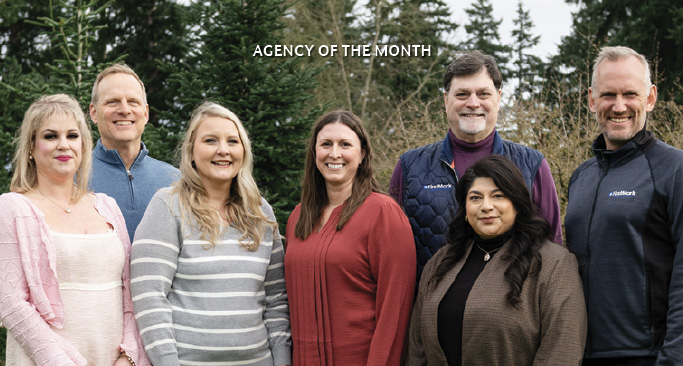
The FirstMark Insurance Group leadership team. From left: Christina Lynch, Chief Operating Officer; Dave Taylor, Principal and Chief Executive Officer; Marie Loran, Commercial Lines New Business Manager; Sarah King, Commercial Lines Client Care Manager; David McKinstry, Personal Lines Client Care Manager; Rosemary Ramirez, Private Client Group Manager; and Andrew Cowan Principal and Sales Manager.
Washington agency’s pandemic
pivot leads to redefined approach,
mindful staff focus, and commitment to care
By Dennis H. Pillsbury
Photography by Ben Johnson
When Covid hit and sent the staff at FirstMark Insurance Group home from their suburban Seattle offices, the two owners and founders—Dave Taylor, CEO, and Andrew Cowan, sales manager—decided to make the best of a bad situation. They made use of the fact that their Edmonds, Washington space was empty to remodel.
They fully expected their people would be excited to return to a really spiffed up office. But after 18 months of working from home, when the staff came back, they really weren’t. Not only was their reaction devoid of excitement, but they questioned whether they really needed to be in an office at all.
The thought was echoed by nearly everyone. All but one, in fact. “Well, I was old school,” Dave admits, “and the reaction left me feeling quite emotional and disappointed. The thought of closing the office actually left me in tears.
“But the staff had really proven that our emphasis on culture had turned the team into a family focused on success,” he adds, “and that they were members of the FirstMark family regardless of where they were working.”
The agency had not just survived during Covid but had actually grown. “And our people had earned the right to create the agency the way they wanted it to operate,” Dave says. “When we got the all-clear to return to the office, instead of returning to business as usual, we became a virtual agency.
“While it was difficult for me at the time,” he adds, “when I look back, I can’t understand why I was resistant. The pros of making the move to virtuality have so outweighed the cons.”
Dave started his insurance career with a direct writer in 1987 and ran an agency for them until he sold it in 2013. In 2011, Dave also started a software company that focused on productivity management in sales organizations. Andrew, who had an agency with the same direct writer as Dave, joined the software company and led the sales team.
As luck would have it, their largest client was Safeco, which—in addition to being a good customer—introduced them to the independent agency system. And the rest, as they say, is history.
In 2013, Dave and Andrew started FirstMark Insurance Group from scratch, working with an aggregator at first to get access to markets. “We kind of stumbled along, with both of us selling in people’s kitchens or wherever the opportunity presented itself, through most of that year,” Dave remembers.
“In 2014, we hired our first em-ployee. We now have 70 employees and gross written business of around $60 million, with 80% coming from personal lines and 20% from commercial.”
No ceiling
“One of the things that I didn’t like about the direct writing approach was the ceiling on earnings,” Andrew adds. “I really wanted a chance to succeed or fail based on what I had done, not what some large corporation had decided I needed to do.
“There’s nothing wrong with that approach,” he acknowledges. “I made a comfortable living, but I wanted more—and the decision to join Dave in the software company seemed like the opportunity to prove myself.
“Then serendipity struck when Safeco told Dave and me about the independent agency system,” Andrew recalls. “So, in two years’ time, Dave and I went from working for a large corporation to starting up and owning two businesses that had almost no assets except us.
“We both started out scrambling,” he explains, “with our role being to sell and bring some money in the door. Once we’d accomplished that and began hiring some other people to help out, Dave became CEO, because he had the ability to build the internal structure of an organization and I became the sales manager, where I work closely with agents to help guide them to achieve success and help them build their business by developing sales promotions that bring in potential customers.”
“In 2014, we hired our first employee. We now have 70
employees and gross written business of around $60 million,
with 80% coming from personal lines and 20% from commercial.”
—Dave Taylor
Principal and CEO
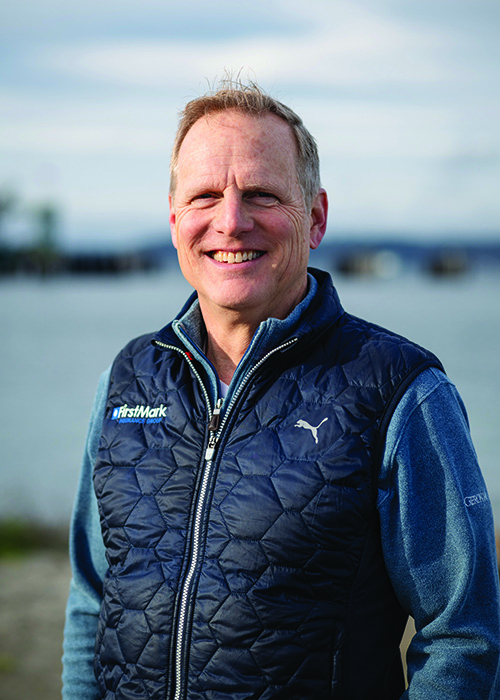
“[T]he ultimate goal that’s at the heart of our culture and is a key part of our training efforts is simple to express: We want to help 100% of the people with whom we communicate, regardless of who they are or why we are talking to them.”
—Dave Taylor
Maintaining the culture
The positives of going virtual are many, including the positive impact to profits and losses of not having to pay for office space and the opportunity to bring talented people into the FirstMark family from anywhere in the country—or “even from outside the country,” Dave adds. Among the main challenges brought about by the change are training new people and imprinting culture.
“Actually, the ultimate goal that’s at the heart of our culture and is a key part of our training efforts is simple to express: We want to help 100% of the people with whom we communicate, regardless of who they are or why we are talking to them,” Dave explains.” They may be clients or prospects or company reps or people we meet at business meetings.
“When those people happen to be prospects,” he adds, “we don’t hard sell. We offer to help and follow that with a request that they take the ‘FirstMark challenge.’ Basically, that amounts to ‘try us, you’ll like us.’
“Throughout that process, we focus on education,” Dave says. “We’re looking for people who want advice; that’s our ideal client. If they’re just looking for price, we’ll still help them in any way we can, but we may very politely suggest that they look elsewhere.”
The same FirstMark challenge is featured in the radio spots the agency started using about five years into its existence. “We worked with a local radio personality who became our spokesperson,” Dave recalls.
“As we were developing our culture,” he adds, “we determined the four principles that we expected every member of our team to emulate. They need to: 1) have a positive attitude, 2) always pursue excellence, 3) be thoughtful and kind, and 4) be confident both in themselves and in the product and agency they represent.
“If they adhere to these principles, clients and customers will recognize that they can be confident that they are properly insured and with the right team to protect them.”
Sales meetings
Andrew picks up by noting that these core principles are a key part of the sales meetings, whether they are group meetings or individual coaching sessions. “I grew up in cubicle land,” he says with a smile, “and I admit that I miss eavesdropping on the other agents—always looking to enhance my own abilities by copying those ideas or approaches that seemed to work well.
“So, we have tried to duplicate that in our meetings,” he notes. “We will listen to sales calls and provide both corrections and praise.
“In our mastermind agent meetings, which are held monthly with all our agents, we have people talk about those individuals who have really shown our agency principles in action and how that paid off,” Andrew says. “These meetings offer agents an opportunity to talk about how they do things and they help to build trust and fine-tune phrasing. They’ve provided an excellent way for our team to get to know their fellow agents and learn from them.
“We also have individual meetings, where I meet one-on-one with an agent to see how everything is going,” he says. “With our newer ‘Foundation’ agents, as we call them, I spend about three hours a week discussing their progress; I offer advice on areas where they may have missed an opportunity during a call and praise them when they came up with a great way to help the prospect agree to take the FirstMark challenge.
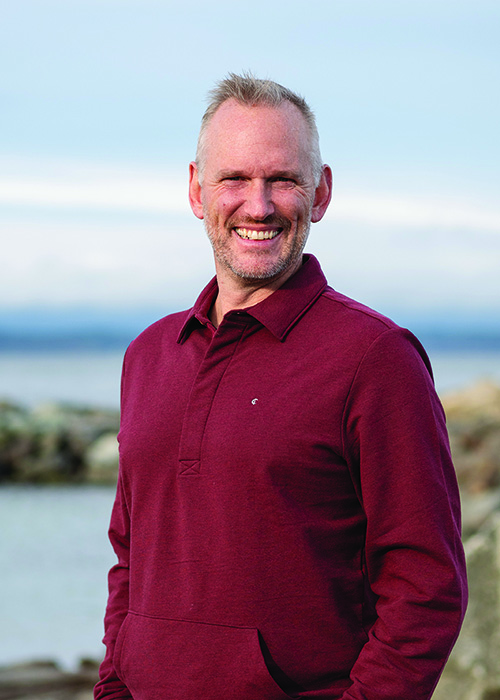
“In our mastermind agent meetings, which are held monthly with all our agents, we have people talk about those individuals who have really shown our agency’s guiding principles in action and how that paid off.”
—Andrew Cowan
Principal and Sales Manager
“In many ways, I’m in charge of fun—planning events that will bring teams together … from all across the country … [and give them] a chance to meet people that they’d only seen on Zoom meetings or conversed with in other ways.”
—Christina Lynch
Chief Operating Officer
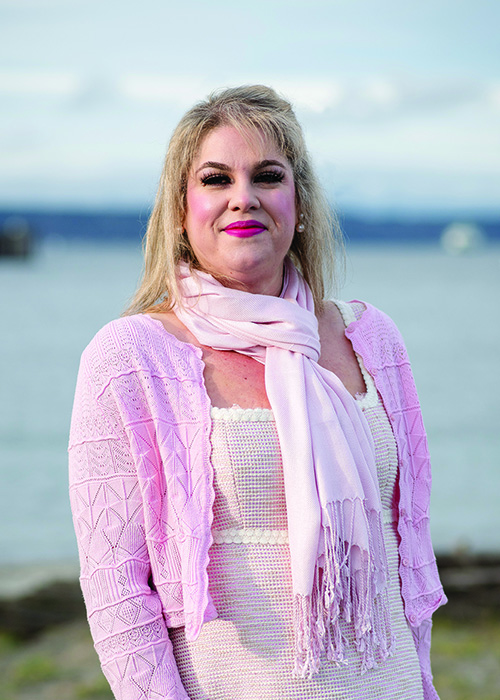
“I use biweekly check-ins with the Foundation agents and that goes up to quarterly check-ins with our more seasoned Master agents,” Andrew explains.
Dave adds that the agency focuses on the individual talents of each team member, trying to place them in a position that best utilizes those strengths. “For example, quite simply, we put those people who don’t enjoy the thought of sales, but enjoy helping people, on one of our client care teams, so they can spend most of their day doing what they love,” he explains.
“The personal lines or commercial lines client care team takes over the service once an agent passes the new client to them,” Dave says. “The client is introduced to all members of that team. All client care team members are licensed and any team member can help any client—we don’t follow the account manager model.
“We also are able to recognize people who have a talent for management, and out of that has grown our leadership team of seven individuals who get together every week to discuss where we are going and how we’re going to get there. In addition to Andrew and me, the team includes our chief operating officer, Christina Lynch, our personal lines client care manager, our private client group manager, our commercial lines client care manager, and our commercial lines sales manager.
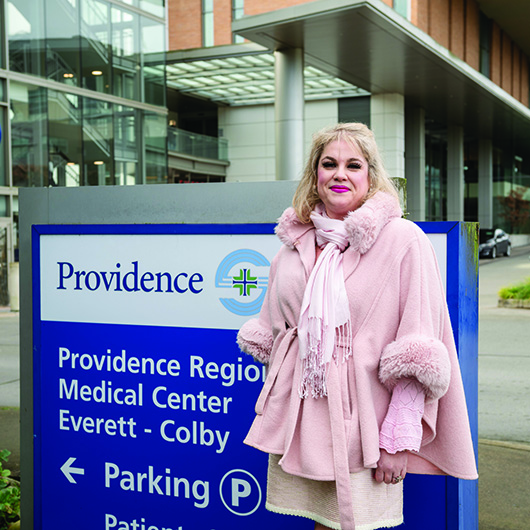
Left: Christina Lynch recently partnered with the Providence Regional Medical Center to raise heart awareness. As chief operating officer, she helps identify the agency’s charitable efforts.
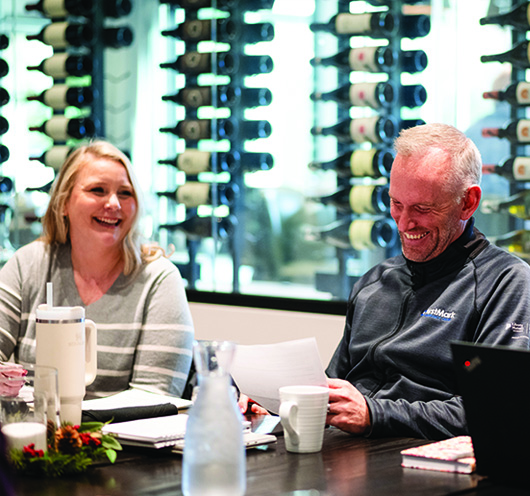
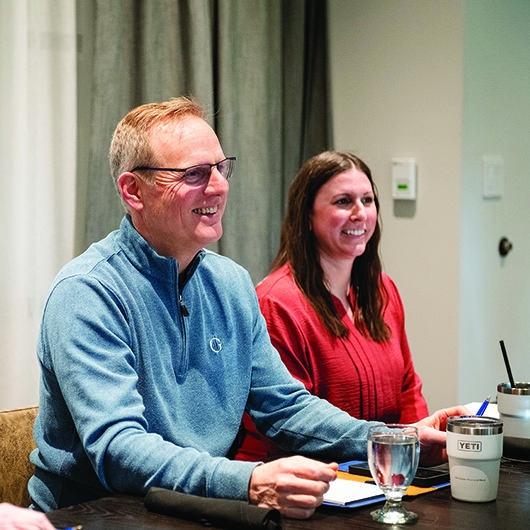
Below: No longer having a physical office space, leadership team members gather at the Everett Country Club to hold meetings.
“We are in the process of moving to EOS (Entrepreneurial Operating System, a business management framework for growth-focused companies) to bring more structure to our leadership meeting and planning,” Dave concludes.
The best job
Christina believes that she has the best job in the agency. “It’s a joy for me,” she says. “My job is to keep people happy, and what could be better than that? I’m happy to report that everything is running smoothly, despite some difficulties in some markets which are now starting to improve. Carriers in our area are once again looking to write new business.
“In many ways,” she continues ebulliently, “I’m in charge of fun—planning events that will bring teams together, including our Christmas party that brings in all of our people from all across the country. They have a chance to meet people that previously they have only seen on Zoom meetings or conversed with in other ways.
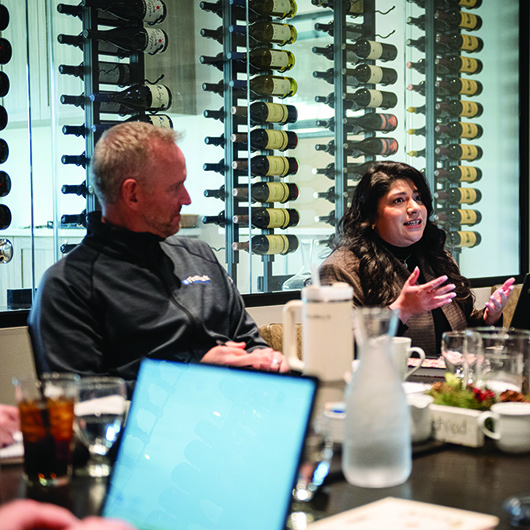
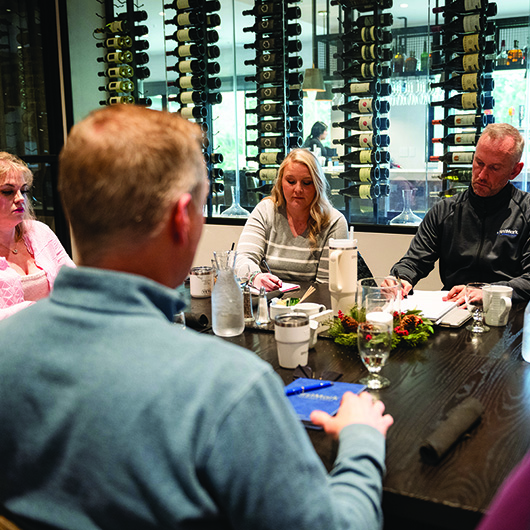
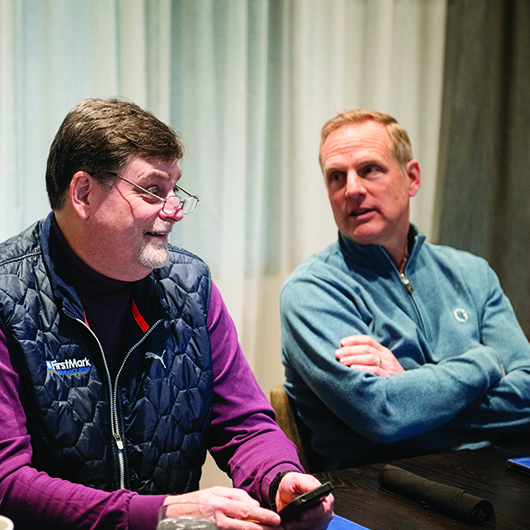
Above: The leadership team meets to discuss employee management. After COVID, the agency went virtual.
Right: Dave Taylor works at his home office overlooking Lake Washington. A former high school football coach, he displays some of his memorabilia.

“We’ve also visited pumpkin patches and gone to Mariners games and other local sporting events,” she adds.
Agency communication with clients is another part of Christina’s role. “The challenge there is to make certain that we remind them that we’re here for them, without being annoying. In addition to a welcome letter to new clients that includes the names of the people on their client care team, we also send out a quarterly newsletter, called ‘Four Topics in One Minute,’ that talks about industry trends and how these might affect their insurance.”
Christina credits peers in the business for helping her drive success. “I’ve met so many wonderful people in this industry who are willing to share what has worked for them,” she explains. “They’ve enhanced the insurance experience for me, and this has allowed me to develop ways we can enhance the insurance experience for our clients.
“Another great part of my job is finding ways to spend money on charitable efforts,” she explains. “For instance, we recently partnered with the Providence Regional Medical Center, working on heart awareness. Also, a fellow employee and I donated 800 pounds of food to our local food bank that was matched by FirstMark.”
Rough Notes is pleased to recognize FirstMark Insurance Group as our Agency of the Month. They have proven that, with strong technology, an agency can be virtual and still maintain relationships with clients, centers of influence, company reps, and people throughout the industry. In fact, it is how they find talent across the country through recommendations from those relationships.
The author
Dennis Pillsbury is a Virginia-based freelance insurance writer.