No one can say for sure
Occasionally, states reference suggestions made by the NAIC
in statute or rule; however, asserting that those references equate
with creating an instrumentality strains credulity beyond the breaking point.
By Kevin P. Hennosy
The month of March is on the cusp of spring, which in most responsible and honorable nonprofit organizations means gathering the data needed to complete the annual Form 990 filing with the Internal Revenue Service (IRS).
The official name of Form 990 is “Return of Organization Exempt from Income Tax.” It only makes sense in the public policy realm that the IRS would want to gather the data usually reported on a federal tax return on another platform.
Of course, not all nonprofit organizations file a Form 990, such as nonprofit organizations with small budgets. Then, there are others—such as a nonprofit organization that in a recent year projected “$178.8 million in revenues and
$186.3 million in expenses” that would not fall into that small budget category.
We may assume that tax authorities would consider such a rogue organization in a state of rebellion against established laws, rules, and norms.
In this case, the rogue organization imagines that it is an instrumentality of the states; therefore, they say, filing a form with a federal agency would be unconstitutional.
In support of this tall tale, the rogue organization created legend and lore to explain their special status that keeps any of the organization’s leadership from putting their name on a line next to the words “subject to perjury.”
Certainly, one could speculate that the organization has something to hide. It is a pretense that makes the organization look guilty of something.
In The Talented Mr. Ripley, author Patricia Highsmith wrote of her title character: “His stories were good because he imagined them intensely, so intensely that he came to believe them.”
A confidence man like the character Tom Ripley begins his nefarious activities by convincing himself of his pure intentions. Only then can the successful con artist begin to persuade his “marks” to believe his tale as both true and certain.
Which brings this column back to familiar territory, my good friends at the National Association of Insurance Commissioners (NAIC). More specifically, the association’s intensely imagined story that it is an “instrumentality of the states.”
Traits and tests
It is important to discuss what an instrumentality of the state(s) is before we discuss why the NAIC wants to portray one.
One or more state governments may construct such an instrumentality to serve the purpose of conducting the state’s business in a limited area.
State instrumentalities wield governmental
powers and privileges, such as taxation and sovereign immunity. Importantly, the instruments remain under the control and supervision of the creating jurisdictions.
Authorities, beginning with the IRS, establish tests for what is a state instrumentality and what is not. According to information obtained on the IRS website, before deciding whether an organization is a state instrumentality, the tax agency examines the record of the entity’s creation by a state, the ongoing control of the entity by one or more states, and financial history of the entity.
Just serving the public interest or playing a public role is not enough. Entities that exhibit those characteristics have a good claim on a 501(c)(3) opinion letter and nonprofit status, but they also need to file an annual Form 990 report with the IRS.
Pedigree
Which brings us back to the NAIC.
No state, nor states, ever created the NAIC in law or executive order. Occasionally, states reference suggestions made by the NAIC in statute or rule; however, asserting that those references equate with creating an instrumentality strains credulity beyond the breaking point.
Furthermore, and based on many years of observation, any time that the NAIC’s leadership is not near a keyboard or a microphone, concepts like “the public interest” or “consumer protection” seem to drift into the vapid windmills of their minds.
We may describe the NAIC’s pedigree as “shadowy,” at best. We know the line emerged from the miscreant mongrel whelped from the political kennel of 19th century Tammany Hall.
In 1871, the convention of insurance commissioners assembled through an invitation from a newly appointed New York Superintendent of Insurance. His governor had just been swept into office by a campaign orchestrated by Tammany Hall Boss William Magear Tweed.
At that time, Tammany Hall was extremely business oriented. Industries that felt aggrieved by New York State and city government regularly sought relief from Tweed, who held no public office. But by paying both attention and cash to Tweed, businesses received Tammany’s electoral magic. Troublesome officials were voted out, and public contracts landed on the “right” firms.
The New York-based system of fire insurance cartels had failed to force Congress to remove the sector from state jurisdiction through a legal challenge to the Commonwealth of Virginia’s regulatory framework. The Supreme Court dashed that scheme in 1869 by the decision in Paul v. Virginia by denying insurers a pet agency in the federal government.
For the fire insurance cartels, approaching Boss Tweed for help in 1870 provided a reasonable fallback position after the Paul decision. As businesspeople, the cartel executives were familiar with where to find Tweed.
In January of 1871, a newly inaugurated and Tweed-controlled governor then appointed a Tammany loyalist to the post of Superintendent of Insurance. One of the superintendent’s first acts was to invite the nation’s chief insurance regulatory officials to come to New York for a national convocation, open to regulators and industry personnel, aimed at developing suggestions for harmonizing state frameworks.
Such is the story of how New York politicians working at the behest of insurance executives created the NAIC. The influence of those executives remains in the NAIC like genetic material. For example, when the association broke its “membership” into geographic zones, the lines followed the lines used by fire insurance cartels.
So, no legislature created the NAIC. The cartels created what became the NAIC in their own image and likeness.
Nor can the NAIC point to material funding from, or continuing oversight by, any state. For each of the last 60 years, “state assessments” or dues paid from state budgets have never exceeded 5% of the NAIC’s annual revenue. State legislatures do not provide oversight of the NAIC.
We could describe the resulting convocation as a debating society or drinking club, but no independent observer would describe the NAIC as a state instrumentality based on its creation, control, or funding. Furthermore, the associations policy suggestions are not “standards.”
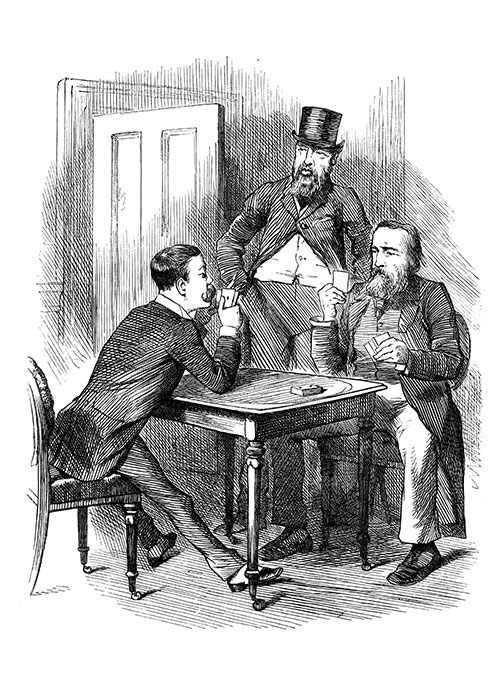
Three-card monte
In the intervening decades after the founding of the NAIC, the association collected contradictory letters from the IRS like a degenerate gambler collects markers.
In the first half of the 20th century, the association twice persuaded personnel of what was then referred to as “the Bureau of the Budget,” i.e. IRS, to issue opinion letters deeming that the NAIC was an instrumentality of the states.
This writer has never found the source materials submitted to the bureau by the NAIC, so who knows what yarn the NAIC spun for the IRS?
In the 1980s, the NAIC added two more IRS opinion letters. The first of those two letters found that the NAIC was a 501(c)(3) organization, which the association needed the IRS to say in order to evade payment of New York State sales tax on the products sold by the NAIC division then known as the Securities Valuation Office (SVO). The second letter issued in the 1980s deemed that the association was a 501(c)(6) (trade association), which allowed the NAIC to sell insurance data collected through the jurisdiction loaned to the states by the McCarran Ferguson Act.
What do any or all these IRS letters tell us about the NAIC? Not much!
The letters do suggest that the IRS issues tax letters based on the questions put to them without looking at the agency’s own files. None of the letters invalidates the others.
As a result of the IRS’s curious behavior, the NAIC uses the deck of IRS opinion letters like activity akin to the grifters’ card game three-card monte.
If the NAIC wants to wrap the association in the robes of a state agency, they make sure that the instrumentality of the state’s opinion letter comes off the deck.
If a journalist from any state jurisdiction tenders an open records or sunshine request to the NAIC, (consistent with instrumentality of the states), the three-card monte shuffle produces the 501(c)(3) or (6) letters. As a spokesperson for the NAIC in the early 1990s, this writer used this fancy shuffling technique at the direction of his superiors.
The “Zombie Congress” could hold hearings and figure out this grift, but they’re zombies.
Premodern
Of course, 26 years ago, a new NAIC replaced the one that the IRS opined upon in the 20th Century. The new company (NewCo) still uses the name NAIC, but the NewCo is a Delaware-chartered corporation. One cannot reasonably claim that incorporation by Delaware creates a state instrumentality.
Yet, the NAIC implores us to believe that it is an instrumentality of the states. Generations of NAIC leaders have convinced themselves that this imagined tale is indeed fact, and they invite everyone else to share this belief.
Hey NAIC, have you met my friend, Mr. Ripley? You two share much in common. n
The author
Kevin P. Hennosy is an insurance writer who specializes in the history and politics of insurance regulation. He began his insurance career in the regulatory compliance office of Nationwide and then served as public affairs manager for the National Association of Insurance Commissioners (NAIC). Since leaving the NAIC staff, he has written extensively on insurance regulation and testified before the NAIC as a consumer advocate.