
A look at how various water
backup endorsements can differ
In situations where a coverage determination is not appearing
favorable to your insured, do what the adjuster does: Read the policy language.
By Marc McNulty, CIC, CRM
Your agency’s size will typically determine how involved producers get in the claims process. Those of us who are in smaller agencies will take occasional claims calls from our clients at any time of day, especially clients who haven’t experienced the claims process and don’t know what to do.
For newer producers, this process can be slightly daunting, as they’re speaking with someone at a stressful time: They’ve been in an accident, suffered damage to their home, or undergone any other sort of loss that causes anxiety. Those new to the industry soon learn what key information to obtain, how to report the claim, and perhaps most important—not to make any coverage promises.
Yes, a young producer can confirm to their client that he or she has service line coverage, water backup coverage, or mold coverage on their homeowners policy, but that doesn’t guarantee that the loss will be covered. That final determination is up to the individual who has the checkbook. In other words, the claims adjuster.
However, one thing that isn’t taught in pre-licensing coursework is that adjusters are like the rest of us and are human. Occasional mistakes will be made. And this is where your value as an agent can potentially shine.
In situations where a coverage determination is not appearing favorable to your insured, do what the adjuster does: Read the policy language. Sometimes, after some back-and-forth conversation, you might find that the adjuster overlooked something in the policy language or misread a provision. In the rare instance where this occurs and you’re able to secure coverage for your client, you can humbly assure them you went to bat for them and secured coverage at their time of need.
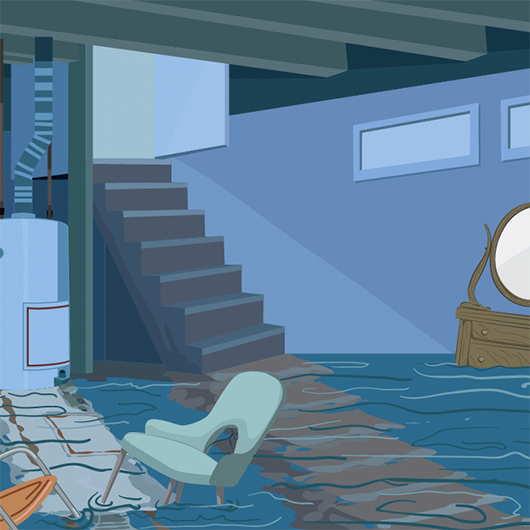
One of our agency’s producers recently went through this process when his client suffered a water damage loss in their finished basement. The producer was initially advised that the claim was going to be denied. However, knowing the situation and that water backup endorsements have slight variations to them, the producer examined the policy language, followed up with the adjuster, and ended up getting coverage secured after the adjuster reviewed everything with his manager.
At this point you’re probably wondering, “How different can water backup endorsements be?” You may be surprised.
For starters, let’s examine the HO 04 95 03 22 Limited Water Back-Up and Sump Discharge or Overflow Coverage endorsement. This endorsement states:
We will pay up to the Limit Of Liability shown in the Schedule for direct physical loss, not caused by the negligence of an “insured”, to property covered under Section I caused by water, or waterborne material, which:
- Originates from within the dwelling where you reside and backs up through sewers or drains; or
- Overflows or is discharged from a:
- Sump, sump pump; or
- Related equipment;
even if such overflow or discharge results from mechanical breakdown or power failure. This coverage does not apply to direct physical loss of the sump pump, or related equipment, which is caused by mechanical breakdown or power failure.
This is straightforward enough, right? However, what about the language stating the loss must originate “from within the dwelling where you reside”? Water backup losses can most certainly originate from an issue outside the dwelling.
Luckily, the ISO HO 06 95 03 22 Broadened Water Back-Up and Sump Discharge or Overflow Coverage endorsement remedies this situation. It amends the coverage triggers by removing the “originates from within the dwelling language” and reads as follows:
- Backs up through sewers or drains; or
- Overflows or is discharged from a:
- Sump, sump pump; or
- Related equipment;
even if such overflow or discharge results from mechanical breakdown or power failure.
Now let’s go to the proprietary endorsement of a national carrier. They include some additional language:
For an additional premium, we cover accidental direct physical loss to property covered under Section I – Property Coverages caused solely by water that escapes, overflows or discharges from a sump, sump pump, sump pump well or a drain or related plumbing appliance located on the residence premises.
While the intent is similar, there’s a subtle difference in how the coverage is worded.
Let’s take another example from a national carrier:
We will pay up to the limit of liability shown in the Declarations under this Water Back Up and Sump Discharge or Overflow Coverage, for direct physical loss, not caused by the negligence of an “insured”, to property covered under the Property Coverage Section of this policy, caused by water or water borne material, that:
- Enters through or backs up from a sewer or drain located within the dwelling or other building structures on the “residence premises”; or on the
- Discharges or overflows from a:
(1) Sump or sump pump;
(2) Related equipment; or “residence”
(3) Any other system designed to remove subsurface water which is drained from the foundation area;
located within the dwelling or other building structures on the “residence premises” even if such discharge or overflow results from mechanical breakdown.
This one is interesting because it not only includes the “any other system” wording, it also adds “other building structures” to the mix.
Then we have this one, which adds a crazy amount of clarification but also adds additional coverage not seen in any of the previous forms:
“We” will pay for “physical loss” to covered property caused by or resulting from water or waterborne material:
(a) Which backs up through sewers and drains on the “residence premises”. A sewer or drain is a pipe connected to the plumbing system, a gutter or downspout, or other drainage pipe that serves to drain water or waste away from the “residence premises”. A back up does not include the inability of the sewer or drain to handle the amount of rainwater, surface water or groundwater trying to enter the sewer or drain;
(b) Which overflows or is discharged from a sump, sump pump or related equipment; or
(c) Below the surface of the ground, including water or waterborne materials which exerts pressure on or seeps or leaks through a building, sidewalk, driveway, foundation, swimming pool or other structure;
unless there is a flood in the area and the flood is the proximate cause of the sewer or drain backup, sump pump discharge or overflow, or seepage of water. In this case this coverage does not apply.
However, “we” will not pay for “physical loss” to the portion of the building or structure through which water or waterborne materials back up, overflow, are discharged, seep or leak.
Hopefully we answered your question regarding how greatly water backup endorsements can differ. And, given these examples, it’s easy to see how an adjuster might make a mistake, especially if he or she is accustomed to working with a different policy form than the one they are using in their claim.
Your attention to detail in such matters can help save your client’s pocketbook from disaster… and might just earn you a long-term client in the process.
The author
Marc McNulty, CIC, CRM, is a principal at The Uhl Agency in Dayton, Ohio, and has been with the agency since 2001. He divides his time among sales, marketing, technology and operational duties. You can reach Marc at marcmcnulty@uhlagency.com.