Improving longevity signals need
for long-term health management
By Thomas A. McCoy, CLU
Ever since defined contribution (DC) plans became the dominant retirement vehicle, employees have had to adapt to the need to plan ahead financially—way ahead in the case of younger employees. With all of the competing financial priorities faced by younger workers, it isn’t easy for them to save significant sums for an event that is decades into the future. Yet, overall, they have made progress in building up their DC plan accounts.
A retirement plan plays a leading role in the financial health of all employees, but it doesn’t act alone. It works in tandem with two other stalwarts of a benefit program: the physical and mental support that employers provide.
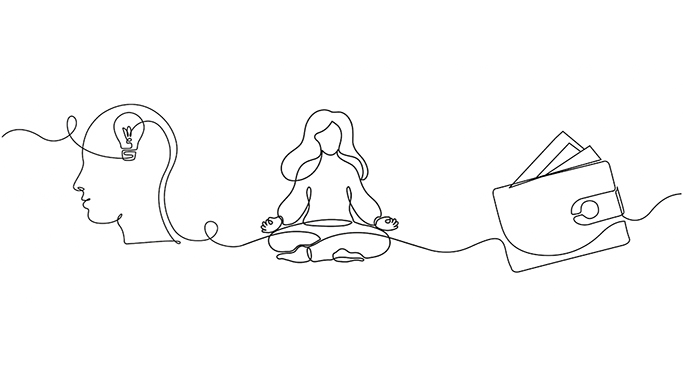
Guardian Life refers to these three forms of support as “mind, body and wallet.” A recent Guardian research report by that name analyzes the interdependence of these three sources of security and stability. While most other published discussions about retirement planning focuses on finances, Guardian’s report stresses the ways in which health of “body and mind” can lead to fulfillment in retirement.
Visualizing the distant future is never easy. Yet, employers have helped workers to understand the need to boost their retirement plan contributions by showing them what their end sum might look like. Could employers also succeed in persuading them how the “contribution” of their health practices—both mind and body—could determine how fulfilling their retirement will be?
Today’s workers of all ages are preparing for retirement at a time when longevity is increasing. That’s good news, of course. But it presents both financial and health challenges. Obviously, it means more years for assets to last.
But also, the Guardian report points out, “Longevity is not necessarily synonymous with health or independence. In addition to having more free time to enjoy, longer lives may mean managing chronic conditions, more years taking care of loved ones—or needing a caregiver yourself.”
“Future quality of life is shaped not by decisions made in your 60s, but often by habits formed
decades earlier.”
—Guardian’s
Mind, Body, and Wallet® Report
More than years
In other words, living well, not just long, needs to be a retirement planning priority. While most younger workers probably do not give much thought to this aspect of their retirement planning, they have plenty of time to mitigate the risk by taking care of their mind and body. As the report states, “Future quality of life is shaped not by decisions made in your 60s, but often by habits formed decades earlier.”
Data from Guardian’s 2026 Workplace Benefits Study show that 37% of Americans do worry that their health and mobility will impact their quality of life when they’re older; another 20% worry that their spouse’s health and/or mobility will impact the same.
Erin Culek, head of financial protection and retirement solutions at Guardian, said, “As people live longer, fuller lives, financial planning shouldn’t just be about saving. It should help them feel confident, flexible, and free to enjoy whatever comes next.”
Guardian’s “Mind, Body, and Wallet” research highlights the obstacles workers face. In 2026 the company’s Workforce Well-Being Index,TM which measures consumer attitudes about financial, physical and emotional wellness, registered its lowest level in the 15 years it has been conducting its Workplace Benefits Study.
Only 34% of all workers rated their mental health as excellent or very good; for physical health, the number was 36%; and for financial health, it was 30%.
Older workers generally self-report better well-being than younger generations; 42% of baby boomers have high Well-Being Index scores compared to 31% for Gen Z and millennials.
Over the past two years, nearly 40% of those surveyed reported feeling increased anxiety, depression, or mental health needs. Only about a third say they’re good at taking care of their mental health (34%) and maintaining good work/life balance. Half of the respondents said money/finances is their leading source of stress.
By contrast, among people who report high overall well-being, 75% say they’re good at taking care of their mental health.
Good habits
While Gen Z and millennials self-report better overall physical health than older people, Guardian’s research shows that they are on the wrong health trajectory compared to their elders. Almost 60% of baby boomers say they’re very good/excellent at keeping up with routine doctor appointments versus only 34% of Gen Z and millennials; and 37% of baby boomers report eating a healthy diet versus only 29% of Gen Z and millennials.
The report states, “While healthy habits can’t guarantee physical wellness, data shows they can help. Among individuals with high overall well-being, 68% say they’re good at keeping up with routine doctor appointments, 61% say they’re good at eating a healthy diet, and 66% say they get enough exercise.”
If current health practices can improve the odds of thriving in retirement, employers have an opportunity to communicate this message to their workers. Guardian’s report suggests some decade-by-decade guidance that employers can provide.
Among its suggestions: in their 20s, develop good health practices; build positive stress management habits and social connections; build emergency savings; in their 30s, protect work/life balance; increase retirement contributions; 40s, health screenings, estate planning, caregiving plans; 50s, catch-up payments to retirement funds, long-term care insurance.
For workers in their 60s and beyond, the suggestions include finding purpose beyond work, building sustainable retirement income strategies, and learning about Medicare and Medicare Advantage plans.
At a time when the internet and AI have placed information—including health and retirement advice—at the fingertips of everyone, it is all the more important that benefits plans take the initiative as a trusted source of guidance for workers. Even a simple checklist as part of regular communications with employees can be important.
Employer role
By whatever means an employer chooses to explain to employees how their physical, mental and financial health are linked, it is an important demonstration of the employer’s concern for their welfare.
A benefits plan can be a continuum of support throughout the decades of an employee’s work tenure and reaches into retirement. The fact that employers are showing more interest in offering guaranteed retirement income products is evidence that their concern for employees’ financial security extends beyond their working years.
The three pillars of security and stability—body, mind and wallet—are closely intertwined. Communicating this message to employees can help build a more productive workforce and lead to more fulfilling retirement years.
The author
Thomas A. McCoy, CLU, is an Indiana-based freelance insurance writer.