Maryland agency transforms
processes to tackle today’s challenges
and pave the way for future success
By Maura C. Ciccarelli
Photography by Arturo Paulino
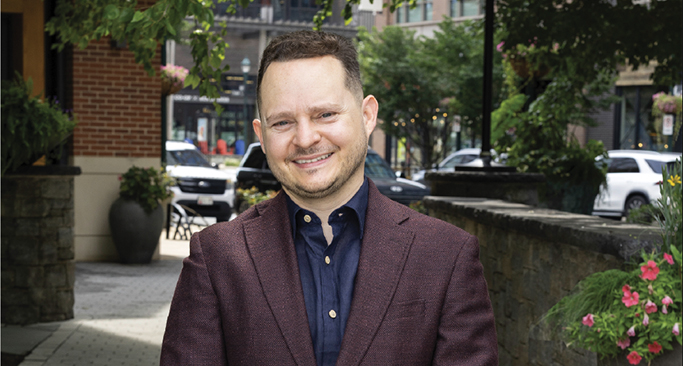
Transformation. That one word describes how Foresight Insurance Founder and Principal Agent Michael Cruz has run his agency since he started it in 2015.
Michael has built a successful business by always seeking better ways to do things—by documenting standard operating procedures, assigning teams rather than individuals to customers, using technology to help improve processes, and finding innovative ways to serve clients with human interactions.
“One of the things that really accelerated a lot of this is the transformation that our [independent agency] industry is going through. Mergers and acquisitions are happening at a scale where it feels like every day someone is announcing, ‘I sold my agency to so-and-so,’” Michael explains.
Bold moves have paved the way from the start for this North Bethesda, Maryland, independent agency that offers auto, home, life, and commercial policies.
“If we can prove that you can build an agency where people have work-life balance, where they can have a career, where they can have purpose, and where they can stay long-term, then I think that’s one of the biggest contributions that we can make to the industry,” he says.
Earliest lessons
Born in Cuba, Michael came to the United States with his mom in 2001 and quickly learned lessons that would later benefit him as an entrepreneur. “We arrived with very little money, not knowing the language or the culture, and my middle school and high school years were spent just trying to get acclimated to a new country,” he recalls. “That period was hard, but it taught me how to adapt and how to work for everything.”
While working in retail sales at Circuit City at age 19, he was recruited to sell life insurance. “Selling life insurance to other 19-year-olds turned out to be a terrible idea, but it was one of the best learning experiences I could have asked for,” Michael notes. “I learned rejection early, I learned the power of positive thinking, and I started thinking big about entrepreneurship.”
“If we can prove that you can build an agency where people have work-life balance, where they can have a career, where they can have purpose, and where they can stay long-term, then I think that’s one of the biggest contributions that we can make to the industry.”
—Michael Cruz
Founder and Principal Agent
Foresight Insurance, LLC
“When you give [work] to the team instead (of one person), the work spreads out evenly, it gets done faster, nobody burns out, and the whole team learns every account, so you’re never stuck depending on one person again.”
—Michael Cruz
He networked constantly and kept running into the same Liberty Mutual sales manager, who later offered him a job. Taking that position, he says, “turned out to be one of the best decisions I’ve made. The P&C side is what got my career going, financially and professionally, and the training at Liberty Mutual was excellent.
“At some point it just clicked that going independent was the natural next step for me, so in 2015 I founded Foresight,” says Michael. Why the name Foresight? Because it resonated with insurance’s fundamental mission of planning for the future.
Paving a path to a new agency model
Since the beginning, Michael says, the goal has been to build an agency that can “run on its own.” By that, he means keeping up with the day-to-day client interactions in innovative ways while keeping himself and his team from burning out.
Over the years, Michael’s team solved four key problems that most agencies face with their traditional business processes:
- Communications are scattered among individuals’ email boxes, phone numbers, and texts, making real-time account activity tracking impossible.
- There’s no transparency, so the owner doesn’t know if emails are getting answered or followed up on.
- Every process depends on a specific person instead of a standard of doing things anyone can follow.
- Staff members are overworked and burned out, so the agency loses staff.
To start addressing these challenges at Foresight, Michael and his team began documenting standard operating procedures (SOPs), inspired by his business coach, Joe Hagan of Freedom Through Systems.
“Joe drilled into me early on how much standards matter, and how you have to document and keep people accountable to those standards so they actually mean something,” he says. “That thinking is underneath everything we’ve built since.”
Looking at successful companies like Chick-fil-A, Starbucks, McDonald’s and others, Michael liked that they codified their customer experience and could spread it to all locations. “When you talk about standardizing a process, [people] default to [thinking that] this is a very robotic thing, it doesn’t feel personal, it doesn’t feel human,” he says. “The reality is [that] the most successful companies that have the best experiences are not by accident.
“They’re very intentional, repeatable and designed experiences,” Michael adds. “You can train somebody to still have [their] personality, but the process itself is designed by the corporation.”
After starting with the SOPs, the next move was to use virtual assistants (VAs). He founded On Hand VAs in Colombia, South America, to focus on both backroom and client-facing calls. That team was trained to understand insurance and had access to the agency’s management system and carriers and could actually take care of a client on the phone.
“I could hire someone highly qualified at a fraction of the cost, which let us do more with less cost,” Michael says. “The real unlock was applying that same standardization mindset to it.”
Later, to position the business for its next stage of growth, On Hand VAs merged with Illinois-based Virtual Intelligence.
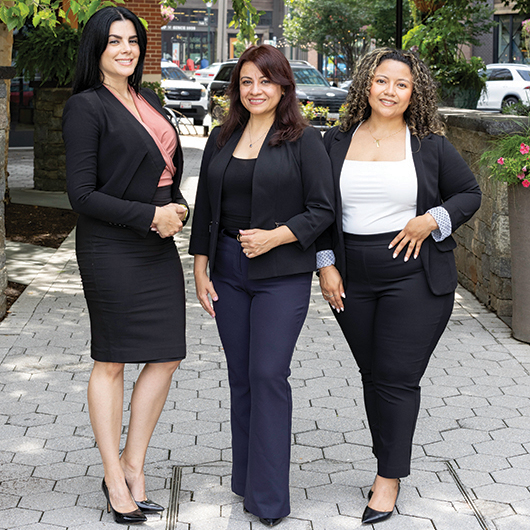
“By combining their leadership, infrastructure, and Philippine-based teams, the companies created a larger, more scalable organization capable of supporting more insurance agencies with consistent recruiting, training, operational support, and client service,” Michael explains.
Another innovation was a “shared inbox.” Anyone emailing the agency sends to one email address, and software analyzes and sorts the messages so tasks can be handled by multiple people on the Foresight staff. The agency has used shared inboxes for years, starting with service, and in January of 2024 moved to a new email-routing platform that brought sales into the same system. It has become one of the most important tools in the agency, enabling communication speed, visibility, distribution, and collaboration.
Then, in May 2024, Foresight implemented a four-day, 32-hour workweek for employees (after a 90-day initial period) with no reduction in pay. The agency rotates schedules so that the office remains open Monday through Friday to ensure that every employee receives an extra day off each week.
The four-day workweek “forced us to double down on our standardization procedures,” Michael notes, letting them “create more standardization across the entire organization.”
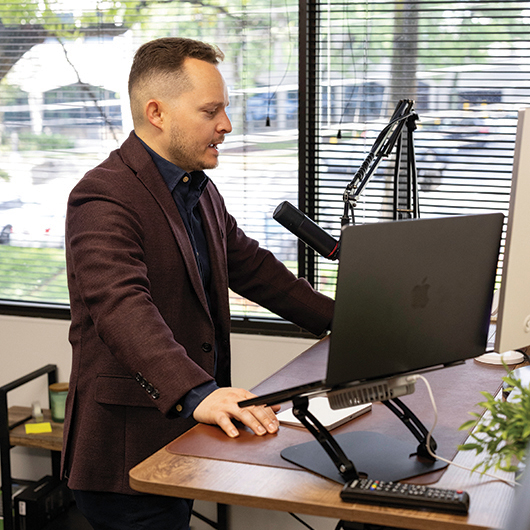
Two years ago they also began using AI to make documentation and SOPs more easily available to staff, whether they were in Maryland or on the virtual assistant team in Colombia and the Philippines.
Shareable lessons learned
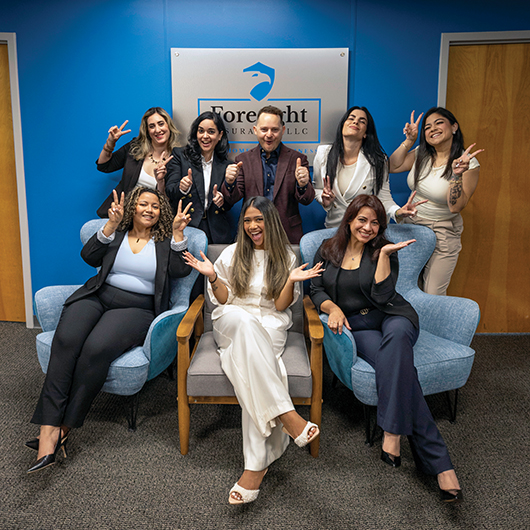
A team approach to customer service, a shared inbox, high-quality virtual assistants trained in agency processes, standardized operating procedures and using tech to support it all have also helped retain staff, Michael says.
No single person gets slammed with work while others have a light workload. Customer service doesn’t suffer when someone goes on vacation or leaves the company.
“When you give it to the team instead, the work spreads out evenly, it gets done faster, nobody burns out, and the whole team learns every account, so you’re never stuck depending on one person again,” he says.
Another key element of Foresight’s approach is training local and virtual staff to communicate in plain language. That involves a lot of training to avoid getting “lost in insurance terminology. Every interaction should be an educational one, where the customer walks away knowing what they’re paying for and why, and feeling confident in the decision instead of just hoping they got it right,” he says.
Simple communication, Michael fervently believes, is a key element in building that client relationship. Human-to-human interaction can quickly sort through the intricacies in ways that AI or a bot can’t.
“I want a Foresight customer to say, ‘you’d be crazy to be insured anywhere but here,’ and mean it. And I want the team behind that experience to be treated like family and to treat clients the same way—with respect, honesty, and the kind of service that makes people stay,” Michael says.
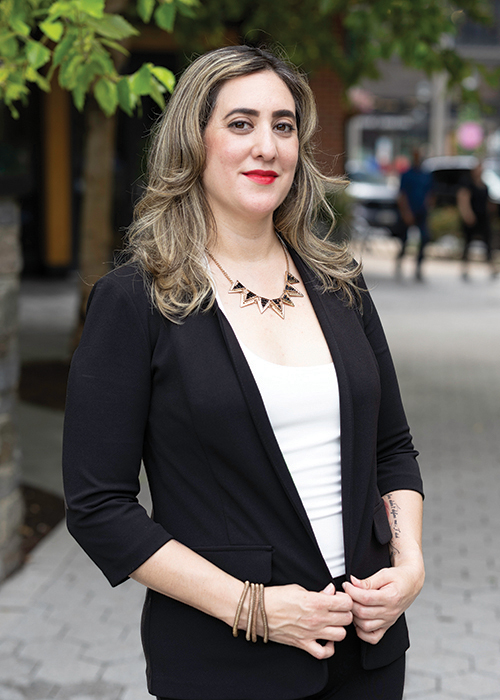
By addressing the causes of burnout and turnover, he hopes to make it easier to let agencies scale up and solve the problems created by longstanding agency designs.
“If you’re an agency that’s been in business for 20 years, 30 years, it’s not easy to flip that switch and make that change,” Michael explains. “That’s why it’s easier [with] less friction to just continue doing what you’re doing.
“Today’s client is busy. They don’t care who helps them. They just want their request done, and they want it now. It’s the Amazon world. Everything we want, we want right now. If you want to keep up with today’s customer, you have to rethink how the agency actually runs,” Michael says.
“That’s my thinking on all this. I’m sure that it’s a hot take. Who knows? We’ll see in the future if I’m right or not,” he adds.
Looking ahead
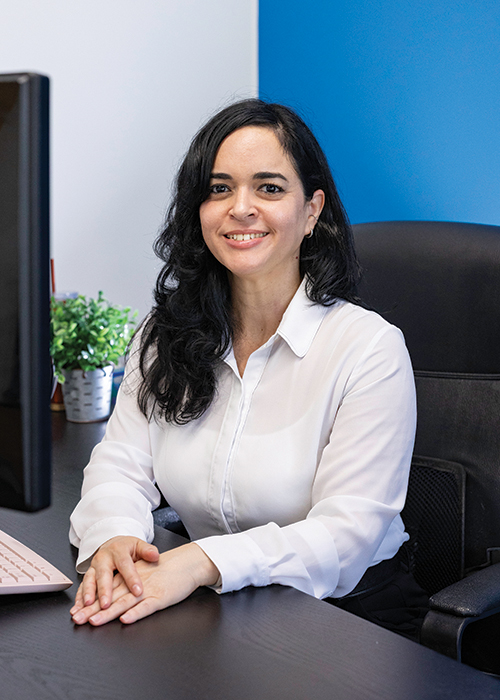
Michael plans to continue Foresight’s transformational journey, which involves continuing their personal lines business while cross training the sales and service teams to build their small commercial book of business.
“The person who needs us most [is] the busy small business owner who’s underserved, who wants to call one place and get everything handl-ed, [including] their business and personal [insurance], with real personalized service. That’s where we’re headed,” Michael says.
The ultimate goal, he believes, is to “build a company with the culture and the systems to recruit, train, and manage agents, and to get more of the younger generation into this industry. I want to build a company that people actually want to stay with. Not just because of the work, but because they have a real life outside of work, too.
“None of this is easy,” he continues. “It’s a lot of work. But it’s what lets us run a better company, give our people real work-life balance, keep our best talent, and keep attracting more of it. I want to show more people that this industry, done right, checks a lot of boxes.”
Sharing his agency’s experiences and lessons in person and online has been an important value of his for many years. “I do see myself as a teacher. I gravitate towards helping people. And I have a passion for seeing them do better because [something] I taught them made their lives better,” Michael says.
“I want a Foresight customer to say, ‘you’d be crazy to be insured anywhere but here,’ and mean it. And I want the team behind that experience to be treated like family and to treat clients the same way … .”
—Michael Cruz

Future of the industry
Looking beyond just his own agency, Michael says he’s concerned with the speed and scale of agency consolidations, particularly when private equity firms are involved.
“That concerns me, and I think it’s something all of us need to keep an eye on,” he says. “Associations, the carriers, [and] everybody in the industry needs to focus on building new talent and helping the talent we already have survive this.
“If we’re not careful, we will end up with just a handful of big brokers doing insurance, and we lose the essence of what this industry is: agencies that are local to their community. Real people solving real problems, human to human. Once it gets too big, a lot of that goes away.”
His solution? Make sure people are given the resources to start and keep independent agencies in their communities, so they don’t get so operationally exhausted that being acquired by a large broker becomes the only way out.
“When it’s done right, some of those deals make sense,” he notes. “I’m not against all of it. But at the scale it’s happening right now, I think it’s changing our industry right in front of us, and I’m honestly not sure that’s a good thing.”
As for now, he believes, insurance is one of the few industries that is seeking more talent, has job security, allows for remote work, and plays a key role in the local community and the national economy. “We need to be proud of what we do. Insurance has been, for the longest time, not seen as a sexy industry. We are a very reputable industry and we need to advocate for it.”
At its core, Michael says, his work is driven by a belief in the important role the insurance industry plays in people’s lives—and how independent agencies play a critical role in educating clients, offering coverage that fits their needs, and then helping them with claims when disaster strikes.
“That is a very noble thing,” he concludes.
For its role in rewriting the playbook for how to run a personal and small business lines operation by focusing on teamwork, tech solutions, and workflow documentation—while keeping a human approach to service—Rough Notes is proud to recognize Foresight Insurance, LLC as our Agency of the Month.
The author
Maura C. Ciccarelli is a longtime freelance journalist originally from Philadelphia. She writes about business and more from an adobe home in southern New Mexico, after spending nine years living on the road full-time with her husband in their Airstream trailer.