
Competition for coverage
helps relieve challenges
By Joseph S. Harrington, CPCU
Insuring nonprofit organizations that deal with human clients has become riskier and more costly, though not through the fault of nonprofits themselves, according to Pamela Davis.
“Having insured nonprofits for 36 years, we can say with confidence that nonprofits have not suddenly become more risky or less capable,” says Davis, president and chief executive officer of Nonprofits Insurance Alliance (NIA). “What’s changed is the public’s view of accountability for acts of negligence or wrongdoing.
“Whoever has insurance coverage in the continuum of care for a vulnerable child or adult is now held financially responsible, even if they did absolutely nothing wrong,” she says. “Nonprofits are being held accountable for acts they could not prevent, even when they meet or exceed the legal standard of care.”
As a result, Davis says, funds that could be devoted to care are diverted into costs for legal liability, which are in turn reflected in the cost and conditions of general liability insurance.
“Unprecedented uncertainty”
Rising litigation is among the factors Gallagher cites for creating “unprecedented uncertainty” for nonprofits in its 2026 market update on the sector.
That’s nothing new for this class of business, but the uncertainty is compounded by new challenges arising from federal and state funding cuts, inflation, and potential changes to nonprofits’ tax benefits.
When it comes to insurance coverage, however, nonprofits have seen something of a reprieve in availability and affordability after several years of sharp rate hikes and carrier retrenchment.
Gallagher reports that specialized nonprofit carriers are competing more actively for new business, and Davis observes that a few carriers who non-renewed nonprofit accounts in recent years are again competing for certain classes in the sector. “Given the volatility of this type of business, it is uncertain how long they will last,” she adds.
“Whoever has insurance coverage in the continuum of care for a vulnerable child or adult is now held financially responsible, even if they did absolutely nothing wrong. Nonprofits are being held accountable for acts they could not prevent, even when they meet or exceed the legal standard of care.”
—Pamela Davis
President and CEO
Nonprofits Insurance Alliance
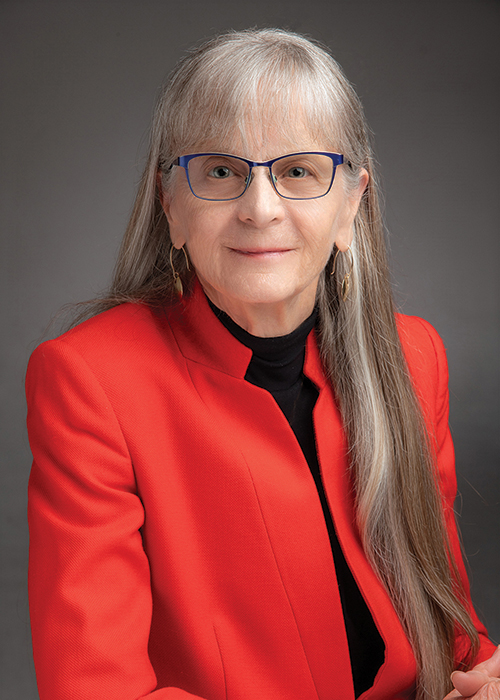
In light of that, insuring nonprofits and social service agencies has become “more interesting and more challenging,” according to Gail C. Pierce, senior commercial underwriter for Roush Insurance Services, Inc., a managing general agency.
“We’ve seen more agencies contacting us regarding the same accounts, a sign that their insureds are looking to reduce premiums or expand coverages or limits,” Pierce says. “Some carriers are withdrawing from writing these classes, or narrowing the scope of coverage they provide, leaving fewer carriers available to these accounts.
“Premiums, limits, and deductibles have remained stable, however, among carriers that continue to write nonprofit accounts,” she adds. “Given the insurance market changes over the past years, it’s a pleasant surprise to not have major premium increases and changes.
Elevated but not exorbitant
John Abbott, a licensed broker with the digital brokerage Insura, predicted early in 2026 that generally prevailing rates for coverage for nonprofit organizations would be somewhat elevated but not at levels most observers would consider exorbitant.
According to Abbott, small local nonprofits with revenues under $500,000 a year could expect to find a package of property, general liability, and directors and officers (D&O) coverage for something in the range of $2,500 to $4,000.
That estimate does not include cyber or auto coverage, either of which double the total premium, or more. The inclusion of D&O coverage in the estimate reflects the fact that legal protection of officers and directors has become an established obligation of nonprofits.
For a mid-sized charitable foundation with $500,000 to $2 million in revenue, Abbott believes it can expect to pay $4,000 to $6,500 for a liability package that includes general, management, professional, cyber, and employment practices coverage. Property is not included, perhaps because it would be a secondary concern for a foundation.
“Premiums, limits, and deductibles have remained stable, however, among carriers that continue to write nonprofit accounts. Given the insurance market changes over the
past years, it’s a pleasant surprise to not have major
premium increases and changes.”
—Gail C. Pierce
Senior Commercial Underwriter
Roush Insurance Services, Inc.

Large nonprofits with more than $2 million in annual revenue could expect to pay from $6,500 to more than $15,000 in premium for a comprehensive property and liability package with high limits.
Abbott’s estimates suggest that, relative to revenues, insurance coverage is a cost-effective resource in allowing nonprofits to pursue their missions.
Target reduction
For her part, Davis finds premium rates for nonprofits to have increased “pretty much across the board” due to economic inflation, the generally increased cost of goods and services, and “social inflation,” cost increases arising from growing litigation costs, and jury awards that put upward pressure on the amounts offered to settle liability claims. As an example of the latter, Davis notes a growing propensity among plaintiffs’ attorneys to allege traumatic brain injury (TBI) as a result of a vehicle accident, even a low impact one.
“Juries are often willing to accept testimony that an accident victim’s personality has changed as evidence of a TBI, even if no medical tests indicate a TBI,” Davis says. This emerging auto exposure factors into the risk profile of any nonprofit that uses motor vehicles to visit or transport clients.
In response to rising premiums, Davis finds that general liability limits have been restricted to $5 million or less for many classes of social service agencies, with limits for abuse claims often at $1 million to $2 million.
“Lower limits are the most effective way to keep coverage affordable for nonprofits and reduce their value as targets for litigation,” she says. “In our experience, plaintiff attorneys tend to take the available limits and do not seek to attack the assets of active nonprofits.”
AI not a big factor, yet
Virtually all enterprises today are utilizing artificial intelligence (AI) in some fashion, if only because it is embedded in commonly used cloud-based applications. Nonprofit organizations are no different.
To date, Davis finds nonprofits’ use of generative AI largely limited to help in producing marketing and communications content. Even with that limited use, she cautions them to “think twice” about using AI.
“I’ve read that when nonprofits use these tools to write fundraising materials, donations drop,” she says. “People just don’t like it.”
Apart from that, Davis notes that using AI to generate content risks publishing copyrighted material taken verbatim from an AI search. Also, AI can “hallucinate,” invent facts and assertions, creating reputational risk for any nonprofit that publishes AI-generated material under their name without careful review and fact-checking.
“Worst of all,” she says, “you have a privacy issue when sensitive information is entered into a public AI tool. The shoe hasn’t dropped yet on many of these AI risks, but it will.”
For more information:
Nonprofits Insurance Alliance
insurancefornonprofits.org
Roush Insurance Services, Inc.
roushins.com
The author
Joseph S. Harrington, CPCU, is an independent business writer specializing in property and casualty insurance coverages and operations. For 21 years, Joe was the communications director for the American Association of Insurance Services (AAIS), a P&C advisory organization. Prior to that, Joe worked in journalism and as a reporter and editor in financial services.