
Will less-distressed conditions
provide openings for insurers?
By Joseph S. Harrington, CPCU
“Municipalities were never designed to be frontline insurers—but in today’s environment, they often are.” So writes Jon Lumbra, partner and chief financial officer of The Dowd Insurance Agencies, a New England commercial risk advisory firm, on LinkedIn.
According to Lumbra, cities and towns find themselves in an almost “impossible situation” as they grapple with the effects of aging infrastructure, intensifying weather events, and rising liability claims in the face of a “stubbornly hard market.”
What Lumbra describes has certainly been in evidence since the pandemic year of 2020. Are things getting any better for the public sector? That’s hard to say, but there may be indications that things are not getting worse.
“States are in a good financial position, for the most part,” says Kevin Beer, president of Wright Specialty Insurance and Wright Risk Management. “Numerous states are either working off surpluses or have enough fiscal flexibility to adjust if conditions tighten up.
“Conditions are more uneven at the local level,” he adds. “Cities, towns, and school districts don’t have the same flexibility.
“I wouldn’t call the sector precarious, but outcomes vary a lot more depending on where you are. We’re starting to see more separation between the stronger and the more constrained local entities.”
Property softening
For public entities in better or worse condition, it helps that they are finally experiencing a softening market for property coverage after five or more years of rate increases, according to Beer.
“Rates are coming down across the board,” he says, “but how much really depends on the property, its location, and loss experience. Catastrophe-heavy areas like Florida and the Southeast are seeking the biggest decreases, sometimes 25% to 30%, while rate changes in the Midwest are more modest, closer to flat or down slightly.”
Beer also detects that property underwriting is “loosening slightly” despite the persistently frequent and severe weather events, even in areas not historically prone to them. “Carriers are still disciplined,” he says, “but there’s less intense scrutiny than we saw the past few years, especially around property valuations.”
Liability still hard
On the liability side, Beer finds the hard market for coverage shaped by exposures that “just keep coming up over and over.”
Prominent among them is law enforcement, a complex exposure that generates tort and civil rights claims arising from pursuit policies, arrest procedures, use of force, and incarceration.
“Some major carriers have started excluding law enforcement from broader public entity offerings altogether,” Beer says. “That tells you a lot about where the market is.”

“Public entities see [risk] pools as a long-term cost stabilizer rather than as a short-term risk transfer.
Members have skin in the game. Their incentives are aligned.”
—Kevin Meehan
Vice President
Arrowhead Public Entity
The potential for sexual abuse and molestation claims weighs heavily on any type of public entity serving children and dependent populations. The exposure has been magnified as numerous states have enacted “reviver” laws that extend statutes of limitations for making such claims.
“Depending on loss history and the legal jurisdiction, those exposures may be carved out of coverage,” Beer says.
“Of course, you also have the broader pressure from rising jury verdicts and generally expanding liability exposures,” he adds. “These force municipalities to look more closely at what is actually covered, what the limitations of coverage are, and how much risk they may end up retaining.”
Public risk pools
In contrast to private companies, which merge, divest, and reorganize frequently, municipalities and public entities are intended to carry on indefinitely, for the most part.
For that reason, the public sector relies heavily on public entity risk pools—what Lumbra calls “frontline insurers”—as a substitute or complement for private insurance.
“Reliance on public risk pools has increased over time,” says Kevin Meehan, vice president of Arrowhead Public Entity. “Public entities see pools as a long-term cost stabilizer rather than as a short-term risk transfer.
“Members have skin in the game,” he explains. “Their incentives are aligned. Their focus goes beyond buying coverage for a year and extends to reducing losses, improving safety, and establishing consistency over time.”
As Meehan tells it, it’s in the nature of a risk pool to bundle coverage with training, safety programs, hazard mitigation, claims management, and loss control services tailored to public sector exposures.
“I wouldn’t call the sector precarious, but outcomes vary a lot more depending on where you are. We’re starting to see more separation between the stronger and the more constrained local entities.”
—Kevin Beer
President
Wright Specialty Insurance and Wright Risk Management
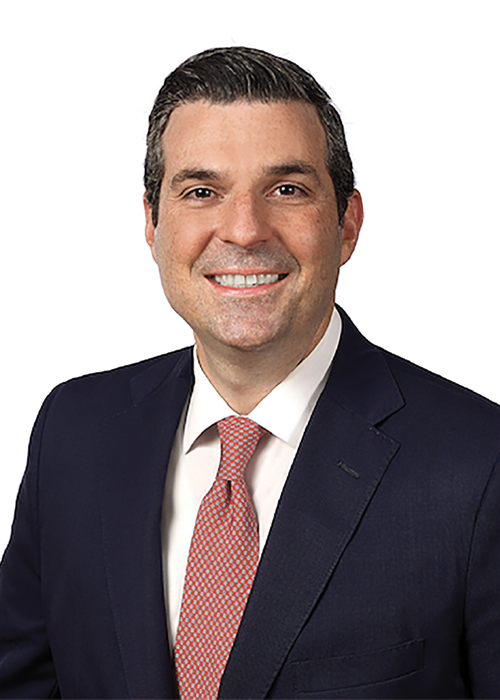
“Where commercial insurance can be expensive and strictly transactional, pools can be more nimble in meeting the specific needs of municipalities,” Meehan adds. “They understand municipalities, schools, special districts, and law enforcement exposures in a way that is hard to replicate in a more fragmented commercial placement.”
That said, Meehan detects some movement among large jurisdictions to self-insure in some lines, provided they have strong balance sheets to absorb litigation risk and can invest in legal resources to improve case outcomes.
Cyber and AI
When it comes to cyber exposure, Meehan finds public sector risk managers pulled in two directions.
“There’s more cyber insurance capacity and competition now, and pricing has stabilized, sometimes even coming down a little,” he says. “But the actual exposure keeps getting more serious. Attacks are more sophisticated. Artificial intelligence (AI) is making phishing and impersonation more convincing.
“On top of that, municipalities are becoming more dependent on third-party vendors, creating another layer of risk.”
In response, municipalities are more aware of cyber risk, according to Meehan, seeking higher cyber limits and demanding fast, effective responses to cyber incidents. “That’s a huge part of the value,” he says.
As for AI risk within the public sector, Meehan says that “we’re still just in the early stages.
“AI exposure is evolving quickly, but policies and underwriting are still catching up,” he says. “There’s potential for some gray areas around coverage until things get more defined.”
At this point, Meehan says, underwriters are already scrutinizing AI governance, data controls, and vendor accountability to identify control points. “Over time, I would expect more AI-specific endorsements and more direct underwriting scrutiny,” he notes.
In the meantime, AI is helping public sector managers and risk professionals identify loss drivers, improve underwriting and risk assessment, strengthen claims triage, and make loss control services more responsive.
“If the technology helps make the process more efficient, more user-friendly, and better aligned with actual exposure, that should benefit public entity clients,” Meehan concludes.
For more information:
Arrowhead Public Entity
arrowheadprograms.com
Wright Specialty Insurance
wrightspecialty.com
Wright Risk Management
wrightrisk.com
The author
Joseph S. Harrington, CPCU, is an independent business writer specializing in property and casualty insurance coverages and operations. For 21 years, Joe was the communications director for the American Association of Insurance Services (AAIS), a P&C advisory organization. Prior to that, Joe worked in journalism and as a reporter and editor in financial services.