It ought to be, for most purposes
Identifying the source of an ADAS “problem” would matter … if plaintiffs or
defendants want to access the deep pockets of vehicle manufacturers or ADAS developers.
By Joseph S. Harrington
What is attorney Michael Steinger getting at in his advice to consumers regarding auto accident cases involving “advanced driver assistance systems” (ADAS)? [1]
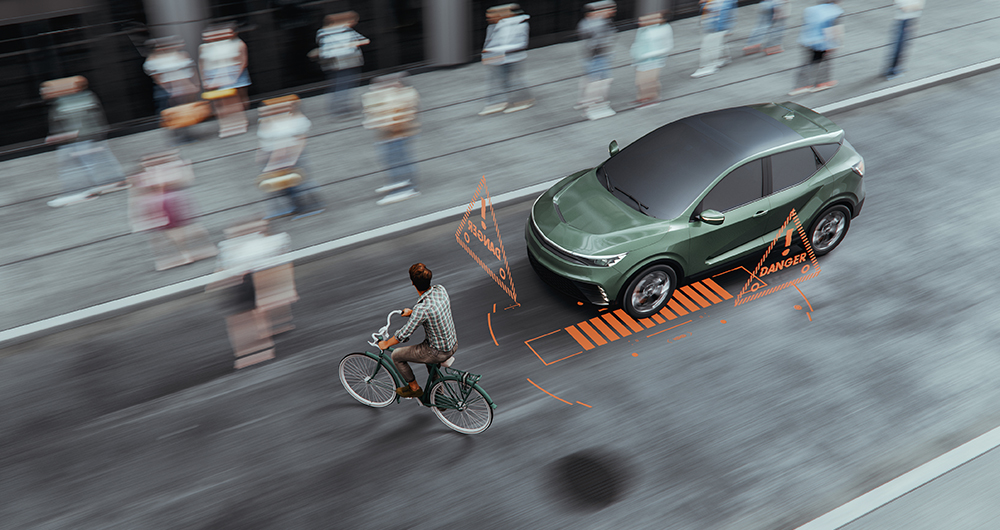
We’re all aware that new-model cars contain advanced technologies for helping drivers maintain safe speeds, navigate lane changes, and avoid hazards. Debate continues about how to assign liability between the maker of the vehicle and the driver when such systems fail or malfunction.
In the meantime, LexisNexis Risk Solutions has found that, overall, the proliferation of ADAS features has had a positive effect on auto accident frequency and severity—enough to produce “an overall reduction in loss cost by coverage, which can warrant ADAS feature-based policy discounts … .”[2]
So what is Steinger talking about when he writes that, after an accident involving ADAS, “the insurance company starts asking questions that make it sound like the driver is still the problem”?[3] In particular, which insurance company is Steinger talking about?
Under a personal auto policy, it should make no difference whether the driver or the vehicle is “the problem.” The vehicle is insured for any permitted, non-excluded use that results in liability for bodily injury or property damage. If a parked vehicle slips out of “park,” rolls down a hill, and hits someone, the insured is covered. The insurer would want to know what went wrong for underwriting and rating purposes, but it’s virtually impossible to imagine how it could deny coverage.
Who’s responsible? Does it matter?
Agents and brokers, beware of any non-standard auto policies with a liability exclusion for system hacks or failures. It’s hard to imagine courts or regulators allowing them, as such provisions would violate a fundamental premise of auto and general liability coverage: to ensure that injured persons are compensated and that insureds do not suffer financial ruin for making a mistake.
Also, one would think an ADAS failure would have no impact on the application of coverage for uninsured and underinsured (UM/UIM) motorists. If an at-fault motorist does not have coverage for an ADAS malfunction, then he or she is uninsured or underinsured for the resulting damage or injury, and UM/UIM coverage is triggered. If it’s a “hit and run” accident, we won’t know what caused it.
Identifying the source of an ADAS “problem” would matter, however, if plaintiffs or defendants want to access the deep pockets of vehicle manufacturers or ADAS developers. Plaintiffs will want to do so if they believe the owner-operator’s auto limits are insufficient. Defendants and their insurers would have an interest in subrogating their losses against those responsible for the function of ADAS systems.
All that said, the question remains: Who’s responsible when driver assistance systems don’t work? Is a driver of his or her own vehicle ultimately responsible for its operation? Must he or she be able and prepared to “take the wheel” when something appears to go wrong?
Physical damage
As a practical matter, the question would come up more often in first-party physical damage coverage, “collision” or “comprehensive” coverage. These do not involve third-party claimants, and the insured is only at risk for, at most, the cost of replacing the vehicle.
Yet the basic logic of auto insurance still holds, at least with collision coverage. As with liability claims, there is a presumption under collision coverage that the operator of the vehicle erred somehow; it shouldn’t matter who or what is the operator. Apportioning fault between the driver and an errant system should be irrelevant to the application of coverage.
There are, however, features of standard collision coverage that producers should review carefully when advising clients with ADAS in their vehicles.
First off, the standard ISO Personal Auto Policy, under Part D—Coverage for Damage to Your Auto, excludes coverage for “damage due and confined to . . . mechanical or electrical breakdown or failure.” This provision would appear to eliminate coverage for restoring a failed part or system but maintain coverage for any resulting physical damage to the vehicle.
The Part D exclusion extends to “loss to any electronic equipment that reproduces, receives or transmits audio, visual or data signals,” specified to include navigation systems and internet access systems, among others. However, that exclusion does not apply to electronic equipment that is permanently installed in an insured auto or non-owned auto (e.g., rental car). So whether a vehicle uses a manufacturer’s built-in navigation system or relies on one added separately may make a difference in the event of damage to a system.
We’re not done yet. Watch for an upcoming Coverage Concerns for related developments in repair costs for ADAS, commercial trucking, and cyber security for vehicles.
[1] Steinger Green Feiner, “When Driver-Assistance Systems Cause a Crash, Fault Gets Complicated Fast,” reviewed by Michael Steinger, June 18, 2026; accessed at https://www.injurylawyers.com/blog/when-advanced-driver-assistance-systems-fail-who-is-liable-in-car-accident/#h-what-insurance-companies-usually-argue-after-a-driver-assist-crash
[2] LexisNexis Risk Solutions, “True Impact of Advanced Driver Assistance Systems on Auto Insurance Claims,” 2021; accessed at https://risk.lexisnexis.com/insights-resources/white-paper/true-impact-of-adas-features-on-insurance-claim-severity-revealed
[3] Steinger Green Feiner, op. site.
The author
Joseph S. Harrington, CPCU, is an independent business writer specializing in property and casualty insurance coverages and operations. For 21 years, Joe was the communications director for the American Association of Insurance Services (AAIS), a P&C advisory organization. Prior to that, Joe worked in journalism and as a reporter and editor in financial services.