The need to personalize employee benefits
“Employers are focused on helping workers to adapt the benefits
to the different stages of their life.”
—Lindsey Murray
President
Nationwide Group Benefits
By Thomas A. McCoy, CLU
Today’s workplace is permeated by economic uncertainty for both employers and employees. General challenges include intractable healthcare inflation that is higher than the rate of general inflation, changes being wrought by AI, and job realignments as baby boomers retire.
Then, there are economic challenges that apply disproportionately to younger employees—such as paying off student debt, saving for a first home, or fertility support—and to older ones, including retirement counseling.
There is evidence that as employers make their salary and benefits decisions, they are moving toward a more tailored approach, individualizing their offerings based on the strengths and interests of individual employees.
The Salary Budget Planning Report issued by WTW (Willis Towers Watson) projects a 3.4% annual increase in salaries for U.S. companies in 2027, slightly below this year’s 3.5%. “Salary budgets may be holding steady, but the way organizations are using those dollars is changing significantly,” said Brittany Innes, senior director, Rewards Data Intelligence at WTW.
“Employers are moving away from broad-based increases and toward more precise, performance-driven pay strategies that target the roles, skills and talent segments that matter most.”
The WTW study found that one-third of employers are adjusting their programs, with another 15% planning future changes. The study was conducted earlier this year, based on more than 34,000 companies worldwide.
Tauseef Rahman, U.S. workforce rewards and solutions leader at Marsh said inflation pressures have brought about a shift in how employers are looking at their benefits spending. “Compared to past years, there’s a lot less questioning of ‘what the market is doing?’ and a lot more focus on ‘what budget do we need to be successful?’
“Those are actually two quite different approaches,” he notes. “They’re both about the numbers, but one is about what are others doing; the other is about what we need to offer to be successful. Employers need to determine the drivers of compensation and benefits that can give them the return they need.”
Employee surveys can help employers make that determination, he says, but the monitoring of employee priorities needs to be ongoing. “Employee attitudes toward their benefits can change very quickly as the workforce changes and the economy changes.”
Lindsey Murray, president of Nationwide Group Benefits, says, “Ten years ago, employers were focused on educating employees on the value of their benefits plan. We’re past that. Employees know the value. Employers now are focused on helping workers to adapt the benefits to the different stages of their life.”
A SHRM (Society for Human Resource Management) study found that 75% of employers plan to offer more customized benefits by 2028, she notes.
“Personalizing employee benefits has to be approached from all angles,” Murray says. “It’s not just about flexibility of plan design, although that is important. It’s about creating an overall ecosystem that provides the most value for both employers and employees. Employees need to understand how the plan meets their needs.
“Employers are not in this alone,” she adds. “The most effective providers or brokers can work with employers to design the right solution. The goal is to bring together the right carriers and vendors to package the experience so employees can easily get the value from the plan that they expect.
“AI can help employers create a more personalized experience through communication and outreach,” Murray says. “Employees have different family compositions, healthcare concerns, and financial situations. AI can be used to help educate them and make comparisons on an apples-to-apples basis to determine what might be the best fit for them. That includes their financial protection needs, healthcare needs and retirement needs.
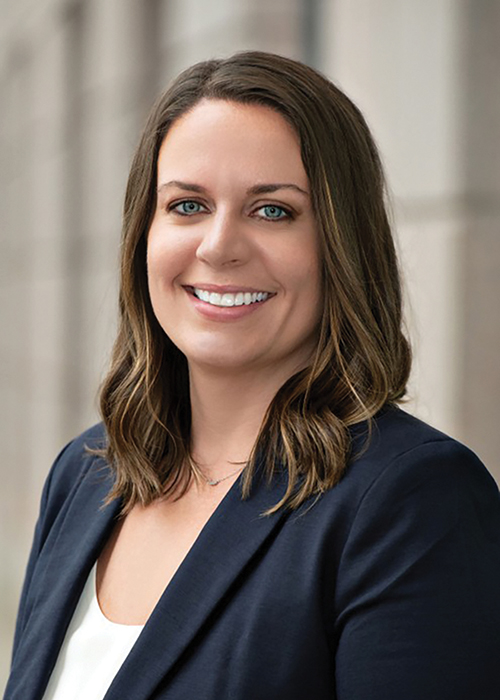
Lindsey Murray
President
Nationwide Group Benefits
“Also, we might see AI tools help people navigate through their own healthcare decisions—such as where to find high quality, reasonable cost healthcare providers. Or AI can provide alerts to remind someone to schedule a medical appointment.”
A recent Nationwide survey found that 24% of a 400-agent sample (a quarter of whom sell commercial property insurance) were currently investing in AI, but 48% planned to do so within the next year. One cautionary note from agents in the survey: Almost half (46%) were concerned that clients will begin turning to AI instead of their agent for insurance advice.
Nationwide stresses the importance of its broad benefits portfolio—both employer-paid and voluntary products—to cater to a wide range of workforces and individuals within a workforce. Murray notes that while products such as dental, vision, and employer-paid life are standards, “we’re seeing interest in different types of coverages that are perceived as beneficial.”
One example is pet insurance. “People now think of their pets as a member of the household, so naturally they want to protect their pet’s health.”
Differences in generational attitudes will continue to influence the selection of benefits products and how they are presented. Nationwide’s survey asked small business owners about the biggest challenges in their workplace for each generation. For Gen Z and millennial employees, almost half of owners (47%) named “communication styles and preferences” compared to 35% for Gen X and 29% for boomers.
Another disparity was “attitudes towards job loyalty or tenure” (58% of owners said this is a challenge for
Gen Z vs. a range of 29% to 38% for the other generations. The leading challenge listed for boomers was “use of technology and digital tools” (58%).
One area of generational consistency was the challenge of “work-life balance and flexibility.” The business owners reported that it ranged from 36% to 41% across all the generations.
In whatever ways generational differences may shape benefits decisions, employers are laser-focused on costs. Almost two-thirds (65%) of mid-market business owners and 48% of small business owners in Nationwide’s survey cited benefits costs as a leading concern.
Employees also are pressured by rising costs throughout their daily lives, so a benefits program that addresses their needs as specifically as possible will help an employer achieve its goals of recruitment and retention. “A one-size-fits-all approach to the benefits plan doesn’t work anymore,” says Murray.
“At enrollment, the goal is to make all the product offerings understandable for plan participants, but it’s also important that they aren’t just thinking of the products individually. Instead, they are stepping back to see how these benefits work together. We want to take a whole person approach,” she adds.
The author
Thomas A. McCoy, CLU, is an Indiana-based freelance insurance writer.