
Remember, holding steady on
price doesn’t mean holding steady on risk
By Ryan Byrd
The personal insurance market has cooled in 2026 roughly the way the industry expected.
Coming into this year, personal lines expected a calmer landscape after several volatile years, with carriers cautiously re-entering high-risk markets, premium growth stabilizing, and renewal conversations getting less tense. Ten months in, that’s largely how it has unfolded. Homeowners and auto pricing didn’t spike the way it did in 2022 and 2023. Some carriers that had exited from coastal and wildfire-exposed regions re-entered, selectively.
It’s easy to stop there, treat “the market held” as the whole story, and move on. But holding steady on price doesn’t mean holding steady on risk. Flood coverage, liability limits, and cyber policy language haven’t moved just because premiums didn’t, and that’s where the 2027 homework is. Looking ahead, the more useful question isn’t whether the market changed, but what still needs attention now that it hasn’t.
Homeowners: A cautious reopening, with conditions
The cautious reopening in high-risk markets played out largely as expected, with conditions attached. Carriers are relying more on aerial imagery, geospatial data, and AI-supported modeling to evaluate roof condition, vegetation, and storm exposure before extending a quote, and industry analysts have raised questions about model accuracy and fairness as carriers lean on these tools.
Excess and surplus (E&S) coverage is no longer used as a last resort. Most high-net-worth carriers now run E&S divisions that look a lot like their standard offerings, which is good news for capacity in higher-risk zones. It also means that the fine print matters more. Water-back-up limits and inspection requirements are where E&S and admitted forms tend to diverge, and those differences should be read closely before assuming that coverage is the same.
Well-documented roof condition, upgrades, and maintenance history now determine whether a client sees several competitive quotes or just one. That gap has widened as carriers rely on remote data to make that first call before inspecting a property in person.
Flood: The one risk that didn’t stabilize
Flood remains the coverage that hasn’t stabilized. The National Flood Insurance Program (NFIP) as of mid-summer is authorized through September 30, 2026. Congress has kept the NFIP running through more than 30 short-term extensions since its last full reauthorization, and a 2025 lapse stopped new and renewed policies for over a month. At the same time, some private insurers have stepped in with competitive rates.
At renewal, clients should understand whether their flood coverage runs through the NFIP or a private carrier. If it’s the NFIP, that opens a conversation with their advisor on whether a private insurer may offer more stability, and at what cost.
Auto: Normalization, not a swing back
Repair severity remains the story in personal auto. Combined ratios improved sharply from 109.9% in 2023 to 95.3% in 2024, which is why pricing eased. Industry projections show ratio drifting back up modestly through 2027, more of a leveling than a reversal after several years of outsized correction.
Repairs got more expensive, mostly because of the cameras, radar sensors, new calibration needs, and advanced driver-assistance system (ADAS) packages standard with most new vehicles, turning what used to be tinkering with body panels into something closer to electronic repair. A bumper that could have been fixed for a few hundred dollars can now require sensor recalibration, wiring harness replacement, and a certified technician, costing thousands. This shows up in both the size of the claim and how long a policyholder needs a rental vehicle during repairs.
Agreed-value coverage and realistic rental reimbursement terms remain the two items to confirm at every renewal for higher-value vehicles, since both assumptions were built around a repair environment that no longer exists.
Umbrella: The same gap, still open
Nothing about liability exposure has cooled. Concern about a major liability lawsuit runs high among affluent households, and coverage hasn’t kept pace, a gap that analysts have called out as one of personal lines’ more persistent blind spots. Nuclear verdicts, jury awards of
$10 million or more, hit a record 135 cases in 2024, totaling $31.3 billion.
Capacity at the highest limits remains tight, and underwriters ask more detailed questions about driving history, vehicle exotics, and public exposure before extending coverage at that level. That gap has held for a few years, and nothing about 2027 is going to close it on its own.
Cyber: Already moving in the right direction
The industry spent the past year making progress on how to handle deepfake-enabled impersonation and voice cloning with existing cyber policies. Wiley’s cyber insurance practice predicts that carriers will draw a harder line between traditional social engineering and AI-generated impersonation, adding exclusions or dedicated endorsements rather than assuming existing riders extend automatically.
For personal lines, the practical takeaway is that AI voice cloning is starting to automate the “someone impersonating a family member” scenario that social-engineering coverage was built around. Confirming that a client’s specific policy language keeps up with that shift matters more this renewal cycle than checking if a cyber endorsement exists at all.
Faster process, not a different market
If there’s a change to focus on for 2027, it’s on the service side, not the market side. AI-supported tools are accelerating comparative quoting, document review, and renewal preparation, just as carriers have used similar tools in underwriting for the past two years. That distinction, a faster process versus a different market, matters because of what it means for clients.
Rather than a rate change, they’ll see this shift in how completely an advisor gets through the list above before a renewal deadline forces the issue: roof documentation in hand, the umbrella limit stress-tested against current verdict trends, the flood conversation on the table, and cyber policy language read closely enough to know what it covers.
Automation can identify exposure faster and more consistently than a manual review. However, it can’t tell an advisor which of those exposures matters most to a given family; that part still comes down to judgment.
Heading into 2027
The market held. That’s not the same as saying the risk did. The mundane work, like documenting mitigation, stress-testing liability limits, confirming flood coverage doesn’t hinge on a federal deadline, and reading the cyber policy closely enough to know what “impersonation” covers, is what separates a renewal that holds up from one that surprises the client in 2027.
The author
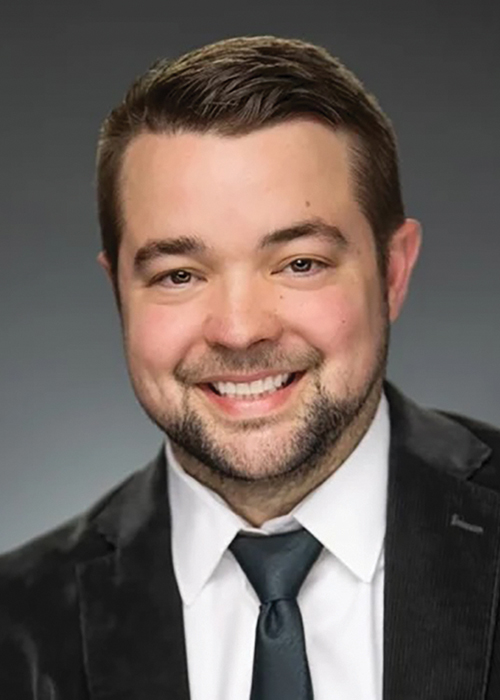
Ryan Byrd is an account executive on the personal lines team at B. F. Saul Insurance, with more than 10 years of experience on both the carrier and agency side. He specializes in high-net-worth insurance, builders risk, liability, and cyber coverage, and works closely with clients navigating complex life decisions and claims.