Rules require that insurers use only
state-generated loss data to create local prices
A new Illinois after-the-fact review procedure determines
whether an insurer’s pricing scheme establishes
“excessive, inadequate, or unfairly discriminatory rates.”
By Kevin P. Hennosy
On August 4, 2026, Illinois Governor JB Pritzker signed two pieces of legislation, which took one material step toward the standard set for state jurisdictions by the McCarran-Ferguson Act of 1945. The new Illinois laws address private passenger automobile, and homeowners or fire and extended coverage.
The new laws create a notably gentle-handed form of rate review for those lines of the business of insurance, which we will address later.
But first, let us give the insurance trade associations their Orwellian Two Minutes of Hate.
Trade groups
In response to Governor Pritzker’s decision to sign the bills, The Illinois Insurance Association (IIA), the American Property Casualty Insurance Association (APCIA), and the National Association of Mutual Insurance Companies (NAMIC) issued a joint statement.
“Illinois residents should be prepared for the potential impact of these new laws: higher home and auto insurance costs and fewer options for coverage,” begins the statement.
Or, in the immortal words of the Ghostbuster Dr. Peter Venkman, played by Bill Murray: we shall see, “Human sacrifice, dogs and cats living together … mass hysteria!”
The insurance trade groups then explained that weather events and repair material inflation drove recent double-digit percentage premium increases paid by policyholders.
“In recent months, powerful storms have repeatedly ripped through communities across Illinois, causing widespread damage to homes, vehicles, and infrastructure. Illinois now leads the nation in tornadoes—by a significant margin—and has already broken its [sic] all-time tornado record, even though the year is only halfway over,” observed the associations.
If the conditions described by the trade groups persist, and there is no reason to assume that conditions will change, the price of insurance will increase whether or not the insurers have to open their books for a public review by the Illinois Insurance Department.
Barely regulation
So, before anyone gets fired-up about the Illini State establishing a Soviet-Style system of central planning, we should all cool our jets. Neither of the two recently signed laws establish soviet councils made up of workers, peasants, and soldiers.
The new Illinois rate review system does not require the use of government created prices or even government approval, or even review, before an insurer sells products using a pricing model. As such, it is difficult to see how the review process can slow down insurers’ responses to “market conditions.”
The recently enacted Illinois laws created a File and Use system, which creates an after-the-fact review procedure. The review determines whether an insurer’s pricing scheme establishes “excessive, inadequate, or unfairly discriminatory rates.”
In addition, the new system will verify that insurers use only Illinois-generated loss data to create prices charged within the Illini state.
Lobbyists and spokespersons for insurance carriers have long rejected claims that after major loss events in a state or region, companies raise their prices in other jurisdictions to rebuild reserves. If their assertions are true, the carriers have nothing to fear.
No competition
Until the passage of these two bills establishing rate review in Illinois, the state relied on competition to “regulate” the price of auto and homeowners insurance.
Those who still adhere to the quaint concept known as “The Rule of Law” will look at the federal law that establishes the state-by-state model for insurance regulation, and question where “competition” enters this discussion.
In response to a June 1944 U.S. Supreme Court decision, which ruled that the business of insurance is interstate commerce and subject to congressional jurisdiction, Congress passed the McCarran-Ferguson Act of 1945.
That 81-year-old federal law encouraged the several states to exercise “state action” to affirmatively regulate insurance. The alternative was to treat insurance as a competitive market. The latter approach would have subjected insurance to the normal system of policing by federal antitrust law and fair-trade enforcement to maintain market competition.
Negotiators for the federal Executive Branch and Congressional leadership, organized by Senator Joseph C. O’Mahoney (D-Wyo.), doubted whether the public would benefit from treating insurance like most sectors of interstate commerce. The doubt centered upon whether consumers could make an informed choice in a competitive insurance market.
The problem is that insurance is so complex, not only in terms of policy language, but also in terms of the data that goes into assuring accurate and fair rates. That data is necessary to measure the weight of risk transferred from insured to insurer.
O’Mahoney and the bill’s drafters concluded that insurance is not a commercial transaction where the consumer can make an informed choice among products and prices—save for hiring an actuary before buying a personal lines policy—and bring competitive forces to bear on insurers to perfect pricing and product design.
The lack of informed consumer choice led the bill drafters to create a framework where the state insurance departments function as the public’s actuary and calculate the weight of risk transferred and the price charged for that service.
In cases where the states did not act, the McCarran-Ferguson framework simply applied federal antitrust and fair-trade enforcement to foster competition, like other sectors of interstate commerce. Congress intended that states regulate insurance or the federal government would regulate competition in insurance.
Team Science defeated Team Magic in the debate on the McCarran-Ferguson Act, which remains the law of the land. The concept of the “Magic of the Marketplace” delivering the best products at the best price for consumers had no role in this area of law.
Old friends
The McCarran-Ferguson Act received material political assistance from non-cartel member companies (Independents), including mutual insurers, as well as independent agents. O’Mahoney remembered that assistance.
By the late 1950s, numerous mutual companies experienced massive growth, which gave the companies access to data that other companies could not gather for rating purposes. However, the rate filing process forced the mutuals to give supporting data to state insurance departments, which made much of the data publicly available … i.e., available to other insurance companies.
As a result, smaller companies could use the filed rating information to echo the larger companies’ rates without independently gathering similar data. In the insurance sector, executives and regulators referred to this practice as “Me Too Rates.”
The mutual insurers appealed to Senator O’Mahoney for help. The senator chaired a subcommittee of the Senate Judiciary Committee, which provided oversight to the implementation of McCarran-Ferguson. The companies asked the senator to approve in concept a system of rate filing and review that allowed the data-rich companies to enjoy a competitive advantage for at least a brief period.
O’Mahoney resisted the proposal at first but eventually endorsed a system known as File and Use as fulfilling the spirit of the McCarran-Ferguson Act.
The shift
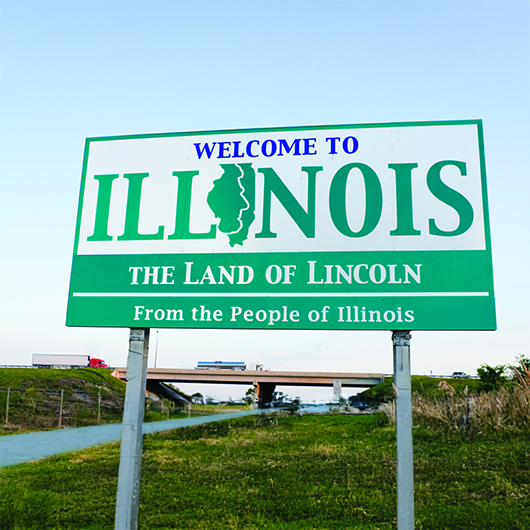
The joint trade association statement noted previously describes the establishment of a rate review in Illinois auto and homeowners insurance as a “fundamental shift in Illinois’ regulatory environment, moving the state toward a more rigid rate approval system similar to struggling insurance markets like California.”
The California example is interesting to old guys like this writer who remember what a mess the business of insurance was before the current system of rate and form review which came from the votes cast by angry California villagers though a citizens’ initiative.
The villager voters in late 1980s California responded to a failed free market that dated back to the time of Governor Ronald Reagan’s administration, the “open competition” approach. Open competition produced a property and casualty insurance sector most notable for its unavailable and unaffordable products.
The “fundamental shift” in Illinois does reflect a change in an at least century-old political culture in that state.
In the 1930s, a Chicago-based insurance executive named Charles Street organized on behalf of a fire insurance cartel a scheme to corrupt ratemaking in Missouri. As he organized a corrupt political ring featuring Kansas City political boss Thomas J. Pendergast to fix fire insurance rates in the Show-Me state, Street noted that Illinois was the fire insurance sector’s “pet state.”
In the past 50 years, a gambler could have made a tidy sum wagering that Illinois insurance regulators would side with the insurance carriers on political and policy matters. That is why Illinois was one of the last states to forgo open competition for auto and homeowners lines last summer.
Too much protest?
This writer can agree with the assessment that Illinois state officials have shifted their approach to insurance regulation; however, the state adopted a system championed by mutual insurance companies in the 1950s.
To paraphrase Hamlet’s mother, “The lobby doth protest too much, methinks.”
Opponents of the reform legislation will also assign blame for every increase in premium to this “heavy handed” regulatory framework. And roosters can claim responsibility for the sunrise.
The expectation for premium increases is real, but for the reasons cited in the statement released by the three industry trade groups cited above: “Powerful storms have repeatedly ripped through communities across Illinois, causing widespread damage to homes, vehicles, and infrastructure.” Rate increases based on such experience data are not threatened by rate review.
The public’s actuary?
So, after 81 years, Illinois’ regulation of personal lines property and casualty insurance poised itself to comply with the congressional intent that established the state’s borrowed jurisdiction over the business of insurance.
Will that state action actually mean anything to insurance consumers?
Will Illini state officials make the most of their new assertion of that jurisdiction? Only time will tell. Illinois Secretary of State Alexi Giannoulias cheered the new auto insurance law. Giannoulias observed that the new statute would:
Require insurers to provide at least 30 days’ notice before increasing auto insurance renewal premiums by more than 10%.
Prohibit excessive, inadequate, or unfairly discriminatory insurance rates that do not reflect actual driving risk.
Authorize the Illinois Department of Insurance to review rate filings, challenge unjustified increases, and require rebates when consumers are overcharged.
Prevent insurers from shifting out-of-state disaster losses onto Illinois drivers.
Expand access to insurance discounts for drivers age 55 and older through a modernized National Safety Council Defensive Driving Course.
The Secretary of State seems a little excited. He seems new to this game. Well calm down, Skippy; we have not seen any implementation yet.
Will the rate review process result in the “affirmative regulation” that Senator O’Mahoney championed? Will the insurance department function as “the public’s actuary?”
Or will the insurance department collect the filings and wait to see whether public complaints or court challenges force them to review filings with an eye toward ordering rebates like blood money. That was not the approach that Senator O’Mahoney had in mind.
While advocates in the insurance sector want to believe a pet state savagely bit them, the Illinois laws are nothing more than a soft mew of a kitten sporting its baby teeth.
If Illinois state officials had not acted with half-measures, who knows what angry Illini villagers would do at the ballot box?
The author
Kevin P. Hennosy is an insurance writer who specializes in the history and politics of insurance regulation. He began his insurance career in the regulatory compliance office of Nationwide and then served as public affairs manager for the National Association of Insurance Commissioners (NAIC). Since leaving the NAIC staff, he has written extensively on insurance regulation and testified before the NAIC as a consumer advocate.