Logic and good intentions won’t help.
[F]ederal district and appeals courts recently upheld a denial
of coverage for a professional liability claim where the
insured admitted an error even before submitting the claim.
By Joseph S. Harrington, CPCU
There’s a principle of liability insurance we impart to everyone from teenage motorists to the most seasoned and sophisticated organizations: Don’t voluntarily admit fault for an accident or an error. Cooperate with an investigation but allow that investigation to determine what happened and who or what is to blame.
Insurance professionals are accustomed to seeing this principle embodied in policy provisions that deny coverage for liability voluntarily assumed or conceded by an insured.
It would come as no surprise to them, therefore, that federal district and appeals courts recently upheld a denial of coverage for a professional liability claim where the insured admitted an error even before submitting the claim. The only surprise would be that it became a court case in the first place, given the comprehensive “voluntary payments” exclusion in the policy.
To understand how the matter became a case, one needs to consider how a knowledgeable insured, believing it was acting ethically and in good faith, could unwittingly jeopardize its coverage.
Construction case
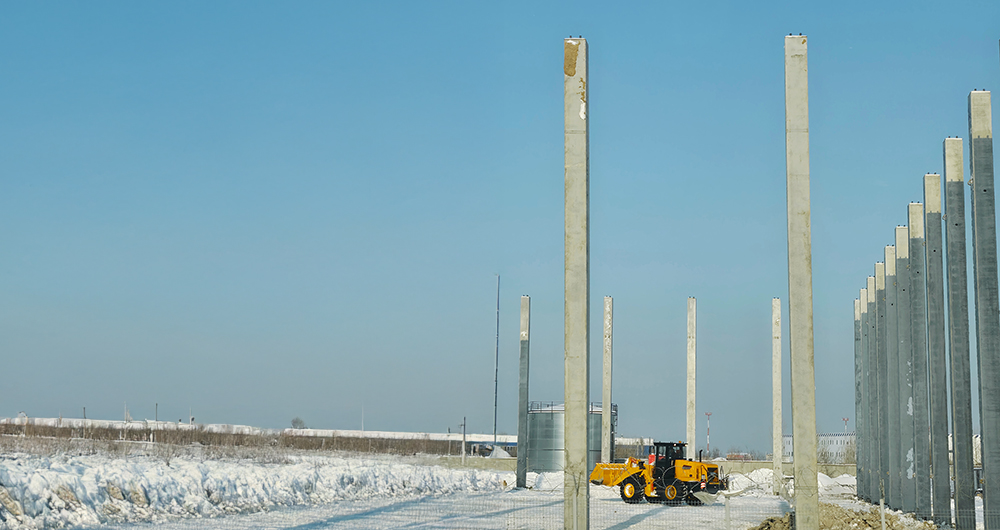
In the case under consideration, the insured, a leading producer of precast concrete building components, was notified by a client of flaws in columns supporting a structure still under construction. The insured conceded the error and then, without consulting its insurer, and “to minimize its exposure and avoid a potentially much larger loss,” undertook its own investigation for how to correct the error.[i]
The insured and its client agreed to a remediation plan estimated to cost about $1.5 million. The insured submitted the claim under a contractors professional liability policy and began the remediation work about a month later. The insurer responded a month after that, denying coverage based on the policy’s voluntary payments provision, which stated, among other things, that:
You shall not voluntarily make any payment, assume or admit any liability, consent to any judgment, or incur any claim expense or mitigation cost, for which coverage might be sought under this policy, without our prior written consent … .
Not unreasonable
So, what was the insured thinking? We can’t know for sure, but its court pleadings suggest some expectations that are not unreasonable.
As we’ve seen, the insured believed its course of action would have avoided a much larger loss.
For what it was worth (nothing, in the end) the insured invoked the policy provision stating that the insurer would cover “mitigation cost in excess of any applicable self-insured retention to mitigate or avoid a professional claim … that would be covered under this policy.”
By submitting the claim before starting the remediation work, the insured believed it had met the requirement under the mitigation provision to “demonstrate the reasonableness and necessity of the proposed cost in light of the projected benefit in terms of mitigating or avoiding a covered claim;” consent to such costs was “not to be unreasonably withheld.”
Although the case dragged out over four years, the courts essentially made short work of the insured’s arguments.
As noted, the voluntary payments provision was comprehensive, and it was a stretch to claim that mitigation cost conditions had been met. The courts also rebuffed the insured’s argument that the insurer’s failure to respond sooner after the claim was submitted constituted estoppel, essentially a waiver of its right to deny coverage.
As legal questions go, this wasn’t a close one. The insured went down swinging, hardly putting the bat on the ball.
Suppose, however, that the insured had submitted the claim to its carrier immediately. The insurer would probably have incurred costs to investigate and defend the claim and may have been on the hook for damages anyway. In that event, a bill for $1.5 million might have been a bargain.
The insured in this case may have come away thinking that no good deed goes unpunished. The real lesson is that no one should presume what their insurers will do without consulting them.
[1] Tindall Corp. v. Berkley Assur. Co., No. 25-1448 (2d. Cir. Sep. 30, 2026)
The author
Joseph S. Harrington, CPCU, is an independent business writer specializing in property and casualty insurance coverages and operations. For 21 years, Joe was the communications director for the American Association of Insurance Services (AAIS), a P&C advisory organization. Prior to that, Joe worked in journalism and as a reporter and editor in financial services.