Keeping employees engaged in an uncertain time
By Thomas A. McCoy, CLU
It wasn’t that long ago, in the early post-COVID period, that the market was favorable for employees who wanted to change jobs. Employers were scrambling to retain them and fill open positions. Today it’s a different story for both employers and employees.
A survey in February of this year from the New York Federal Reserve found that workers’ likelihood of leaving their jobs voluntarily in the next
12 months was the lowest it has been since 2013.
As for employers, MetLife’s newly published 2026 Employee Benefit Trends Study (EBTS) found that the priority employers place on “attracting and retaining employees” had fallen by 10 percentage points over the last year. At the same time, “controlling healthcare costs” had become employers’ number one benefits goal for the first time since 2022.
The study states that “35% of workers are staying in their roles because the unpredictable job market makes it too risky to leave.” Further, “64% said that even if they are not fully satisfied at work, they would hesitate to make a change because they fear losing long-term financial security, benefits or stability.”
This practice, or attitude, has come to be known as job hugging—and not the warm and comfortable kind of hug.
Mercer’s current Inside Employees’ Minds study tells a similar story, according to Sean Connelly, Mercer’s U.S. and Canada leader of total rewards research. “Employees’ intent to stay in their current job is up by five percentage points since 2023. This trend is even more pronounced in tech and financial services—up 13 points and 19 points respectively,” he noted at a recent Mercer webinar.
“In today’s climate of uncertainty, when employees’ intent to stay increases and their motivation and sense of belonging starts to wane, organizations run the risk of having under-engaged employees who aren’t helping the organization deliver on its mission,” Connelly said. “They’re simply hanging around, hoping to weather the storm.”
One storm that workers cannot simply weather until it passes is the integration of AI into the workplace. Most workers expect AI to bring changes to their jobs. While they cannot yet envision all the ways AI might alter their daily work tasks and workflows, it certainly contributes to the uncertain work climate.
Aside from the efficiencies AI can create in everyday tasks and workflows, AI has the potential to deliver a more personalized benefit selection experience, which is something workers have consistently said is important to them. MetLife’s study found that 73% of employees want their benefits communication tailored to their needs, while 56% said their employer currently delivers that level of personalization.
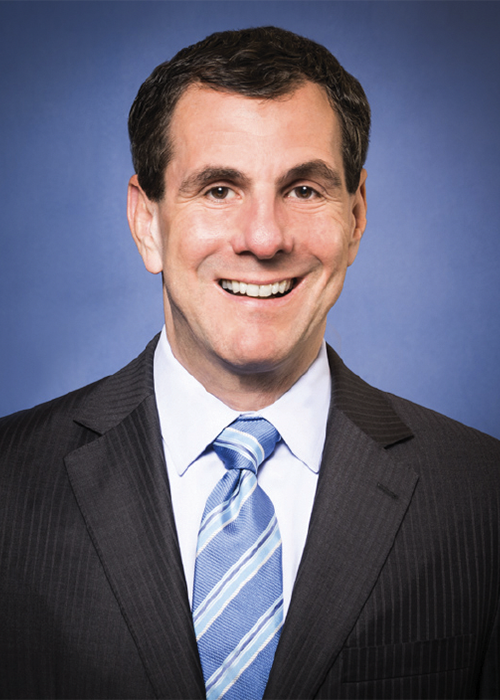
Todd Katz, head of U.S. Group Benefits at MetLife, notes, “AI is embedded across today’s benefits and insurance processes, automating certain tasks to improve speed, consistency and efficiency. At the same time, decision support tools, such as MetLife’s Upwise, use AI-driven recommendations to help individuals navigate and understand which benefits best align with their personal needs and life stage.”
The AI experience is evolving quickly, and it may be too early to accurately gauge employees’ level of acceptance of AI as part of their benefits selection process. Last summer when the Employee Benefit Research Institute (EBRI) interviewed 1,400 workers for its 2025 Workplace Wellness Study, the results were ambiguous.
“While 91% of employers believe their contributions
are fairly rewarded, only 65% of employees agree,
and 67% say AI is creating new friction or distrust.”
—Todd Katz
Head, U.S. Group Benefits
MetLife
It found that two-thirds were concerned about potential bias in AI tools for customized benefit plan recommendations. At the same time, around half said they were comfortable using these tools for this purpose.
What is clearer is that uncertainty about the AI’s impact on jobs is just part of a range of uncertainties hanging over employees. These include the labor market itself and general financial concerns that workers face. According to MetLife’s research, self-reported financial health is under greater strain than at any point since 2020.
Katz notes that of the more than 5,000 full-time workers surveyed for the EBTS, 83% said rising living costs and medical costs are their top stressors, and less than half report feeling holistically healthy or financially confident.
“With this level of financial strain, a majority (68%) of employees say employers have a responsibility for their financial well-being and look to their employer to help provide stability, particularly through benefits.
“One of the clearest signals in the data,” Katz continues, “is that there’s a disconnect between how employers and employees see value at work. While 91% of employers believe contributions are fairly rewarded, only 65% of employees agree, and 67% say AI is creating new friction or distrust.
“At the same time, our research shows ‘connection’ is the strongest driver of performance, as employees who feel connected are twice as likely to be engaged and three times more likely to stay because they want to, not because they have to.”
Connelly said that, in times of uncertainty, it is critical for leaders to explain to employees why decisions are made. “Explain it as though you are explaining it to Wall Street,” he said.
Katz suggests that employers can build the desired connections “by being more explicit about how performance is measured, more consistent in recognizing contributions and more intentional about ensuring that employees understand their benefits.”
As employers strategize over ways to create stronger connections to employees and build a more engaged workforce, it’s helpful not to overlook traditional methods of communication, like face-to-face, one-on-one meetings. The use of AI will continue to grow in importance, but sometimes eye contact can be just the connection that is needed.
The EBRI Workplace Wellness Study proved this when it gave the workers participating in its survey a range of options as to how they would like to receive additional guidance with their benefits plan choices.
“Access to an AI-powered tool that gives personalized benefits advice” was included in the choices. It polled at 20%. Just over half (52%) said they would prefer to meet one-on-one with a benefits counselor, and 70% of those wanted the meeting to be in person.
The author
Thomas A. McCoy, CLU, is an Indiana-based freelance insurance writer.