
Leadership is not a job title
By Bradley Flowers
Leadership is not a tactic, a checklist, or a personality trait that you can switch on at work. It is the downstream result of how you think about people. Your mindset shows up in your behavior, whether you intend it to or not. Just as a customer can hear a smile over the phone, your team can feel how you view leadership through your daily decisions.
Most leadership problems are not skill problems. They are belief problems.
Many agency owners subconsciously (or consciously) believe their role is one of two things:
- Selling and servicing policies, or
- To extract labor. Hire people, tell them what to do, monitor them closely, and step in whenever something feels off. That approach creates compliance, not capability. It produces dependency, not adults.
Real leadership starts with a simple inversion. You work for your team. Your team works for your clients. When you get that order right, everything else becomes more clear.
The inversion that changes
everything
There is a well-known illustration that shows a leader sitting comfortably while employees pull the load. A better version flips that image. The leader pulls so that the team can move faster and further.
In an insurance agency, the principal’s job is not selling policies, taking payments, or processing endorsements. The job is to recruit capable people, develop them, coach them, and give them the confidence to operate without constant supervision.
That shift changes how you hire, train, and manage. You are no longer hiring people to help you. You are hiring people you intend to outgrow your company. That is a good thing.
This requires an internal tension that every healthy organization must have. You should constantly try to give your people more value than the paycheck you write. At the same time, they should constantly try to give the organization more value than the paycheck they receive. When both sides are pushing in that direction, trust compounds.
Adults want ownership,
not babysitting
One of the biggest mistakes agency leaders make is confusing accountability with control. Rigid schedules, “cell phone in a box” policies and micromanagement are often framed as accountability tools. In reality, they signal a lack of trust.
Good employees do not need to be babysat. Good business owners, however, do need systems that protect the organization. Those two ideas are not in conflict.
When you assume that people will not be with you forever, you naturally build better systems. You cross-train roles. You document processes. You create backups. You reduce single points of failure. Paradoxically, that approach increases retention because people feel safe, trusted, and empowered.
A simple example is something we do at Portal Insurance: We maintain a master list of every function in the agency. Next to each task is the person who owns it and another person who knows how to do it. That exercise exposes risk immediately and forces leaders to think beyond personalities.
Dependency feels efficient until the dependent person leaves.
People are not here forever, and that is fine
The average tenure at a job continues to shrink. Gen Z stays at a job an average of 1.1 years; millennials stay about 2.7 years, and Gen X stays 2.8 years. Five years at a job is optimistic.
Younger generations have more options than ever, including remote work and flexible income paths.
Leaders who plan as if people will stay for decades are planning to be surprised.
A better question is this: What do you want someone to say about you and your agency when they leave?
If you assume someone will be with you for a limited season, your posture changes. You invest more intentionally. You expose them to meetings they normally would not attend. You teach them how the business actually works. You help them build skills that will outlast their time with you.
That does not weaken your organization. It strengthens it.
It goes back to the old adage we have all heard: “What if we train our people well and they leave?” “But what if we don’t train them and they stay?”
Some employees will use that growth to advance within your agency. Others will use it to start something of their own or pursue a different path entirely. If someone leaves better than they arrived, leadership worked.
When leaders treat their people as adults, invest in their development,
and hold them to meaningful standards, something powerful happens.
Loyalty is earned without being demanded. Execution improves
without constant oversight. The agency becomes resilient instead of fragile.
Accountability is coaching, not punishment
Culture is often misunderstood. It is not unlimited freedom or forced happiness. Culture is clarity paired with consistency.
In a healthy agency, individualism is encouraged, but accountability is nonnegotiable. People can dress for their day. They can work with autonomy. They can have honest disagreements. What they cannot do is avoid responsibility or create unnecessary friction.
The fastest way to damage culture is to tolerate behavior that under-mines trust, even if that person produces results. High performers who poison the environment are expensive liabilities. Removing them is uncomfortable, but it creates safety for everyone else.
People perform best when they feel safe. Safe to ask questions. Safe to admit mistakes. Safe to share ideas. Mistakes are acceptable. Repeating the same mistakes without learning is not.
Accountability, when done correctly, is simply coaching with standards.
Empowerment reduces stress at the top
One of the clearest signs of a maturing organization is when employees bring problems they have already solved. That happens only when leaders stop positioning themselves as the answer to everything.
Empowerment is not abdication. It is a structured trust. People earn more decision-making authority as they demonstrate judgment and ownership.
Most people want to make an impact. As traditional sources of meaning decline, work becomes a primary place where people look for purpose. Agencies can either suppress that desire or channel it.
Your employees, especially your younger employees, want to make an impact. When people are allowed to shape processes, improve systems, and influence outcomes, they care more. They stay longer. They perform better.
Leadership requires continuous self-audit
No leader has this figured out. The moment you believe you do is the moment growth stops.
As organizations scale, the leadership skills that worked at five employees break at 15. What worked at 15 breaks again at 30. Leaders must continually upgrade themselves. That means seeking feedback, even when it is uncomfortable. It means surrounding yourself with people who will challenge bad ideas instead of endorsing them. It means recognizing personal blind spots and actively working on them.
Strong leadership teams are not built with agreement. They are built with trust and candor.
Build something bigger than a job
Insurance is not a transactional business. It protects homes, livelihoods, and families at their most vulnerable moments. That matters.
When leaders treat their people as adults, invest in their development, and hold them to meaningful standards, something powerful happens. Loyalty is earned without being demanded. Execution improves without constant oversight. The agency becomes resilient instead of fragile.
The role of a leader is not to extract labor. It is to create an environment where capable people can become who they are capable of becoming.
That is how you build adults.
That is how you avoid dependencies.
That is how you build something that lasts.
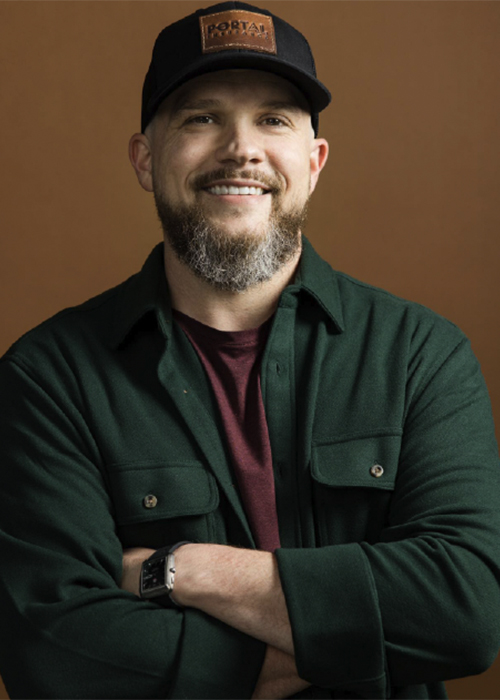
The author
Bradley Flowers is the founder and CEO of Portal Insurance, a Best Practices recognized agency. He founded Portal from “less than scratch” in 2019 after eight years on the captive side. In 2019, Portal Insurance was named the “Agency for the Future’’ by Safeco Insurance. Bradley is also the Co-host of The Insurance Guys Podcast, the most downloaded podcast in the insurance industry, interviewing guests like Gary Vaynerchuk, Neal Foard and Jesse Cole from The Savannah Bananas. Bradley is married to Laurel and they have three beautiful kids, Kleighton, Luke and Cal. In his spare time, he enjoys a good bourbon, playing VR golf and performing corny magic tricks for his kids, nieces and nephews. He can be reached at bradley@portalinsurance.com.