New law addressing smoke
damage reduces conflict but adds exposure
The official rationale for the California measure is to provide
objective standards for applying coverage for smoke in place
of the subjective judgments of adjusters, which can vary from
carrier to carrier and from individual to individual.
By Joseph S. Harrington, CPCU
Property insurance covers damage. So, what constitutes damage?
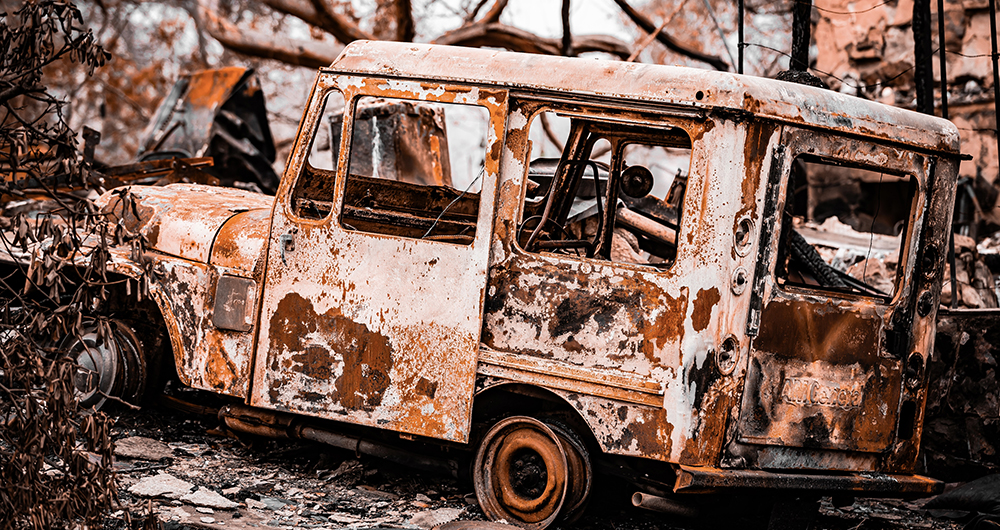
One hundred years ago, the answer would have been fairly straightforward: Damage was the physical breaking or marring of tangible property one could detect with an untrained eye. “Damage” could include permanent stains and odors caused by smoke but would hardly extend to the temporary presence of smoke. At the time, people still burned wood and coal on a daily basis for heating and cooking.
Today, science knows a lot more about the composition of smoke and its effects on humans, and they’re not good. Even smoke that has passed along can leave behind hazardous substances—seen or unseen, but detectable to modern technology.
This was the source of countless disputes between homeowners and their insurers in the wake of the southern California wildfires at the beginning of 2025. Where a claims adjuster may have seen little or no evidence of smoke damage to a particular dwelling, a policyholder may have reasonably believed it was uninhabitable due to potential contamination by substances borne by wildfire smoke.
California law
In September 2026, the State of California acted to address the issue by passing the nation’s first law to establish objective criteria for what constitutes smoke damage for purposes of insurance coverage. The act directs a state agency to determine objective levels of lead, asbestos, and other smoke-borne substances that make a dwelling uninhabitable.
Residential property insurers will be required to cover costs incurred to test for and clean up toxins, and to restore the property to an inhabitable state. Insurers will also be required to cover an insured’s additional living expenses as long as the insured dwelling is uninhabitable, up to the policy limit.
For smoke damage claims made following a wildfire, there will be a legal presumption that any contamination identified was a result of the fire. In the event of a dispute over the cause of contamination, insurers bear the burden of demonstrating that it resulted from some other cause or activity.
Added exposure
The official rationale for the California measure is to provide objective standards for applying coverage for smoke in place of the subjective judgments of adjusters, which can vary from carrier to carrier and from individual to individual. That will theoretically lead to fewer claims disputes over smoke damage, an issue that figured prominently in the California Department of Insurance’s decision to investigate wildfire claims handling and issue fines in response.
For that reason, the latest law earned cautious acquiescence from insurance trade associations that resisted earlier forms of the legislation. The American Property Casualty Insurance Association (APCIA), one of the two largest P&C trade groups, referred to the measure as “a meaningful step toward clearer guidance” while remaining “technically opposed” to it.
Personal lines agents and brokers in California may also appreciate this initiative to avoid coverage disputes, but they can certainly understand the ambivalence of carriers who will face greater exposure to smoke losses following wildfires and will seek to raise rates and/or restrict their underwriting in response.
On its own, the requirement to test for hazardous smoke residue extends exposure beyond visibly damaged structures to a vastly expanded range of properties in the path of wildfire smoke. The legal presumption that contamination resulted from wildfire smoke, no matter what other factors may have been in play, will leave insurers covering the costs of at least some activities not intended to be insured.
The author
Joseph S. Harrington, CPCU, is an independent business writer specializing in property and casualty insurance coverages and operations. For 21 years, Joe was the communications director for the American Association of Insurance Services (AAIS), a P&C advisory organization. Prior to that, Joe worked in journalism and as a reporter and editor in financial services.