Common commercial insurance
exposures that refuse to fade
Some exposures become invisible simply because people get used to them.
A producer’s job … is to recognize when familiarity has started masquerading as risk control.
By Michael Wayne
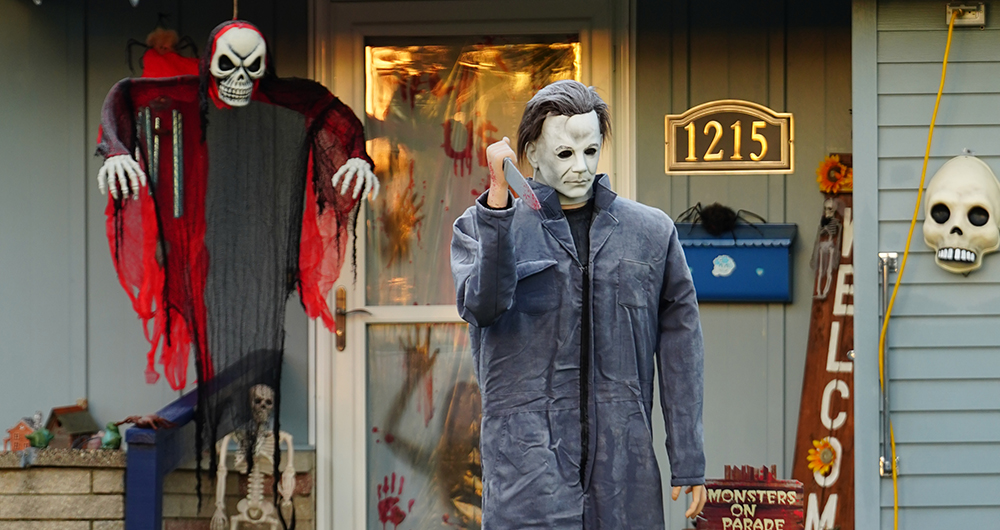
Michael Myers remains one of horror’s most enduring villains for a reason. You can knock him down, run away from him, and convince yourself the nightmare is over. Then, inevitably, he shows up again … and again … and again.
Commercial insurance has its own Michael Myers in the form of the exposure everyone thought had been addressed. The risk that disappeared from the conversation for a year. The problem that was supposed to be fixed before renewal but somehow returned.
The analogy is particularly relevant today. Commercial insurance rates are generally moving in buyers’ favor, but that doesn’t mean every risk has become easier to insure. Marsh recently reported that U.S. composite rates declined 2% in the second quarter of 2026, while property rates fell 13%. United States casualty rates, however, increased 7%, and insurers are continuing to scrutinize risk quality and program structure.
So, while the market may be less frightening, some exposures aren’t.
Here are five risks that just won’t die.
The “we fixed that” exposure
Every producer has one. A property had an outdated valuation. A client needed to improve fleet safety. A manufacturer had a maintenance issue. A contractor needed to tighten its subcontractor agreements. Regardless of what it was, the issue was identified, discussed, and supposedly addressed. Then, renewal arrived, and there “it” was again.
Businesses rarely ignore risk recommendations intentionally. They have competing priorities, capital constraints, and operational demands. A recommendation can easily fall behind the next urgent problem. That is why producers should treat important risk improvements as ongoing action items and not one-time conversations.
If a client said last year that it was going to replace an aging roof, install a sprinkler system or revise its contracts, ask about it again. Was it completed? If not, why? Has the exposure changed? A recommendation isn’t finished because it appeared in last year’s stewardship report. It is finished when the risk actually changes.
The loss-free account that isn’t necessarily a better risk
A clean loss history is good news, but it is not necessarily proof that the underlying exposure has improved. This is especially important in casualty, where the U.S. market continues to face pressure from claims severity and litigation. Marsh reported a 7% increase in U.S. casualty rates in the second quarter of this year, with risk-adjusted umbrella and excess rates rising even more sharply.
A client can go several years without a significant claim while simultaneously expanding operations, entering new jurisdictions, hiring more employees, or assuming additional contractual obligations.
Nothing has gone wrong. Well, not yet.
Producers shouldn’t treat a quiet loss history as evidence that the account’s risk profile is static. Ask what has changed operationally, not just what has happened in the claims history. The absence of a claim doesn’t necessarily mean the absence of an exposure. Sometimes Michael Myers isn’t visible only because he hasn’t come through the door yet.
The risk everyone stopped talking about
Some exposures become invisible simply because people get used to them. A vendor has always performed reliably. A particular employee has always handled a process. A piece of equipment has never caused a problem. A business has always depended on the same technology platform. Eventually, the risk becomes part of the furniture.
That can be particularly problematic as businesses become more dependent on technology and third-party providers. A manufacturer may not think of itself as a technology company, for example, but a disruption to its cloud systems, software, communications, or a critical vendor could still bring operations to a halt.
The same principle applies to physical risks. If employees routinely work around a known hazard without an incident, the lack of a claim doesn’t make the hazard less real. A producer’s job isn’t to make every client afraid of every possible loss. Rather, it is to recognize when familiarity has started masquerading as risk control.
The renewal process that never changes
One of the easiest ways to miss an emerging exposure is to conduct the renewal as though the client’s business is exactly the same as it was 12 months earlier. Same application. Same questions. Same exposure information. Same limits.
Meanwhile, the client has opened three locations, gained a competitor, changed suppliers, added autonomous equipment, and has begun using artificial intelligence throughout its operations.
The business changed, but the renewal process didn’t. That’s a problem in a market where underwriting outcomes increasingly depend on the quality of the risk and information presented to insurers. While capacity and competition are creating opportunities for buyers, insurers continue to differentiate risks based on exposure quality and risk management.
Producers who know what changed inside the business have an advantage over producers who simply know what changed on the expiring policy. “What changed?” isn’t always a good question. Sometimes, the question to uncover risk needs to be, “What are you doing today that you weren’t doing a year ago?”
The risk everyone assumes somebody else is handling
This may be the most persistent exposure of all. The general contractor assumes the subcontractor has adequate insurance. The manufacturer assumes its vendor is responsible for the cyber exposure. The property owner assumes the tenant’s policy will respond. The company assumes a certificate of insurance means the contractual requirement has been satisfied.
Sometimes those assumptions are correct. Sometimes they aren’t.
Contracts can transfer obligations that insurance policies don’t necessarily address in the way the parties expect. An additional-insured requirement, indemnification clause, or certificate may provide evidence of one piece of the arrangement while leaving another exposure unresolved.
Producers don’t need to become attorneys. They need to ask what their clients have agreed to assume. Asking a simple renewal question like, “Have your contracts or customer requirements changed?” can uncover exposures that have been hiding in plain sight. Unlike Michael Myers, contractual obligations don’t disappear just because everyone stops talking about them.
The Halloween franchise works because, just like some commercial risks, Michael Myers doesn’t stay gone. The renewal process can ignore how much the business has changed and, somewhere in the contract stack, an obligation everyone assumes somebody else is handling can be lurking.
The lesson from Michael Myers isn’t that producers should be afraid of every risk. The lesson is that producers shouldn’t assume a risk is gone simply because they stopped seeing it.
The author
Michael Wayne is an insurance freelance writer.