
Soft spots emerge as conditions stabilize
By Joseph S. Harrington, CPCU
Insuring construction operations is never easy, but it may be less difficult now in 2026 than at any time since the pandemic year of 2020.
For one thing, conditions in the construction sector itself may have stabilized, with materials costs leveling off following a huge spike from November 2020 through May 2022, but slowly climbing back to a record level in April 2026, according to U.S. Bureau of Labor statistics, which also show that construction labor costs fell slightly in the fourth quarter of 2024 and the first quarter of 2026, interrupting 25 years of consistent increases.
That’s not the whole story, however, as the Bureau of Labor stats show escalating equipment costs—up 37% from 2020 to 2026—heighten the inland marine risk for loss to mobile equipment, while rising costs for auto, general, and professional liability claims continue to put strain on the market for construction coverage.
“Overall, construction insurance market conditions are no longer hard, and some areas are seeing some softening,” says Jody Sandora, senior commercial lines segment manager for Encova Insurance. “Conditions in property and inland marine are improving on a selective basis, but casualty lines remain challenging.”
According to Sandora, rates for construction property and inland marine coverage are “flat to slightly down” except in areas prone to severe weather events. In those areas, she finds carriers are carefully monitoring their concentration of values and insurance to value while modifying coverage, reducing limits, and increasing their use of percentage deductibles along with their overall pricing.
Regarding liability coverage, Sandora notes that “trends in social inflation and litigation continue to deteriorate performance” in commercial auto, umbrella/excess, and general liability for high-hazard operations. “Insureds differentiate themselves by the quality of their fleet management, controls on operations both on and away from jobsites, and monitoring of subcontractors by ‘contract discipline,’” she says.
For low- to moderate-hazard accounts, general liability rates range from essentially flat to increases at the rate of inflation, she says, while rates for high-hazard operations are increasing much more, along with tightened terms and conditions.
Strong start stabilizes
Teresa Cates, construction industry segment director for EMC Insurance, shares Sandora’s generally optimistic outlook for construction insurance: “2026 started with significant momentum,” she says. “Strong results across much of the industry drove increased capacity and heightened competition, creating a very active renewal environment. Well-performing insureds could find improved pricing and broader terms.”
That softening even extended to the recently difficult market for excess and umbrella liability coverage. “After tightening late in 2025, capacity reopened in early 2026,” she says. “This was driven in part by demand for higher limits tied to data center projects and large infrastructure projects.
Cates adds that the “significant momentum” in construction insurance was slowed by heavy weather losses in March that forced an abrupt reappraisal of both property and liability underwriting. As of May 2026, however, she observes that “the market is stabilizing.
“Underwriting discipline is returning,” she says, “but the environment remains competitive. It’s just more balanced than what we experienced at the start of the year.”
Inland marine
Construction contractors depend heavily on three inland marine coverages:
- Builders’ risk (property coverage for a structure in the process of being built or renovated);
- Installation floaters (property and liability coverage for equipment being installed [e.g., HVAC units]); and
- Contractors’ equipment (mobile equipment not licensed for travel on public roads).
“The builder’s risk market has significantly softened over the past 12 months,” says Tom Ear, executive vice president of Amwins Brokerage. “New markets have entered while current markets are increasing their capacity. As a result, there’s an oversubscription of carriers on placements so, on large placements, two to three carriers are able to offer as much capacity as four or five carriers before.”
Ear says that Amwins is seeing rate decreases in builders’ risk for “garden style” and “podium” projects, along with decreases in deductibles for damage by water and “all other perils” (AOP). At the same time, he finds elevated rates and heightened security requirements are still required of projects exposed to wildfire or in locations with high crime scores and low public protection classifications.
Cates notes a growing demand for higher limits for builders’ risk and installation floaters. “A big reason for that is contractors buying materials in bulk to stay ahead of supply chain issues,” she says. “As a result, the values sitting at temporary locations have gone up quite a bit.” (Builders’ risk policies cover damage to supplies at a jobsite intended for incorporation into the completed structure.)
According to Cates, large-scale data center and infrastructure projects require significantly higher limits to account for concentrations of high-value materials, particularly electrical components. This, in turn, prompts more detailed underwriting and loss control for theft and fire hazards.
Equipment value
Beyond that, “equipment values have also climbed quickly,” she adds. “Take cranes or drilling rigs. What might have been a $650,000 asset a few years ago can now easily be over $1 million. That kind of increase is pushing carriers to be more disciplined. We’re asking more detailed questions about maintenance and seeing a shift toward higher insured participation, like percentage deductibles.
“The good news,” she adds, “is that newer equipment is getting smarter, now coming with built-in telematics and monitoring systems, which give both contractors and insurers better insight into how equipment is being used and maintained.”
Allan Williams, senior safety and loss control consultant for Encova, echoes that observation.
“New equipment is just as advanced as new vehicles on the road today,” he says. “The better the maintenance program, the longer the equipment will last, and the better it performs. Technology also helps track the location of equipment, which can help reduce theft.”
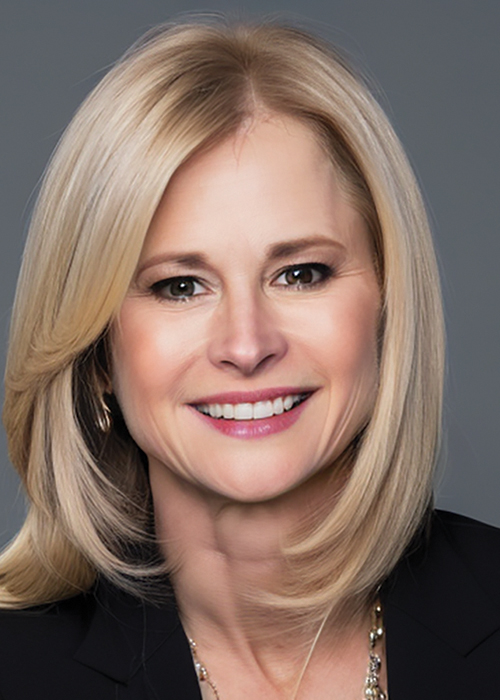
“We’re starting to see more carriers offer errors and omissions coverage on trades not traditionally covered, such as excavation, concrete, and framing contractors. What’s interesting is that most companies doing this aren’t changing their filings but making more one-off exceptions to win individual accounts.”
—Teresa Cates
Construction Industry Segment Director
EMC Insurance

“The builder’s risk market has significantly softened over the past 12 months. New markets have entered while current markets are increasing their capacity.”
—Tom Ear
Executive Vice President
Amwins Brokerage
Liability lines
For over a decade, construction contractors have benefited from a soft market for workers compensation insurance but have struggled with a distressed market for commercial auto insurance.
“Workers compensation remains at the forefront of any safety conversation,” says Williams. He points out that a company’s experience modification rate (EMR, or “e-mod”) doesn’t just increase or decrease workers comp premium. “If a company’s e-mod is too high, it may also prevent the company from getting work,” Williams says.
As it is, “workers compensation has seen decreasing loss costs year over year,” according to Ryan Powers, senior vice president and head of construction at QBE North America. “For 2026, we expect another year of flat to single digit decreases in rates, with some deviations at the state level.” If there’s a problem in workers comp, says Powers, it’s that “those compounded annual rate decreases are chipping away at the line’s margin. It cannot subsidize underperforming accounts.”
There always seems to be problems in commercial auto liability risk, which Powers says “continues to threaten the [construction] industry with elevated severity trends.” Because of that, he anticipates continued rate hikes in the low double-digits despite “market rate fatigue” as carriers struggle to attain better loss ratios.
Powers recommends that contractors with substantial auto exposures consider moving from “guaranteed cost structures” (a fixed premium for a fixed limit) to “loss-sensitive policies” (where premium in part reflects claims activity) as a way to smooth out auto insurance cost increases.

“New equipment is just as advanced as new vehicles on the road today. The better the maintenance program, the longer the equipment will last, and the better it performs.”
—Allan Williams
Senior Safety and
Loss Control Consultant
Encova Insurance
Occupational liability
In a departure from traditional practice, Cates observes that professional liability insurers are expanding the scope of construction occupations they cover.
“We’re starting to see more carriers offer errors and omissions coverage on trades not traditionally covered, such as excavation, concrete, and framing contractors,” she says. “What’s interesting is that most companies doing this aren’t changing their filings but making more one-off exceptions to win individual accounts.
“This trend is creating a ripple effect in the market,” she adds. “It’s putting pressure on other carriers to find ways to stay competitive, whether through contractors professional liability coverage or other specialized solutions.”
Occupational liability is expanding along with the sophistication of the tools utilized to manage and execute projects.
“We’re seeing a lot more technology being used to manage construction projects today,” says Cates. “Building information modeling (BIM) and artificial intelligence (AI) are being used for design, scheduling, and project coordination. Even communication is evolving, as more contractors use chatbots to streamline day-to-day interactions.”
With most contracts having financial records and project data already in digital format, and with AI being rapidly adopted, cyber exposure “is a real concern,” Cates says. “We’re also seeing AI drive changes in the construction business model itself,” she adds. “More general contractors are offering construction management services, along with new players entering the construction management space.”
So, the construction sector is building new opportunities for insurers, agents, and brokers.
For more information:
Amwins Brokerage
amwins.com
EMC Insurance
emcinsurance.com
Encova Insurance
encova.com
QBE North America
qbe.com
The author
Joseph S. Harrington, CPCU, is an independent business writer specializing in property and casualty insurance coverages and operations. For 21 years, Joe was the communications director for the American Association of Insurance Services (AAIS), a P&C advisory organization. Prior to that, Joe worked in journalism and as a reporter and editor in financial services.